
This interview contains spoilers for the series finale of “The Chi.”
From its beginning in 2018, “The Chi,” created by Lena Waithe, sought to defy expectations about criminality and Chicago and focus on the kinds of families that are rarely seen in a TV drama.
“While it unfolds from a crime, it’s not really a crime story,” the New York Times television critic James Poniewozik wrote in his review of its first season. “It’s about a widening pool of people who would rather be doing anything besides dealing with the repercussions of a murder.”
As the series continued to challenge convention, it became a hit for Showtime and the streaming platform Paramount+, the rare show whose viewership increased over time. “The Chi” concluded on Friday after eight seasons, making it the longest-running Black drama on cable television.
Its success did not come without controversy, however. Jason Mitchell, who played Brandon Johnson, a talented chef grieving and seeking revenge for his brother’s murder, was originally the show’s lead. But in 2019, after the second season, Mitchell was fired from the show and his character killed off because of sexual misconduct accusations made against him by his co-star Tiffany Boone and by Ayanna Floyd Davis, then the showrunner. Mitchell has denied the allegations.
“The Chi” reset after Mitchell’s departure with a new showrunner, Justin Hillian, centering on the teenage Kevin Williams (Alex R. Hibbert) while expanding its focus on his friends and family. It kept amping up the violence and melodrama but also featured some of the most textured depictions of queer marriage, transgender characters, working-class families and formerly incarcerated men on TV.
“The Chi” ended with triumph and tenderness. Bakari Bronson (Ahmad Ferguson), a young Black man torn between the criminal activity of street life and his literary aspirations, survives a shootout and pursues his creative dreams. Two of the show’s most beloved characters — the entrepreneurial Emmett Washington (Jacob Latimore) and the patient, progressive Kiesha Williams (Birgundi Baker) — get married. The couple broke gender norms by proposing to each other at the same time.
“We got to see them unlearn what they’ve been taught about what love is,” Baker said by phone. “I think trauma easily trickles down, and we saw that in Emmett’s relationship with his father and Kiesha’s relationship with her mother.”
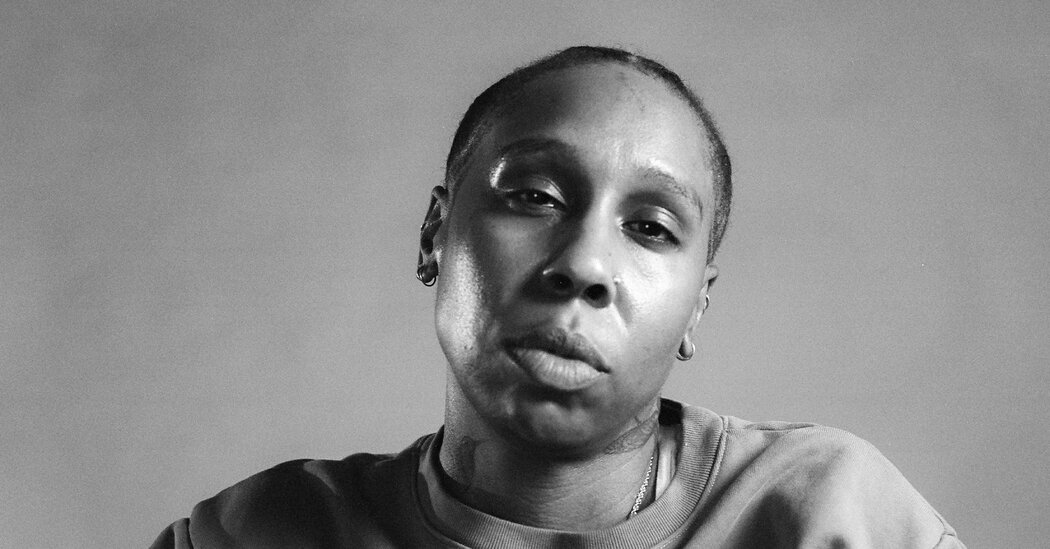
Waithe, who grew up in and around Chicago, first gained attention as an Emmy-winning writer and star of the Netflix comedy “Master of None.” She went on to create the series “Boomerang” and “Twenties” and write the movie “Queen & Slim.” In an hourlong interview in last month and in a later phone call, she reflected on the evolution of “The Chi,” her relationship to the fans and what she sought to achieve with the show’s conclusion. These are edited excerpts from the conversations.
What was your original vision for the show?
I was coming off the show “Dear White People” — I had a chance to work with Justin Simien, who is into multi-protagonist stories. I was fascinated by that because the more people you have in the frame, the more opinions and voices you have. That is the way I want to write. Coming up on Aaron Sorkin, or “A Different World,” “School Daze,” “Boyz N The Hood” or “Menace to Society” — these are shows with many characters coming from different perspectives. All those things influenced “The Chi,” where you’d have one person who’s from the street, another person who wants to just do the right thing. You have a woman who is more promiscuous, a woman who’s more buttoned up. It was always supposed to be an ensemble piece.
Did you feel pressure for it to be something else?
There was this desire to compare it to “The Wire.” There’s no greater compliment, but I’m not that interested in the system. I’m more interested in the people that have to deal with the system and what kind of impact it has on their lives. And because Jason Mitchell was a known commodity coming off “Straight Outta Compton,” it made sense to place him in the center. By the time we got to Season 3, I fought for Justin Hillian, who started on the show as a story editor in the first season, to be the showrunner. Justin was able to say to me, “OK, you want to get rid of the cop stories, you want to focus on the community, and you want it to be an ensemble piece.”
Mitchell left after Season 2, and in past interviews about the allegations, you’ve said you wish you had done things differently. What do you wish you would have done differently?
I think what I did was the right thing. I wasn’t on set; I wasn’t in Chicago. All I could do is allow H.R. to handle it, and they handled things in the way they felt was appropriate. What I’m proud of is that myself, the producing directors, the showrunners — we wanted to make sure something like that never would occur again on our set. And the truth is it never did.
As “The Chi” evolved into more of an ensemble show, how did that influence the storytelling?
I wanted to focus on different kinds of Black men in Chicago, young and old, and show different perspectives on the violence around them. But these men have women in their lives, whether it be a mother, a girlfriend, a grandmother, a friend, a sister. So over the course of the series, and once we lost a main male character, we were able to shift to women. Particularly in Season 3, when the character Kiesha was abducted, people had to ask, “What happens when a Black woman goes missing?” The community has to find her, not the police, because we are the ones who care.
I don’t want to say, “Oh, now the men have to take the back seat.” But rather: We have a voice, and there are things that are going on with us as well. Also being a person who is queer, I have a different idea of what family is.
You also show blended families as normal. Emmett is a good father, even though he has four children with four different women.
Our community can be a little conservative, old-fashioned and steeped in religious ideology. With some of these family dynamics, I’m trying to humanize it. Maybe older generations would say, “What is this, the Ghetto Brady Bunch?” But these younger characters snap back and say: “Well, Granddad had other kids across town. We just had to act like it wasn’t the truth until the funeral came.” I don’t have a desire to hide or have shame around it.
You have a pretty active fan base. How has your audience grown with you over the life of the show?
I watch [YouTube] recaps like “The Weekend Watch,” “The Spot Real Talk” and “MarcDarkTV,” and I love watching the straightest Black dudes on the planet talk about Trig [Luke James] and Fatima [L’lerrét Jazelle], this young woman he’s dating who is trans, and how they’re making it work. And based on what they say or how they communicate or how they grow, I’ll send them a T-shirt or a beanie or shoot them a message: “I’m hearing you because I need to hear from you. I want to hear how this is sitting with you.”
What was your hope for the end of “The Chi”?
This is my first time ending a show. And because of the movie “Queen & Slim,” I have a reputation for not shying away from tragic endings. Bakari feels like your son or the kid next door and is representative of a lot of young Black men who are debating, “Do I make fast money or do I make legal money?” Ahmad Ferguson has charm, even though his character has taken somebody out and killed them. Everybody’s Team Bakari, so the fact that he was shot and got to survive is something I want people to take away from the show. It is important to me that every ending is a new beginning. It’s never really the end; it’s just the start of something new.
A lot of my favorite shows, particularly Black shows, went out with a whimper, be it “A Different World” or “Living Single.” These shows shaped me as a writer and as a person, and I didn’t want my show to have that same fate. I’m grateful that we’re going out when people still care. And to have people like Susan Fales-Hill and Debbie Allen [producers of “A Different World”], Yvette Lee Bowser [“Living Single”] and Mara Brock Akil [“Girlfriends”] as mentors in my community and helping to raise me, this ending is also for them. It’s for all of us.
Cinematography by Jensen Gore.