
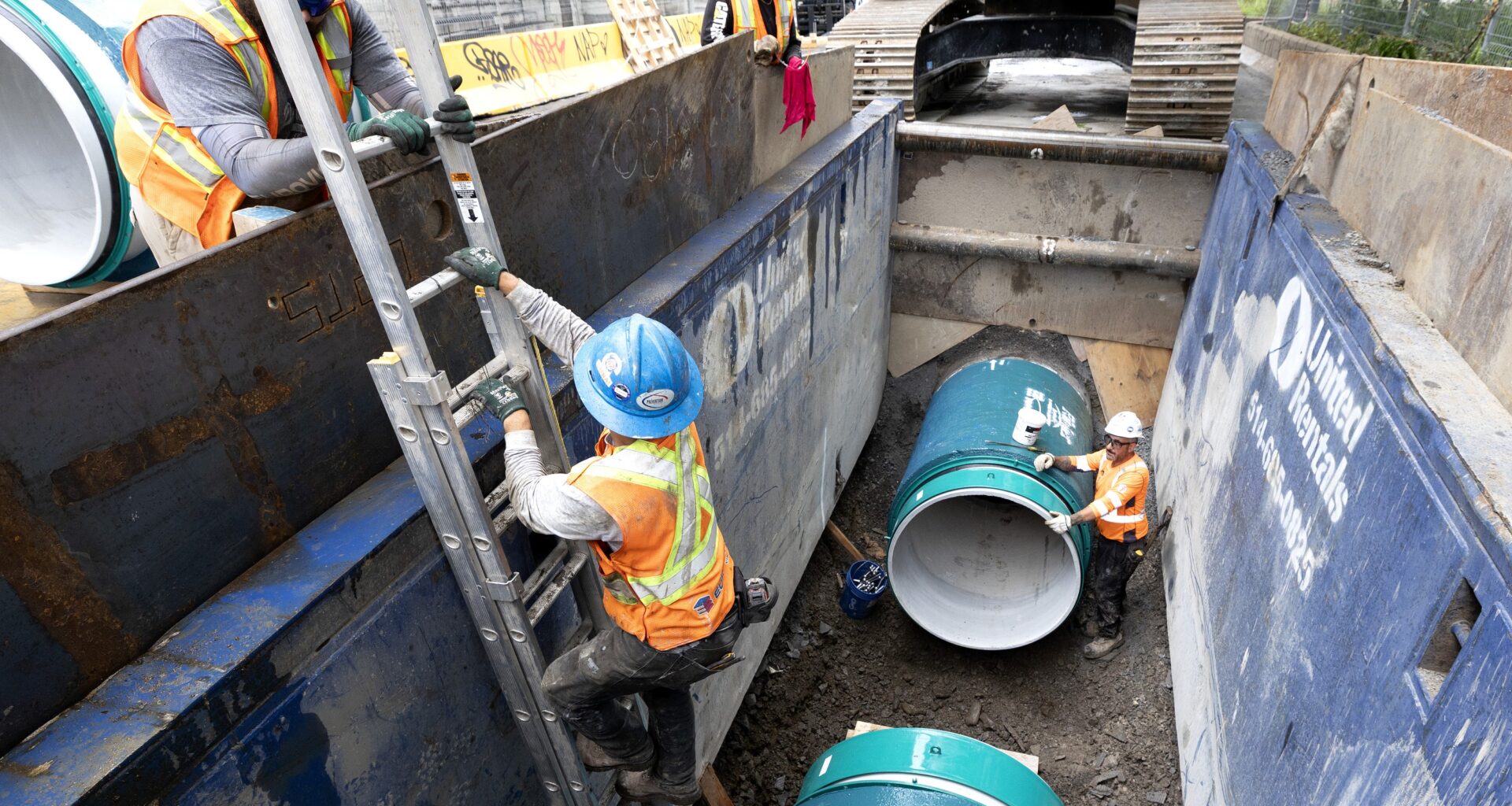
Emergency repairs to a major aqueduct beneath Atwater Ave. are on schedule to finish around the end of summer, Montreal officials said Tuesday, but they also warned that more than one million residents must continue conserving water until the weakened pipe is safely returned to service.
Two of the four sections requiring repairs have been completed, according to Alan DeSousa, the executive committee member responsible for infrastructure and mobility. Crews are working on a third section and preparing to begin working on the fourth in the coming days.
“So far, so good,” DeSousa told reporters at the construction site. But, he added, “we’re not declaring victory yet.”
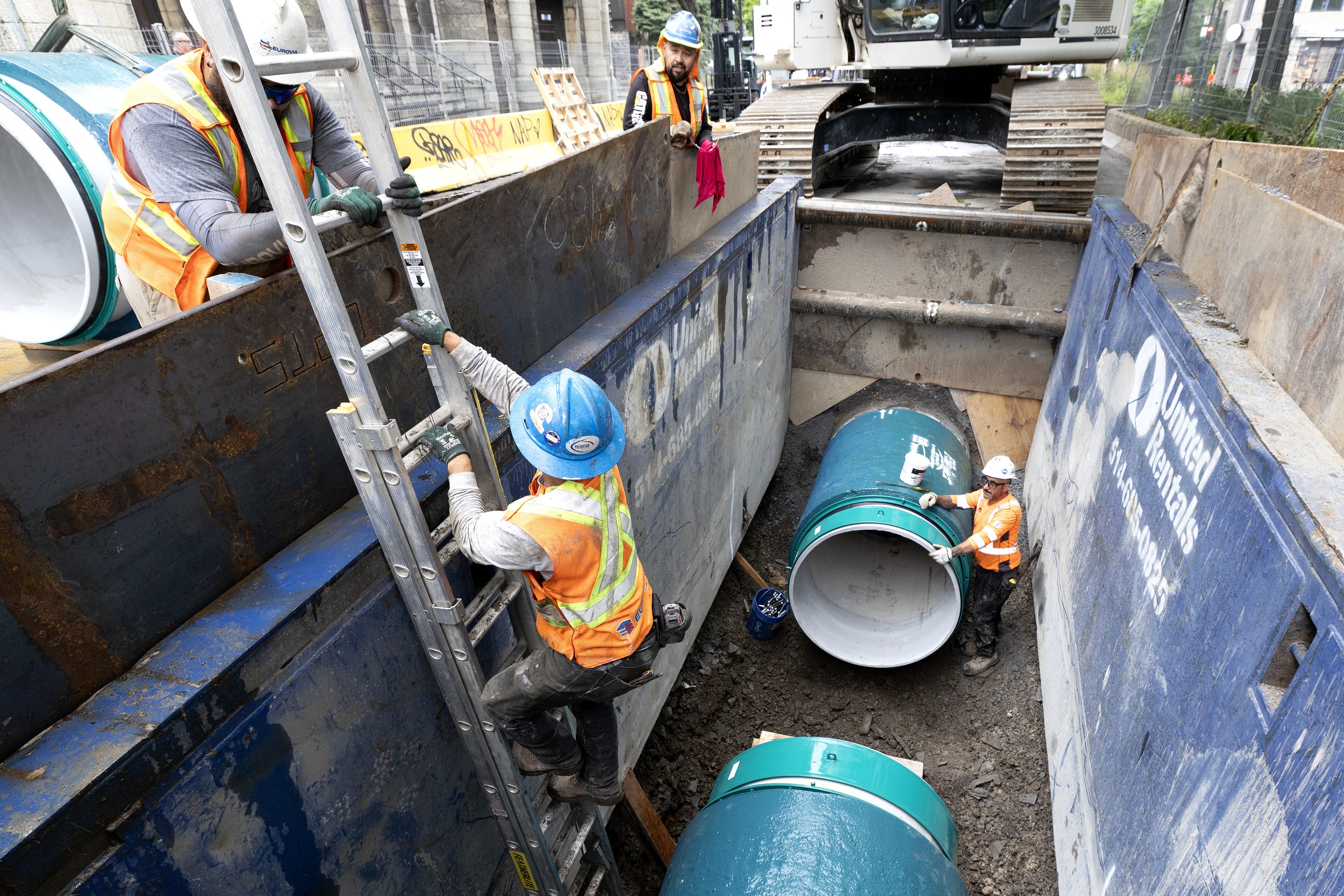 Workers replace sections of Atwater water-main pipes on Tuesday, July 28, 2026. Allen McInnis / Montreal Gazette
In May, the pipe, which supplies drinking water to about 1.3 million people across Montreal’s boroughs and several neighbouring municipalities, was shut down after monitoring equipment detected weaknesses that city engineers feared could lead to a rupture. Two other major conduits in the same area were already closed for reconstruction or rehabilitation, leaving only one fully operational and placing unusual pressure on the remaining network during the summer, when water consumption typically rises.
A failure could have sent a vast quantity of water downhill through densely populated neighbourhoods, DeSousa said, and also could have jeopardized drinking-water supplies and the pressure available to firefighters.
Crews must still inspect the pipe as they proceed, meaning hidden damage could extend the timeline. DeSousa pointed to a separate intervention beneath Viger Ave. in March when workers opened a pipe and discovered 11 additional weak points that had not previously been identified.
“We don’t know what surprises might emanate from the pipe,” he cautioned.
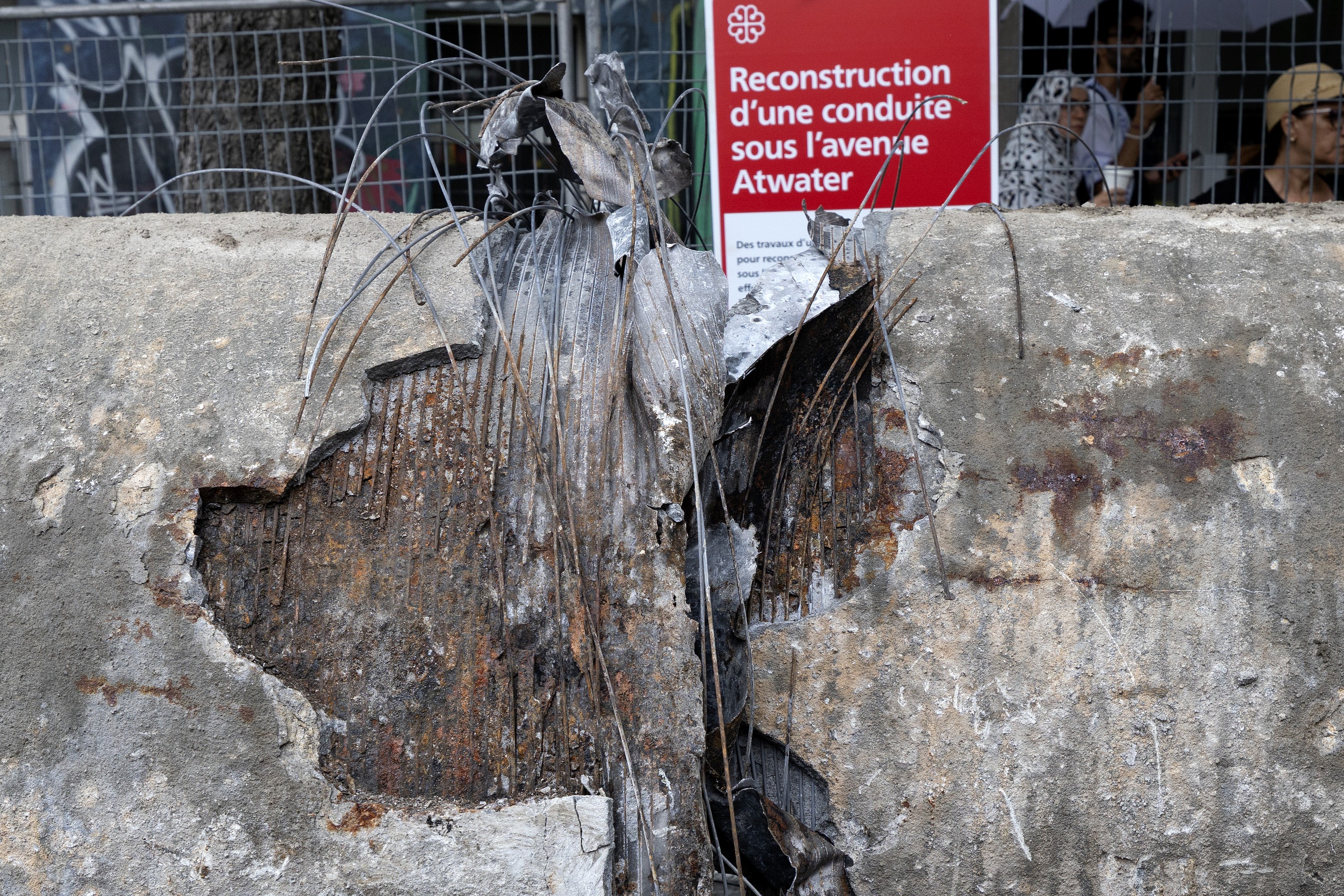 A damaged section of the old Atwater aqueduct is ready to be hauled away on Tuesday, July 28, 2026. Allen McInnis / Montreal Gazette
Once the Atwater repairs are completed, crews will need about two additional weeks to ensure that water is circulating safely before it can be placed back into service.
Montrealers have so far kept consumption comfortably below the level that would place excessive strain on the system, DeSousa added. The city had set a threshold of 1.4 billion litres a day. On Monday, consumption stood at 1.22 billion litres.
Claude Pinard, the president of Montreal’s executive committee who was also in attendance Tuesday, credited residents, businesses and municipalities for responding to the conservation campaign.
But DeSousa warned that a prolonged heat wave in August could quickly push demand higher.
The city has suspended decorative fountains, non-essential watering, continuous pipe flushing and some sewer-cleaning and street-washing operations.
It has also placed renewed attention on Montreal’s aging water infrastructure. DeSousa said the city’s water assets were valued at about $43 billion and required about $15 billion in planned investment, of which about $10 billion had been secured.