
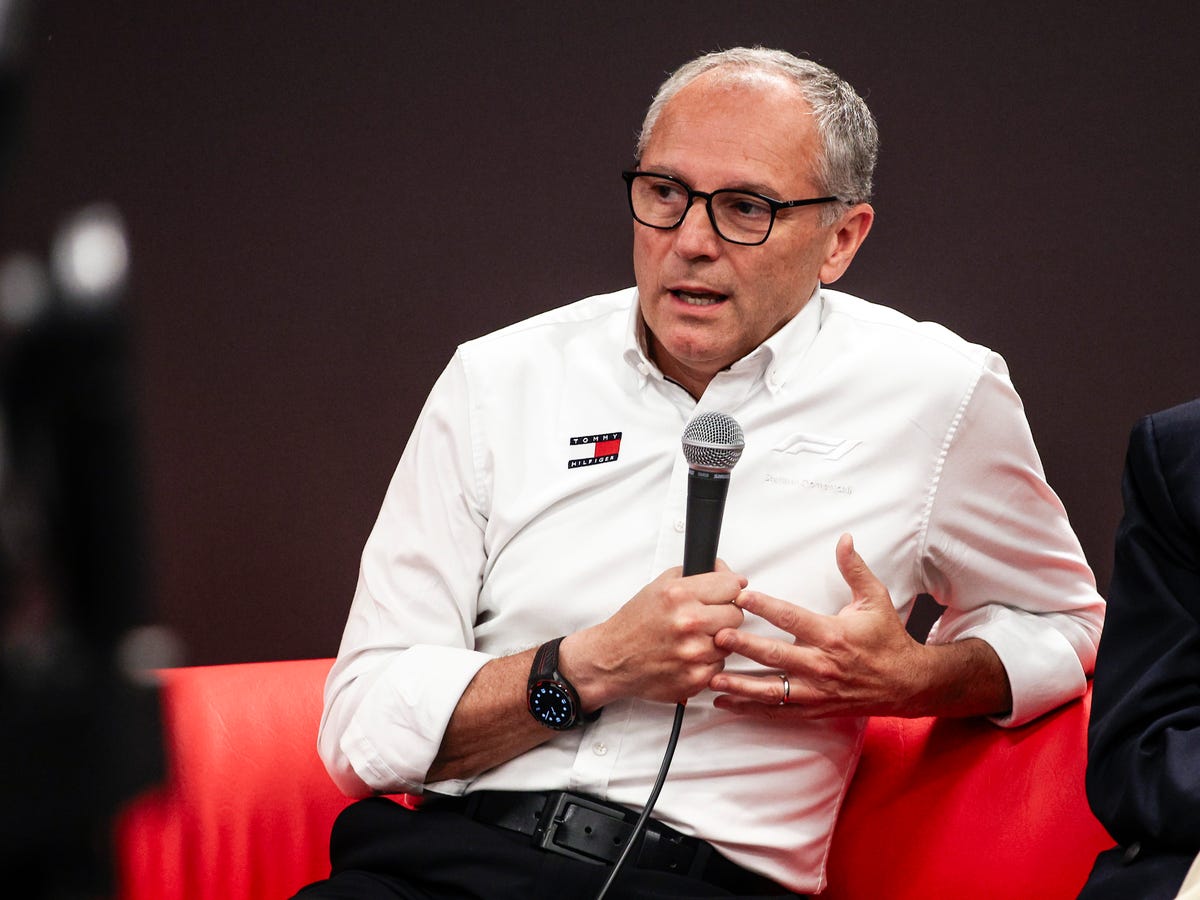
Given that the sport has four races in the Middle East, the conflict with Iran that kicked off earlier this year was always going to prove to be a major headache for the Formula 1 organization and its boss, Stefano Domenicali. But it certainly isn’t his first time dealing with issues of global upheaval. Back in 2020, the Italian managed to steer the sport through the COVID-19 crisis; the season ultimately started in July, and eventually ran to 17 races, most organized at the last minute with no or limited fan presence. The Gulf conflict hasn’t been quite as complex to deal with, at least so far, but it’s still presented plenty of problems.
Formula 1 was due to be in Bahrain and Jeddah in April this year, but as hostilities escalated, it became apparent that the situation was untenable, and both races were dropped. The focus then turned to finding ways to put at least one of them back on the calendar later in the year; luckily, there was a convenient spare weekend available on October 2–4, between the Baku and Singapore races. That plan was worked on for a while, and there were times when it looked like the situation in the Gulf would calm down, only for things to ramp up once again.
That led to a search for an alternative venue to fill that October gap, one that would have to be outside Europe — a flyaway event that would work in terms of the freight route from Baku to Singapore.The problem was finding a promoter capable of hosting a race on short notice, and on a basis that worked commercially given the short lead time to sell tickets, etc. Turkey was an option, especially as it’s due to return to the calendar in 2027, but in the end F1 came up with a surprise plan: run the Bahrain GP at Malaysia’s Sepang Circuit, a popular venue used between 1999 and 2017 before it was dropped for the inevitable financial reasons. The new arrangement means Bahrain pays the bills and continues to generate PR value, while Malaysia puts itself back on the international sporting map at minimal cost and risk.
“We wanted to maximize the number of races that are part of this calendar,” Domenicali explained in a chat with F1 media on Wednesday. “We wanted to be in Bahrain, and we always said that that we have cut-off dates on which we need to take decisions, because for the recovery of one of the Grands Prix in Bahrain, we should have respected the deadline of the end of this month. Together, we have found a new way of hosting the Bahrain Grand Prix Malaysia. So it’s a sign of cooperation. It’s a sign of thinking wider than what other people believe. As I said, we want to make sure that the championship is with as many events as possible.”
NurPhoto//Getty Images
There are good reasons for maximizing the number of events. Roughly a third of F1’s income comes from race hosting fees, and the four Middle East events make a huge contribution, so keeping them on board is crucial. And the championship has to have a minimum number of events to fully trigger TV broadcast and sponsorship contracts that provide the remaining two-third of F1’s income. In COVID times that number was generally accepted as being 16, and as noted, in the end we had 17 races in 2020. That experience led to numbers in the 20–22 range for new contracts; hence, the urgency to run as many races as possible this year.
With Bahrain/Malaysia sorted, the focus now turns to the end of the season. Formula 1 is supposed to go from Las Vegas on November 21 to Qatar on November 29, then to Abu Dhabi on December 6. Clearly, if the current political situation doesn’t change, the final two races of the season will have to be dropped. (The FIA WEC series has already abandoned its events in Qatar and Bahrain, will instead go to Barcelona and Monza.)
“With regard to the end of the season, we are in touch with all the other championships,” said Domenicali. “I know that, for example, WEC has announced that they will not go at the end of the year in the Middle East and will stay in Europe. The way that we are structured is that we will take the maximum time to see how the situation will develop, and we will take the decision at the right time. That moment will be not before the middle of September. For us today, the races in Qatar and Abu Dhabi are confirmed.”
Domenicali accepts that things might change. If that happens, there will be a season finale in Europe, with Imola the favorite to take over the December 6 date, although he won’t confirm it. “Of course, if the situation will not be cleared the way that we believe it should be before the middle of September, we will take the decision,” he said. “And on that respect, I just want to confirm to you that if this will not be possible, that the end of the season will be in Europe, because we cannot go in other places, so the end eventually will be in Europe. There are some possibilities on the table, but I don’t think it’s right to make some promises or anticipate several things. But that’s the situation of today.”
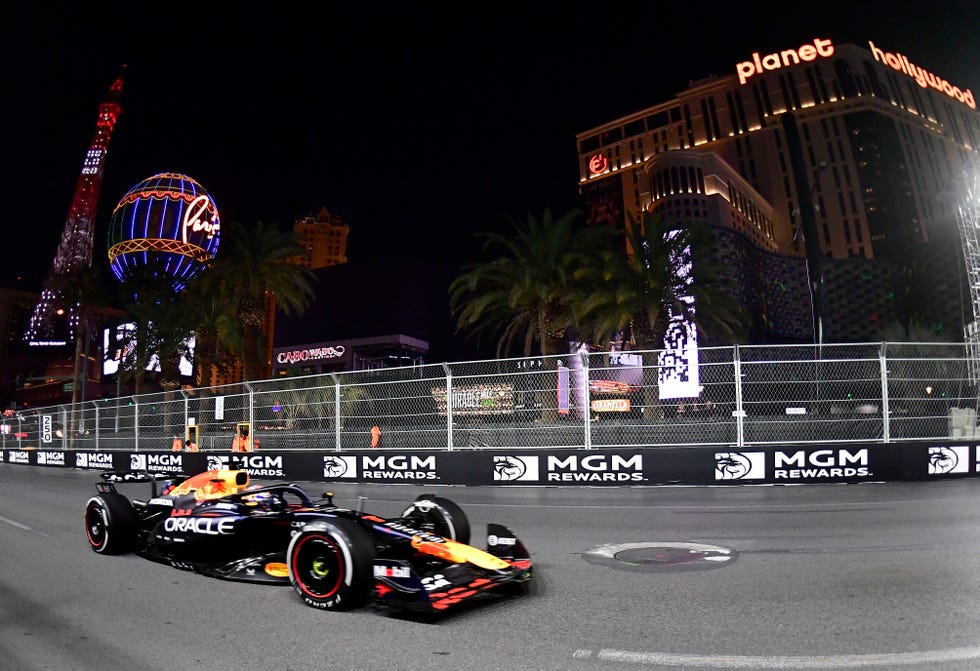
In terms of logistics, it might have seemed that staying in the United States would have been viable. But while a second race in Vegas was briefly considered, it was not a realistic option. “I can guarantee to you that we will not do any other race in the US,” said Domenicali. “There was a possibility there being two races in Las Vegas, but we don’t want to ruin a jewel that is growing by undervaluing what we are doing there. And of course, we don’t have to forget that in that period of the year, we are fighting in the U.S. against [the] NFL. That is a major sport that is … I don’t want to say attractive, but a lot of fans are watching that, so we need to avoid any kind of situation that will put us in front of something that is still very big in the US.”
MediaNews Group/Inland Valley Daily Bulletin via Getty Images//Getty Images
A race in Europe means that the (mostly British-based) teams head back to their factories after Vegas for a quick turnaround. The December date also means that we face the lottery of potentially freezing cold weather — and there’s an obvious risk that, if it is really bad, F1 might not get a season finale after all, which would be an unsatisfactory way to crown a champion if one driver hasn’t already run away with the title in the points.
Having grown up close to Imola, Domenicali knows better than most how the finale might turn out. “It’s definitely something that no one knows … where the temperature will go or [what the] weather [will be] like,” he said. “I think that actually, we see in this situation … how the evolution of the climate change is happening. There’s no certainty, on everything about that. The only possibility we have is to finish in Europe within the same framework of the time, hoping that there will be no snow, as we can hope in other places. If it’s happening, we will try to react on that. Pirelli will not be ready to have the winter snow [tires] for that! But maybe they need to work on them soon. But seriously, I think that the weather should allow us to race in Europe, even at the end of December.”
While this year’s finale is the immediate problem, Domenicali is also juggling the still-unreleased 2027 calendar. Last year, the 2026 schedule was published on June 10, and we are already seven weeks behind that. And it seems we will have a bit longer to wait. “So far, the calendar that will be presented, let’s say in autumn, will be as a sort of normal plan,” he said. “But of course, in case the situation in the Middle East will be not solved, we have options — different plans. The trigger for that, of course, is at the end of the year; so we have still a lot of time, if I may say, to adjust. But just to assure you, we have different plans, with different options ready in place that will accommodate the fact that we will keep, in any case, the target of 24 grands prix also for next year.”