
Prostate cancer is highly treatable when caught early.
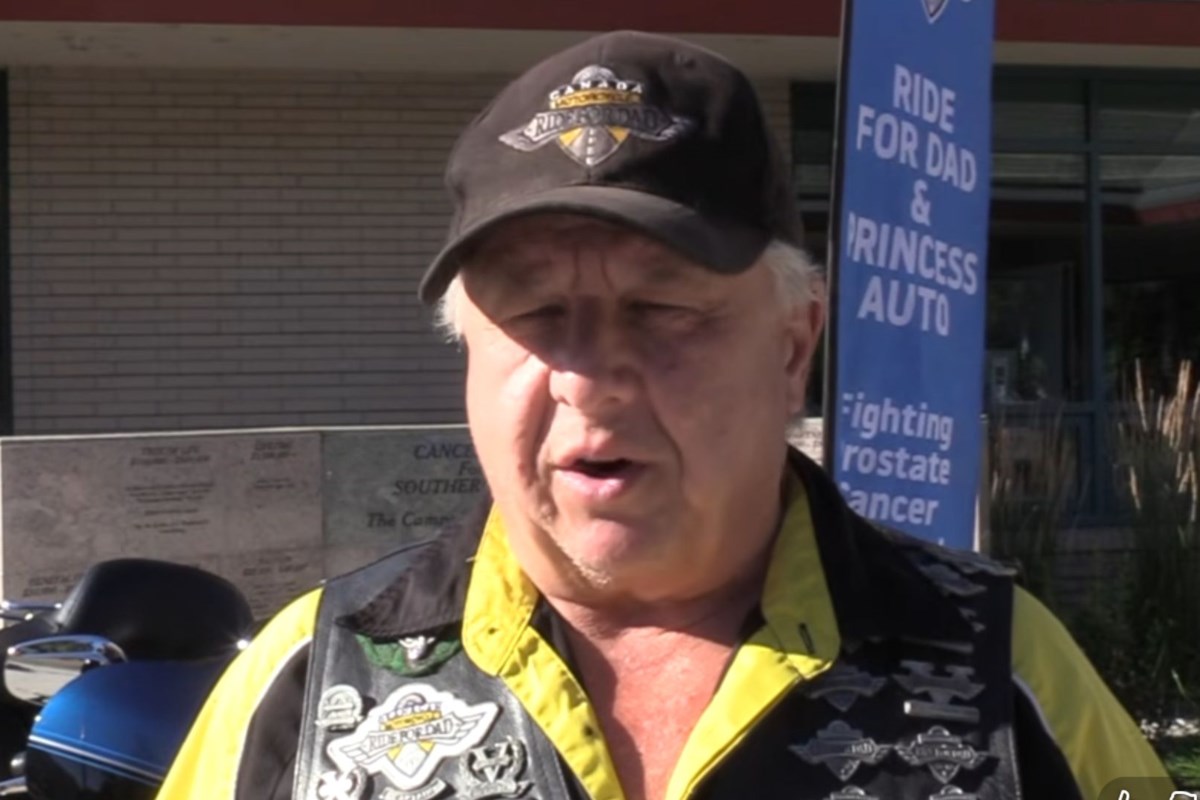
After losing both his father and brother to prostate cancer, Bob Charron is determined to make sure other families don’t experience the same loss.
Now a prostate cancer survivor himself, Charron stood outside the BC Cancer Centre in Kelowna Wednesday morning to present a $110,000 donation for prostate cancer research, hoping the investment will save lives through better treatment — and by encouraging more men to get screened.
“I have a personal investment in it,” said Charron, chair of the Okanagan B.C. chapter of Motorcycle Ride for Dad. “I’m a survivor myself. I lost my father and brother to prostate cancer because they didn’t believe in seeing doctors. And I think that it’s important that although we have these terrific treatments now available for early stages of the cancer, we’ve got to get the word out.”
The donation, raised through last year’s Motorcycle Ride for Dad campaign, includes $60,000 from the B.C. chapter and $50,000 from the Yukon chapter. The funds will support research led by Dr. Juanita Crook, a radiation oncologist at BC Cancer – Kelowna who specializes in brachytherapy, a targeted form of radiation treatment for prostate cancer.
Charron was diagnosed with prostate cancer 11 years ago and received treatment at the Kelowna cancer centre. He says he has now been cancer-free for more than six years.
He believes one of the biggest challenges is convincing men to get tested before symptoms appear.
“It is very important that we overcome that,” Charron said. “When you compare it to women, about 85 per cent get mammograms and cervical cancer screening, but we’re only at 22 per cent in the men. We need to increase that substantially to make a big impact because you’re investing in your future. It’s not just about today — you’re changing your whole outlook in life.”
Charron said prostate cancer is the most commonly diagnosed cancer among Canadian men, making early detection critical.
“We need to get more and more men checked, starting at age 40, with a simple blood test called a PSA,” he said.
For Dr. Crook, the donation will help answer one of the biggest questions in prostate cancer treatment: identifying which patients are at greatest risk of the disease returning.
“When you treat cancer, it’s not just each patient as an individual isolated incident,” Crook said. “You’re looking for trends, you’re looking for questions, you’re looking for answers, and you can only do that through research and you can only do the research if you have the money.”
The funding will support genetic profiling research that aims to identify aggressive prostate cancers earlier, allowing doctors to intensify treatment before the disease spreads.
Crook also stressed the importance of routine screening, even for men without a family history of the disease.
“Screening is essential. There’s nothing shameful about getting a PSA test or detecting a cancer early,” she said. “Even if you don’t have a family history, most of these are random events and they’re not inherited.”
She says prostate cancer is highly treatable when caught early.