

Listen to this article
Estimated 4 minutes
The audio version of this article is generated by AI-based technology. Mispronunciations can occur. We are working with our partners to continually review and improve the results.
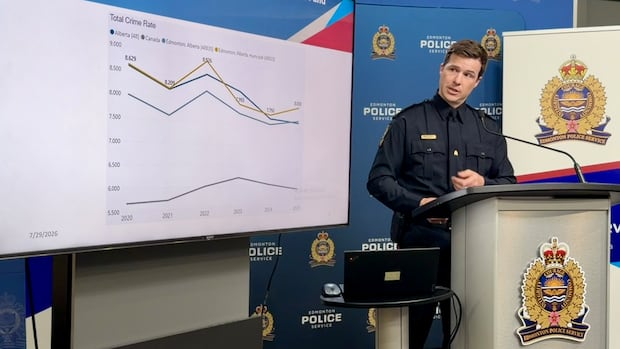
The overall crime severity in Edmonton has hit a five-year low, but police are keeping busy with a 10 per cent jump in property crime. Violent offences are down, although police say they are seeing more severe violent incidents.
However police say a crime-reduction strategy launched earlier this year is showing promising results. As of June, Edmonton’s crime and violent crime rates have both declined.
“We’re only halfway through the year, but these initial results are encouraging and reflective of a more proactive approach,” said Inspector Bryce Gibbon with the Edmonton Police Service’ (EPS) analytics branch at a press conference on Wednesday.
“The feedback to us is telling us that we have police officers at the right locations doing the right things. When police officers are there ahead of a crime having to occur and subsequently us relying on a reported call or reported complaint of crime.”
The project is called Safer Edmonton and uses crime mapping and data analysis to identify neighbourhoods requiring additional enforcement and visibility.
Data from Statistics Canada and the Canadian Centre for Justice and Community Safety Statistics (CCJCSS) shows that as of June, Edmonton’s overall crime rate and violent crime rates have both declined. Violent crime has dropped by six per cent and member-generated calls for service are up 36 per cent.
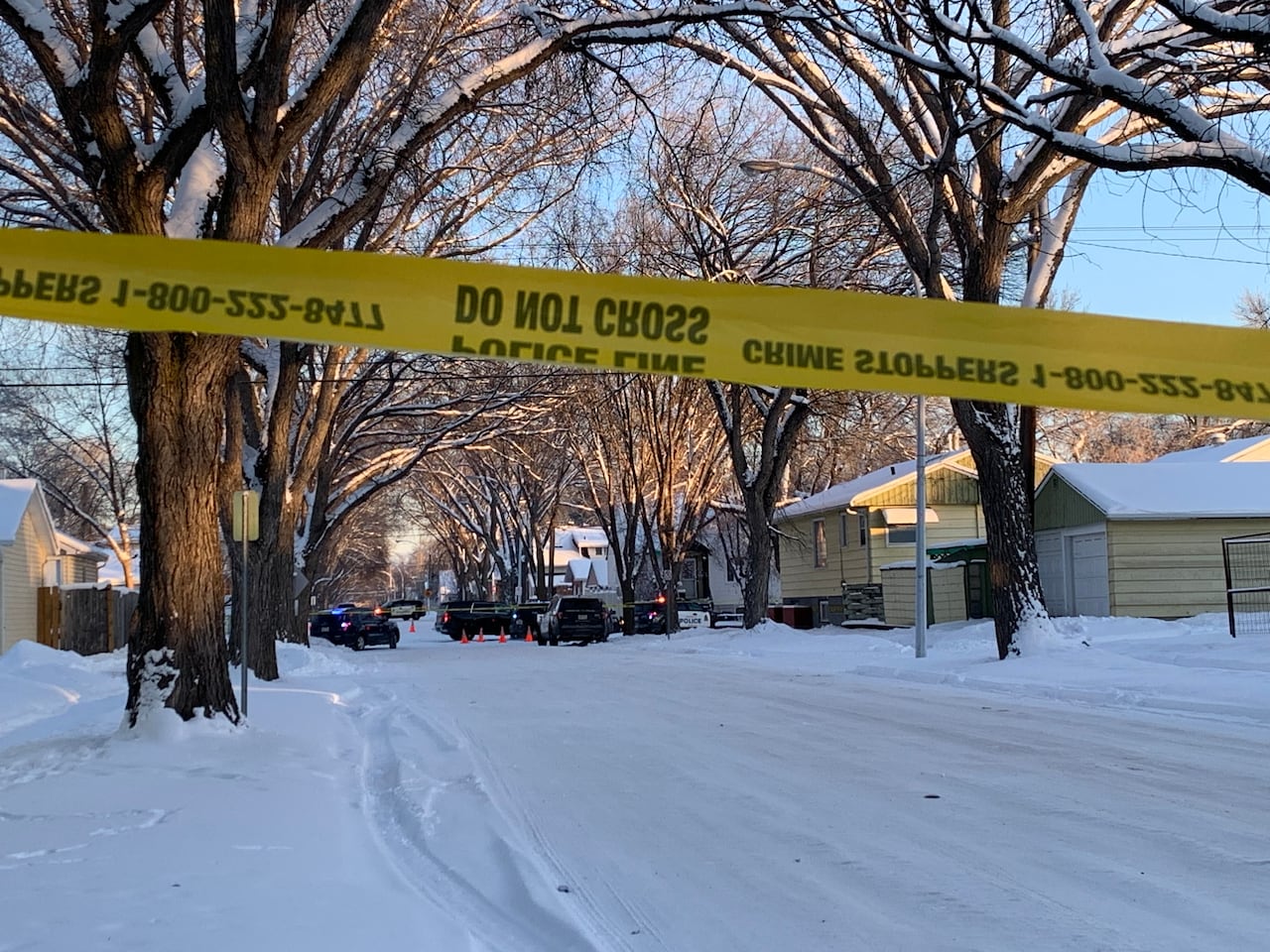 Edmonton police at the scene of an officer-involved shooting in this 2025 file photo. (Jamie McCannel/CBC)
EPS data shows a 6.5 per cent decrease in the total crime severity index (CSI), the lowest level since 2021. The index measures both the volume and seriousness of police-reported crime by assigning greater weight to more serious offences.
But the city’s violent crime severity index increased by 3.2 per cent, meaning the violent offences that did occur were, on average, more serious. Edmonton’s non-violent CSI, however, decreased by 11 per cent.
Edmonton also recorded a 3.2 per cent increase in the total number of police-reported crimes per 100,000 people in 2025.
WATCH | Crime is down, but challenges remain: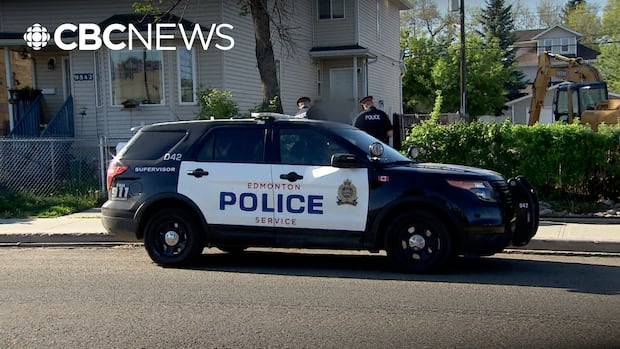
Edmonton’s crime rate went up in 2025, but the severity of crime decreased
The crime severity index in Edmonton last year was the lowest it has been in 5 years, according to annual police-reported crime data published by Statistics Canada. But as CBC’s Nicole Healey explains, the overall crime rate went up, with more property and violent crime.
“We’ve seen an increase in robberies, we’ve seen an increase in assaults against peace officers, as well as uttering threats and child luring files,” said Gibbon.
Police say the property crime in Edmonton showed a significant increase of 10.1 per cent, driven by an increase of shoplifting, mischief, and theft from auto.
The data also shows city-wide disorder calls for service increased by 3.4 per cent. The incidents for these calls involve intoxicated people, trespassing, graffiti, mischief and bylaw complaints.
Overall calls for service rose 4.3 per cent while officer-generated calls increased nearly 20 per cent.
Public perceptions of safety
In an interview with CBC, Edmonton Coun. Aaron Paquette said the latest crime statistics point to broader social issues that cities cannot address on their own without provincial support.
“On a municipal level, we simply don’t have the resources or the legislative authority to deal with those things,” Paquette said, calling for more provincial support.
Paquette said most Edmontonians report feeling safe, according to surveys, but said the concerns of those who don’t should not be dismissed.
“Those who don’t [report] count and…matter,” he said, adding that even though incidents are a small percentage of experiences, “we don’t want anyone to have those experiences whatsoever.”
Doug King, a professor of justice studies at Mount Royal University, said the drop in Alberta’s CSI reflects a broader national trend. However, the numbers need to be viewed in context.
Some of the offences that have the biggest impact on the index—including homicides, robberies, extortions, physical assaults and sexual assaults—have declined in recent years, he said. King also noted the index had been rising for about a decade before the recent decline, but said it remained below historical levels.
“Even though it’s been increasing for 10 years, it was still much lower than it was in 2005,” he said. “The numbers have dropped pretty much across Canada in the last two years.”
He cautioned that crime statistics do not always match how safe people feel in their communities, saying serious crimes that receive attention in the media and on social platforms can shape public perceptions.
“The things that get on to the media are the real serious crimes,” he said. “And that makes people feel a little bit more tense.”