
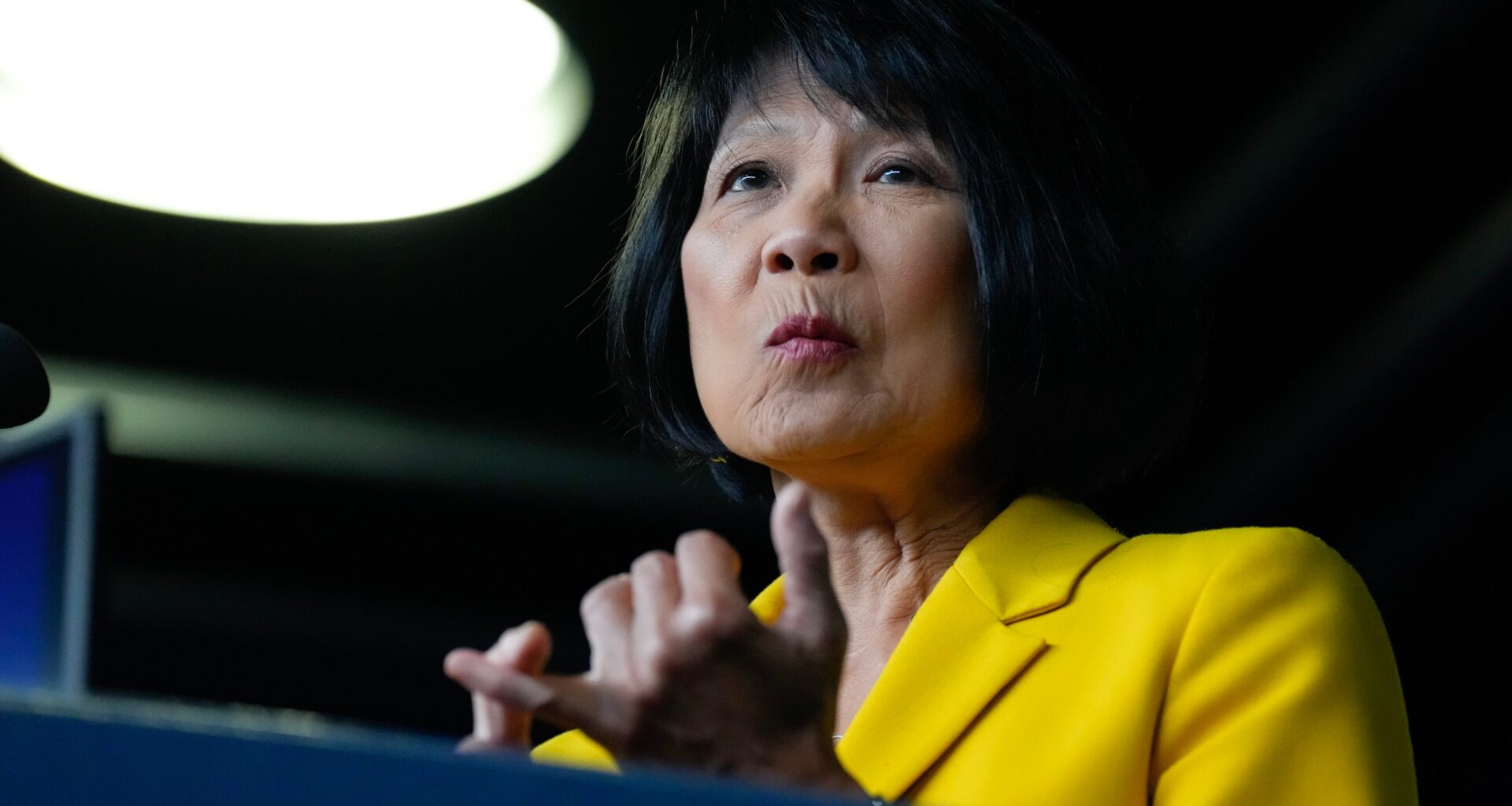
The city of Toronto wants its waterfront land back from Ontario Premier Doug Ford.
Last week, the federal government said it will not support Ford’s plan to take over and expand Toronto’s downtown island airport — a victory for those opposing the expansion, including Toronto Mayor Olivia Chow, who had called it a “power grab” by Ford.
But at a council meeting on Wednesday, Chow explained that the Billy Bishop file isn’t wrapped for the city quite yet.
In May, the Ford government passed Bill 110, the Building Billy Bishop Airport Act, which empowers the province to take over the City of Toronto’s share in the governing agreement for the airport — along with the lands currently owned by the city — “in exchange for fair compensation.” The bill also empowers the province to take over parts of the Toronto Islands and the harbourfront Little Norway Park as part of the airport expansion.
Chow wants that legislation gone and all of its provisions undone.
The federal government is a key player in Ontario Premier Doug Ford’s plan to expand Billy Bishop Airport, which the Toronto Port Authority said will cost up to $5 billion. The Ford government passed a law in early June, which empowers the province to take over the City of Toronto’s share in the governing agreement for the airport, along with lands currently owned by the city. The Toronto Port Authority, an arm’s-length federal agency, presently operates the airport. The City of Toronto owns 20 per cent of the land, while the Toronto Port Authority and Transport Canada hold the remainder. Ford has said will not take over the harbourfront Little Norway Park or Toronto Island as part of the airport expansion, but the bill gives his government that power.
Part of Ford’s takeover plan also includes allowing jets at the airport. Current operations only allow smaller planes, which has raised environmental, noise and climate concerns. The Toronto Star reported that the flight path could interfere with 94,000 units of new housing.
At the meeting, council voted in favour of a motion demanding that the province repeal Bill 110 and, specifically, that it return “the City of Toronto’s land at Toronto Islands and Little Norway Park” and reinstate its position in the tripartite agreement.
Chow noted that the land included in the bill “belongs to the people of Toronto” and said it needs to be returned swiftly.
When questioned by council, city staff said the land included in Bill 110 hasn’t been transferred yet, but that the bill means the city “cannot deal with the land the way it normally would, as an owner.” However, staff also said it’s difficult to read the full implications of the legislation, since the Ford government never presented a formal plan for Billy Bishop Airport nor what it planned to do with the land named in Bill 110.
Following the Liberal government’s announcement, Ontario Transport Minister Prabmeet Sarkaria said his government was disappointed and would not give up on the plan. In response, the Ford government has said it is reconsidering its support for the Alto high-speed rail project, which was put forth by the former federal government under Justin Trudeau.
Sarkaria said the Carney government made its decision not to support the Billy Bishop takeover based on concerns raised by “fringe groups,” which Chow said isn’t true. Rather, opponents are “former mayors, they are the chief planners. People with lots and lots of experience, and their passion and determination made it possible.”
Once Ford announced his intention to take over and expand the island airport, groups and opposition governments mobilized. Existing organizations such as Environmental Defence and No Jets TO launched campaigns and lawn signs popped up across the city urging people to fight the expansion, while flyers from Save our Waterfront encouraged people to participate in the federal survey. The Haudenosaunee Development Institute, representing the Haudenosaunee Confederacy Chiefs Council, pushed to be consulted.
“I think the feeling I had when I saw the news of the announcement from the federal government was a feeling of relief,” said Coun. Amber Morley during a council meeting.
“And my sentiment was: This is what democracy looks like when we have a government that is responsive to the overwhelming collective voices of Torontonians … but we know that this fight and this conversation is one that will continue.”