
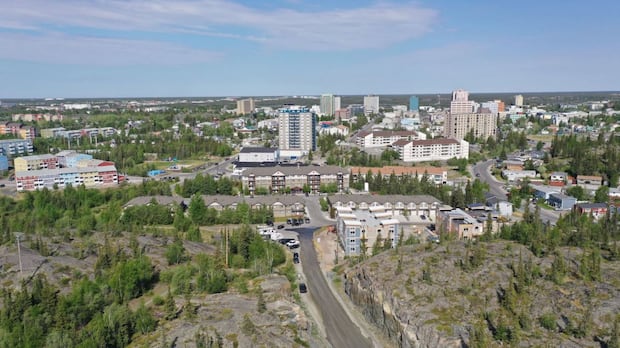
Housing demand has slowed down across the three territories in 2025, but it could have more to do with people leaving than with supply catching up to demand, according to the Canada Mortgage and Housing Corporation (CMHC).
The CMHC’s latest northern housing report, released Wednesday, looks at housing conditions in the three major centres of each territory — Whitehorse, Yellowknife and Iqaluit — including trends in demand, supply, affordability and population.
It found that overall, slower population growth likely tempered housing demand, but CMHC deputy chief economist Aled ab Iorwerth said focusing on population growth isn’t what will solve housing shortages in the North.
“It’s not the complete answer,” he said. “If people are leaving, it may mean that there are less economic opportunities.”
The report notes that slower population growth in Whitehorse was driven by tightened federal immigration policies, coupled with fewer job opportunities driving people out of the territory. Iqaluit also lost workers to other parts of Canada due to severe affordability and housing shortages.
While this may appear to ease housing pressures on the surface, he said this speaks to economic uncertainty and could be forcing people into unfavourable housing situations.
Low investments in construction
The report found that investments in new residential construction in the territories last year remain below 2021 levels.
Ab Iorwerth puts that down to high construction costs and supply chain issues.
In comparison to a southern city like Calgary, the report states that construction costs in Yellowknife and Whitehorse have consistently remained up to 1.5 times higher since 2021.
But there’s a lack of data on construction costs for Iqaluit.
Laurel McCorriston, the CEO of the Uquutaq Society which operates shelters in Nunavut, takes issue with that, especially with the number of federal investments slated for the territory.
“You’d think investing there as they plan to do they would have that information available,” she said.
As for addressing supply chain issues, McCorriston believes there isn’t much Nunavummiut can do to control what happens during the summer construction window. However, she believes Nunavut is already looking at other solutions, like producing modular homes, within the territory.
 Aled ab Iorwerth, CMHC’s deputy chief economist, said construction costs and supply chain issues continue to stall new investments in residential housing. (Submitted by CMHC)
Beyond construction costs, the report states there has been limited land that can be developed across the three territorial capitals.
The report does note that recent changes to upzoning initiatives for higher density developments in Whitehorse and Yellowknife have helped promote construction on under-developed lands.
Mining shocks to the economy
Changes to unemployment rates differed across the territories.
The Northwest Territories was the only province or territory that faced a shrinking economy in 2025 — a two per cent decline on the year prior according to Statistics Canada figures. The CMHC report largely attributes that drop to the collapse of diamond prices and the impending closure of several mines in the territory.
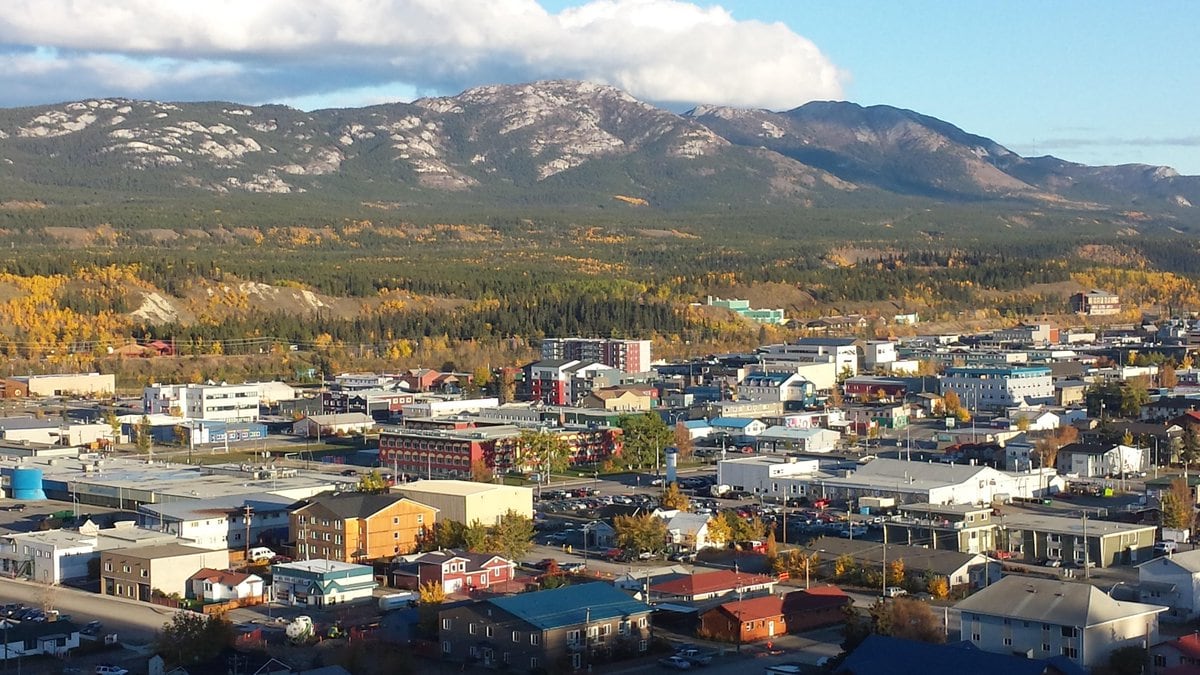 Downtown Whitehorse. The CMHC said average house prices reached a new record in 2025. (Karen Vallevand/CBC)
Despite Nunavut’s real GDP remaining high after multiple years of growth, the unemployment rate increased. In June 2026, it was at 11.6 per cent.
The CMHC report states that an increase in mining jobs in Nunavut were offset by hiring stalling in the public-sector.
Where are people going?
These changes to the economy are happening as home ownership affordability across the three territories continued to deteriorate more rapidly than the national average, according to the report.
While home sales rose in Whitehorse by 21 per cent and 7.4 per cent in Yellowknife, which the report said in part is due to lower borrowing costs since June 2024, home prices continued to rise in contrast to the rest of Canada.
In Whitehorse, the average home price rose 7.4 per cent to a new record in 2025.
“That’s the unfortunate part. People may be giving up on home ownership, but people still need to be housed,” ab Iorwerth said.
Of note, roughly a third of the new residential construction investments in the Yukon and N.W.T. was for social housing units, whereas that figure was close to 93 per cent in Nunavut.
In spite of that, McCorriston believes the report didn’t focus enough on the state of housing outside of the private market in Nunavut.
WATCH | Canada and Nunavut leaders commit to take action on territory’s housing crisis: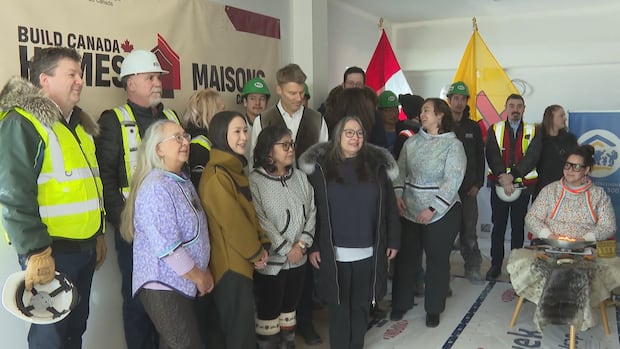
Canada and Nunavut leaders commit to take action on territory’s housing crisis
Federal and territorial leaders met in Iqaluit Monday to highlight a recent partnership aimed at tackling the territory’s housing shortage. Carl Cardinal has more.
Renters aren’t faring much better.
The report states the vacancy rate declined in Yellowknife to 1.3 per cent, and it remained extremely low in Iqaluit at 0.3 per cent, which equates to roughly six vacancies out of nearly 2,000 units.
“That’s where you’re seeing, particularly in Nunavut, a high degree of overcrowding and housing. There’s a lot of overcrowding in social housing,” ab Iorwerth said.
An audit by the Auditor General of Canada conducted in 2024 found more than 60 per cent of Nunavummiut rely on public housing, 45 per cent of which is overcrowded.
For ab Iorwerth, housing affordability remains one of his primary concerns.
“Whether that’s trying to adopt new technologies, or trying to smooth out the supply chain … certainly more options are required on housing supply across the territories.”