
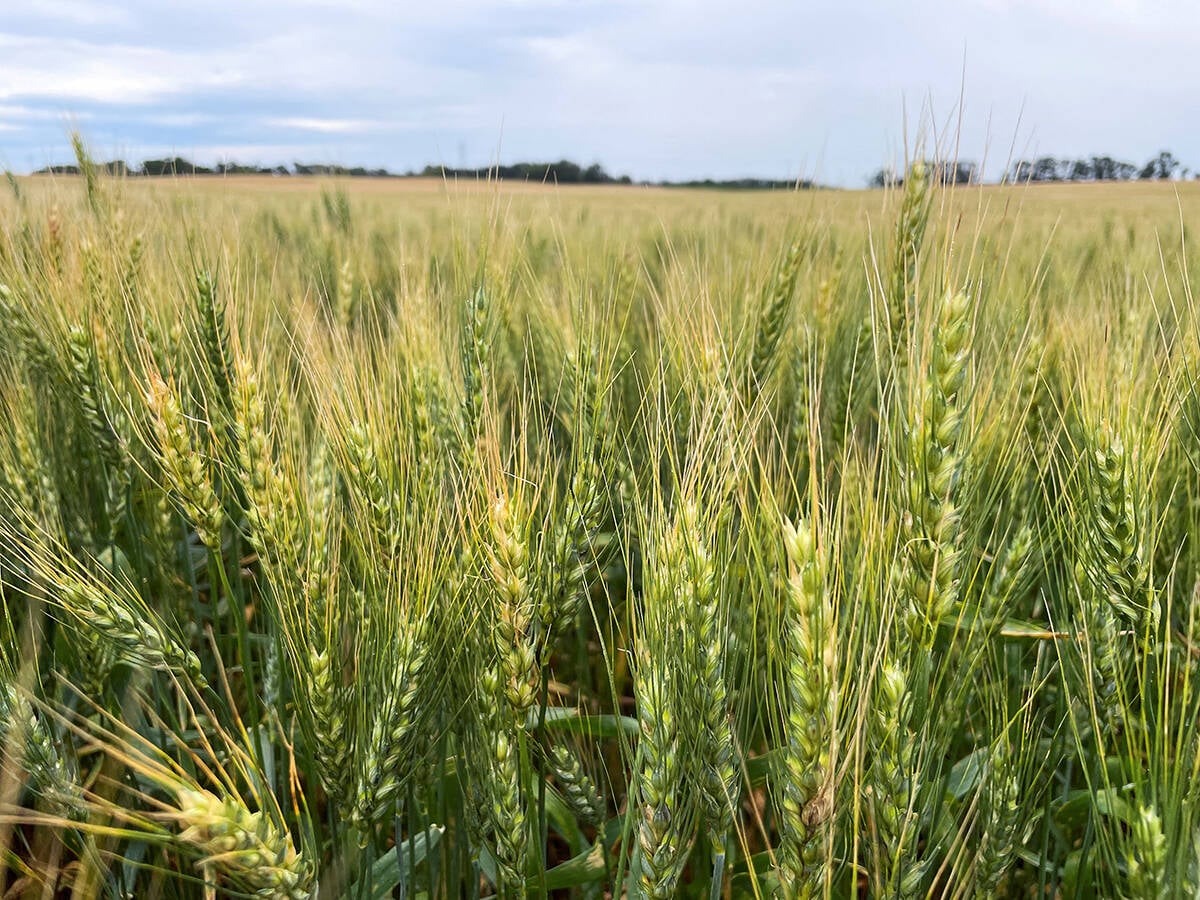
SASKATOON — Spring wheat yield estimates continue to fall in the United States.
The Wheat Quality Council recently completed its hard spring wheat tour and is forecasting an average yield of 48 bushels per acre based on an inspection of 218 fields located mainly in North Dakota.
That is well below the U.S. Department of Agriculture’s July 10 estimate of 58 bu. per acre for the state.
“We still have a good crop, but the top has definitely been taken off,” said Jim Peterson, executive director of the North Dakota Wheat Commission.
“We’ll see where we end up once the combines are parked.”
His guess is they will end up lower than the Wheat Quality Council’s forecast because there has been further heat damage since the tour concluded on July 23 and there was more in the forecast as of July 28.
Peterson was disappointed with the tepid response on the Minneapolis Grain Exchange to the tour’s results. The market responded to the disappointing day one results but has since fallen back.
Read Also

“(The tour) doesn’t seem to get near the market reaction than on the flipside in those years where there’s tremendous yield potential,” he said.
The U.S. is one of Canada’s top competitors in the spring wheat market.
Peterson thinks there should be more of a bump in prices considering both the spring wheat and hard red winter wheat crops are going to be shorter than what was anticipated a month ago.
The yield range for the spring wheat crop was relatively narrow this year compared to some years. There was not a lot of sub-30 or over-70 bu. per acre crops on the tour.
However, the tour did not venture into the southwest corner of the state where there are some crops being rolled into hay bales.
That is more a function of an acute hay shortage in Wyoming, South Dakota and Nebraska than it is a wheat production disaster in that corner of North Dakota.
“The hay market is just extremely hot,” he said.
But it will take some acres out of the milling market.
Peterson said early planted wheat looks good. There should be strong yields, good test weights, decent protein levels and little disease damage.
It is the later-seeded stuff that he is worried about in the central and southern portions of the state, where temperatures climbed as high as 41 C in July.
The crop in the northern part of the state received plenty of moisture from storms in late-June and early-July. The heat wasn’t as bad in the north and ample soil moisture provided a nice buffer.
“When you pulled the plants there was a little more moisture on the roots,” he said.
Farmers in the north are cautiously optimistic about their crops, although more disease pressure is evident in that part of the state.
Peterson believes crop quality will be good this year.
“We’re expecting higher protein just with the late season stress,” he said.
Test weights will be a “wild card” with the hot and dry finish. There could be some pockets with light test weights.
North Dakota’s corn and soybean producers would benefit from further rains, but the state’s wheat producers are hoping for dry conditions come harvest.
The USDA estimates 44 per cent of the U.S. spring wheat crop was in fair or poor condition as of July 26, which is slightly better than the 47 per cent in those two categories at the same time last year.
Western Producer markets desk analyst Bruce Burnett pegged Canada’s average spring wheat yield at 52.5 bu. per acre following his annual mid-July crop tour of the Prairies.
Exceed Grain Marketing said Western Canadian wheat conditions remain “broadly favourable” with much of the crop headed and filling, according to the firm’s latest Wheat Market Outlook report written for the Saskatchewan Wheat Development Commission.
“Western Canadian crops remain favourable overall but are uneven, with localized flooding losses, rising disease concerns and warmer, drier grain-fill weather,” stated the firm.
“Higher humidity and anecdotal reports of higher leaf disease pressures have created more uncertainty around eventual grade and quality than during the recent run of predominantly hot and dry seasons.”
Disease damage will not be known until harvest time.
“This uncertainty is contributing to producer hesitation around new crop sales,” said Exceed.
“Production potential may be good, but committing too much high-grade wheat before quality is known can create delivery risk.”