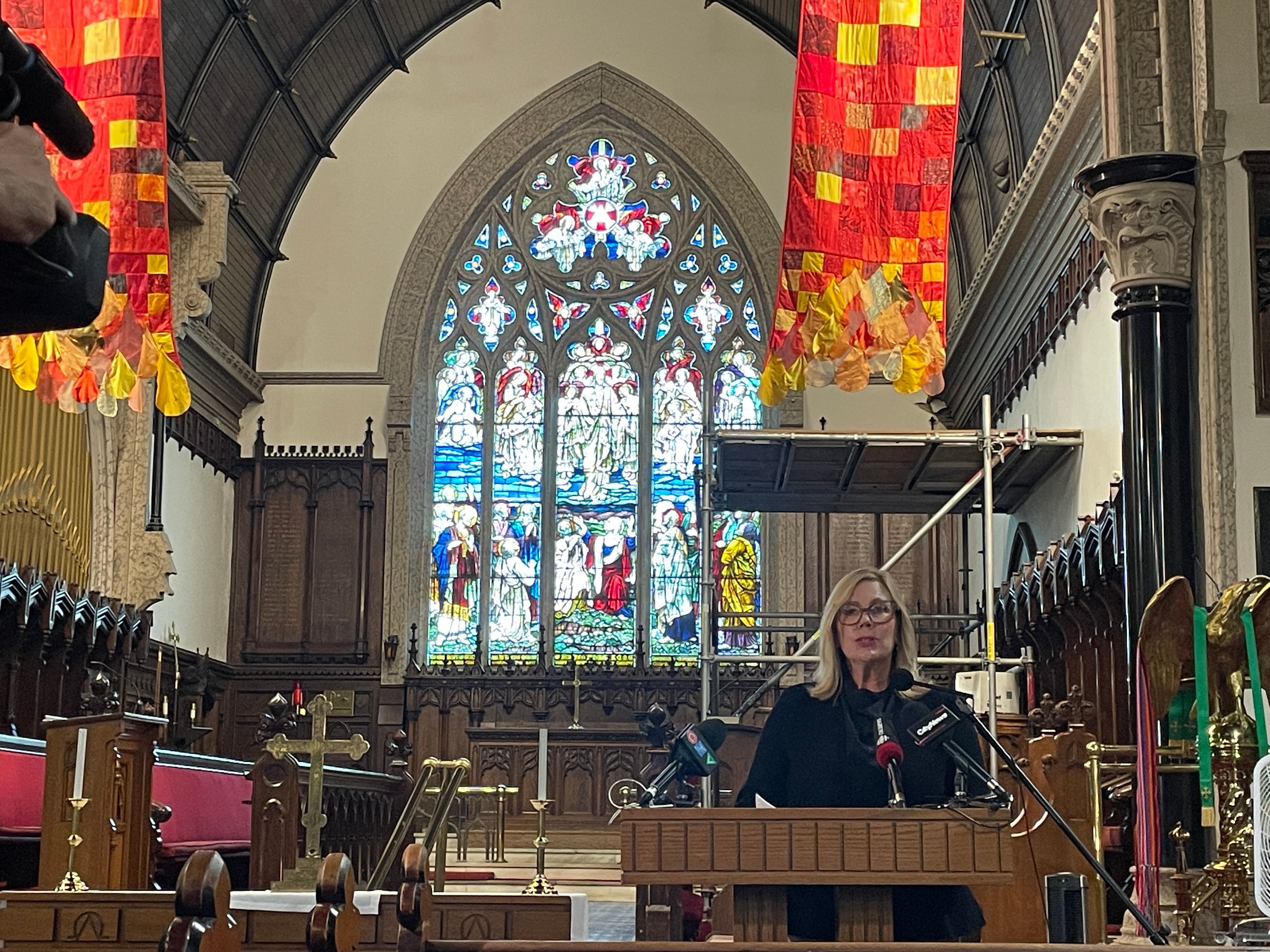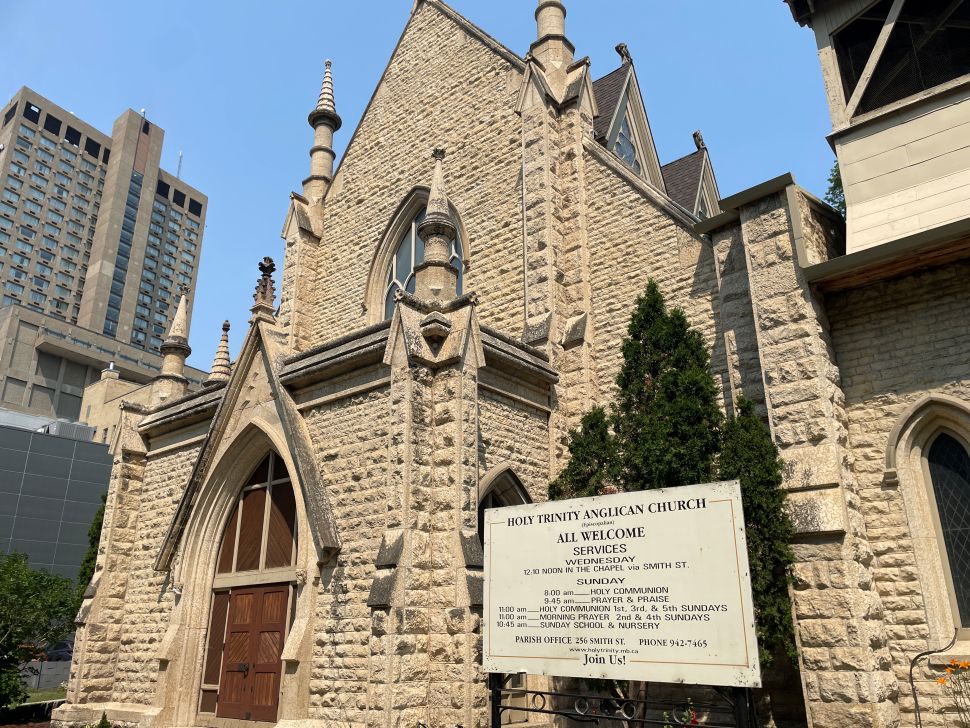
Holy Trinity Anglican Church has launched the next phase of an effort to preserve one of downtown Winnipeg’s most recognizable historic churches while reimagining how it can continue serving the community for generations to come.
Church leaders officially launched Phase 2 of the Heritage Renewal Initiative on Wednesday alongside CentreVenture Development Corporation, government officials and community partners.
The next stage will focus on public consultation and developing adaptive reuse concepts that preserve the more than 140-year-old church as both a place of worship and a community gathering space.
Related Stories:
Over the coming months, we will engage our congregation, neighbours, Indigenous communities, heritage organizations, downtown businesses, governments and many others in a conversation about the future of Holy Trinity,” said Reverend Canon Donna Joy. “We want to listen, to learn and work together to imagine how this remarkable place can continue to serve Winnipeg in new and meaningful ways.”
Building on a strong foundation
The initiative comes as churches across North America grapple with declining attendance and rising maintenance costs for aging buildings. Project leaders say more than 100,000 churches are expected to close over the next decade, making proactive planning essential for Holy Trinity’s future.
Phase 2 follows a comprehensive building assessment completed during the first phase of the initiative. The study concluded the church remains generally well constructed, but identified foundation stabilization as the most urgent priority before additional restoration work can proceed.
Engineers found movement between the original 1884 foundation and later additions has led to structural shifting, cracks and uneven floors over time.
Building project manager Stephen Boris said those structural issues must be addressed before broader conservation work or adaptive reuse plans can move forward.
Once foundation work is complete, restoration plans include masonry repairs, waterproofing, window restoration, accessibility improvements, and upgrades to mechanical, electrical and life safety systems.
Serving the community for generations
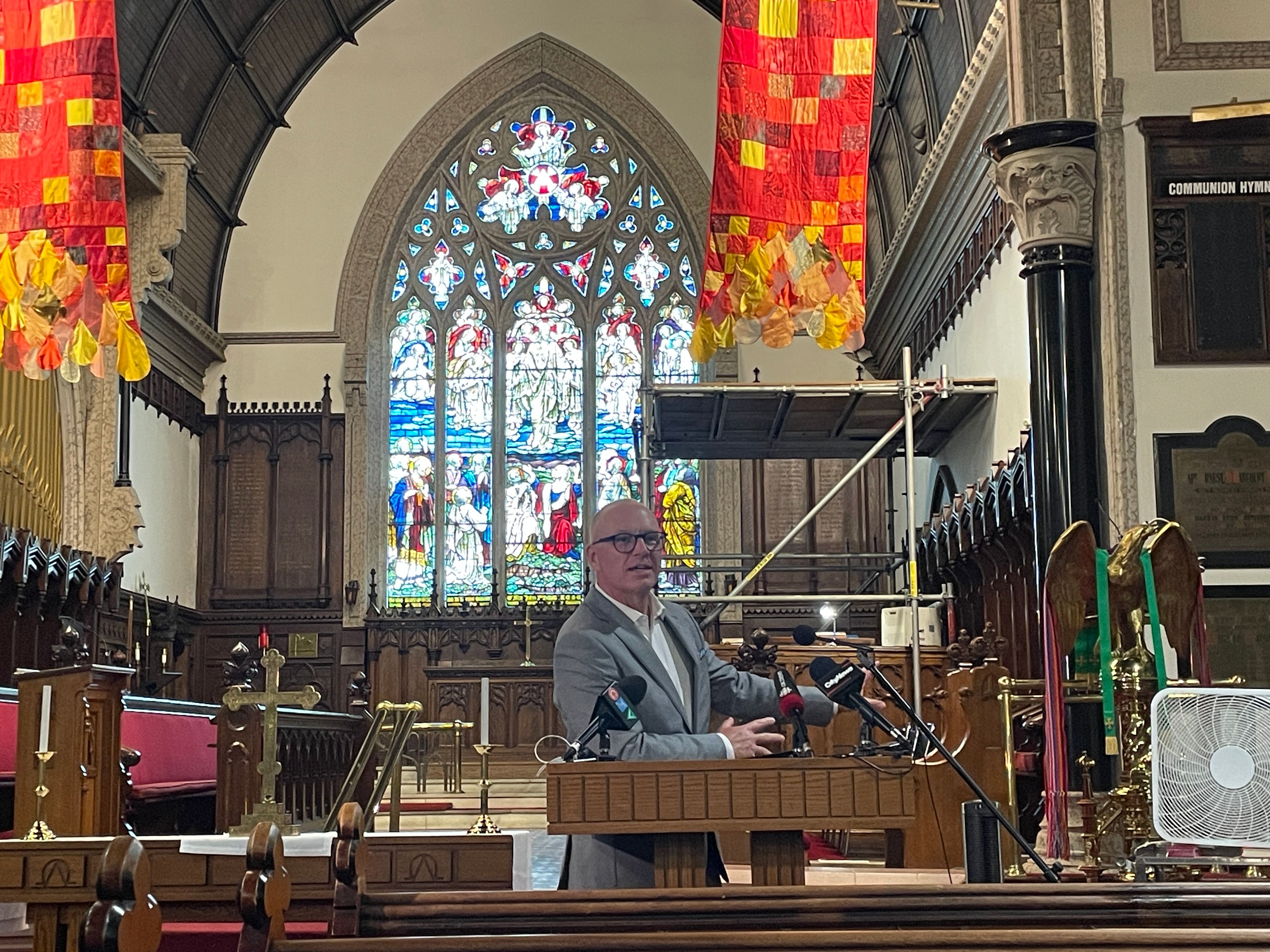
Mayor Scott Gillingham said the initiative is about more than preserving a heritage landmark.
“This process is not only about preserving an important heritage building, but it’s about considering how the church can continue to work with and serve our broader community,” Gillingham said.
He noted Winnipeg’s growing downtown population creates new opportunities for historic institutions such as Holy Trinity to remain important gathering places.
CentreVenture chief executive officer Rochelle Squires said heritage buildings can continue contributing to vibrant downtown neighbourhoods when they are thoughtfully renewed.
“Heritage buildings have an important role to play in that future when they are thoughtfully renewed and adapted to meet today’s needs,” Squires said. “This planning process creates an opportunity to explore how Holy Trinity can continue to be a vibrant cultural, social and civic space in downtown Winnipeg.”
The Heritage Renewal Initiative is supported by CentreVenture, the Anglican Foundation of Canada, the Winnipeg Foundation, the Diocese of Rupert’s Land and other partners. Organizers say public consultation over the coming months will help shape how the nationally recognized heritage building continues serving both its congregation and the wider community.