
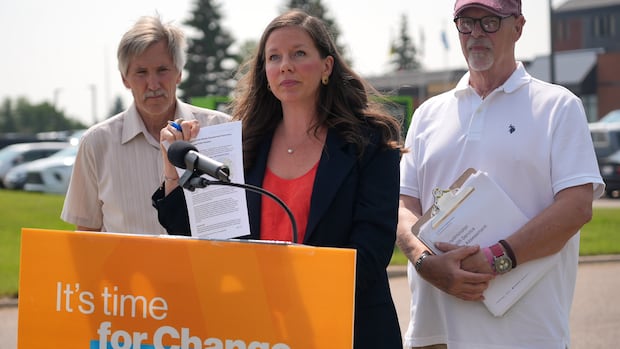
The Saskatchewan NDP have released a leaked copy of a report commissioned by the governments of Saskatchewan and Alberta that says health care in Lloydminster faces “critical challenges.”
The report was withheld from the public by the provinces, but a four-page summary released last month said “overall, service levels are being met.” Saskatchewan NDP MLA and Shadow Minister for Health Meara Conway said the full report shows the province’s public summary “omitted many of the report’s most troubling conclusions.”
“There could not be more daylight between this four-page summary and the 261-page needs report,” said Conway.
“[The full report] documents a healthcare system struggling to keep up, and that patients are paying the price. Perhaps most troubling, many of these same issues were identified more than a decade ago.”
In early July, the Saskatchewan Ministry of Health said the report contains confidential information that could damage future government negotiations. Conway said she did not identify any confidential information in the report.
CBC News has obtained and reviewed a copy of the leaked report. It states the “Lloydminster health system faces critical challenges related to capacity and infrastructure across several key areas.”
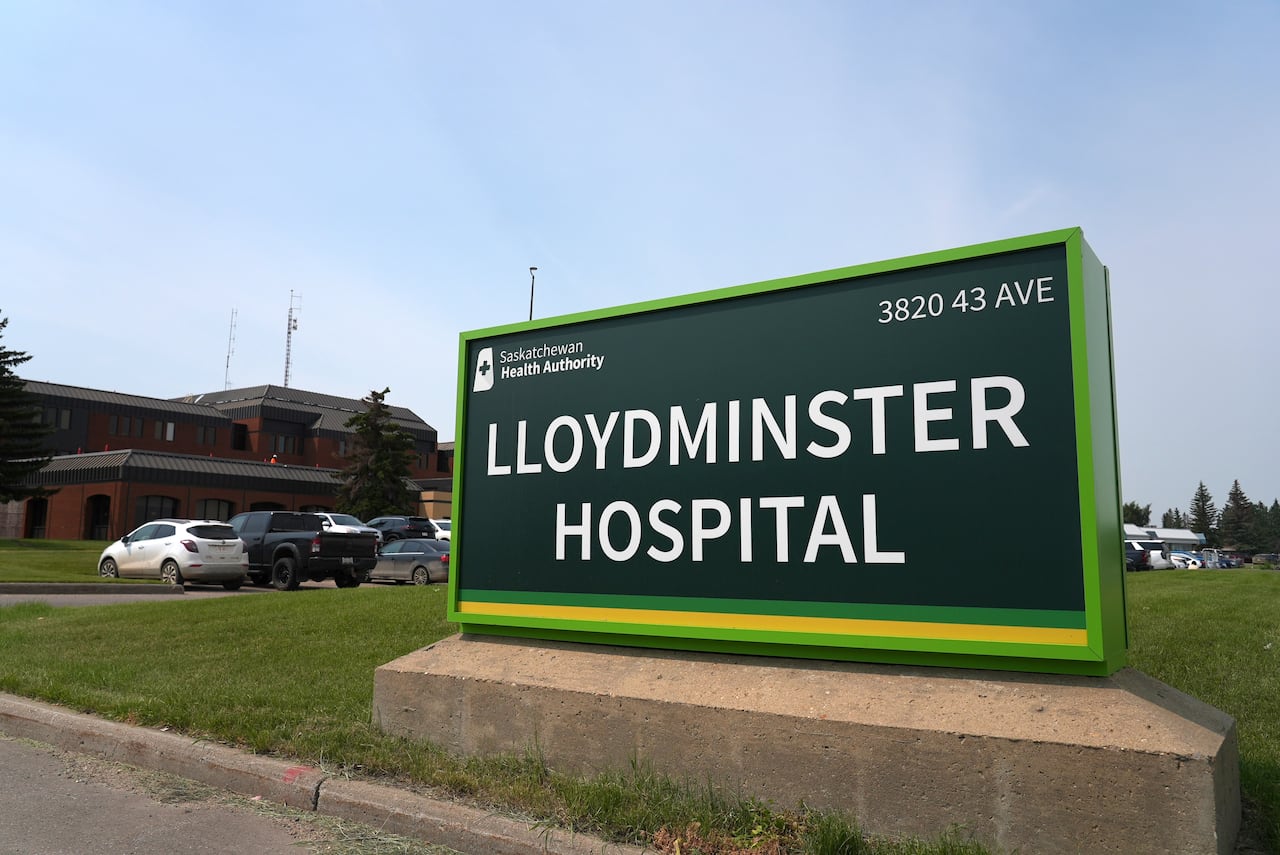 Lloydminster Hospital in Lloydminster, Sask. (Lexi Freehill/CBC)
Findings include Lloydminster’s hospital is “no longer adequate for the population it serves,” primary care services are “critically understaffed,” and mental health and substance use supports in the community are “notably lacking.”
Lloydminster’s emergency department — the first point of access for many patients — was found to have wait times more than double those of similar Saskatchewan hospitals. Approximately one-in-six patients left without being seen in 2024/25.
It pointed to the lack of an Intensive Care Unit (ICU), despite the hospital’s designation as a Regional Hospital, required by provincial policy to provide intensive care services.
Growing pressures in long-term care and complications caused by the border, such as dual licensing requirements and ineffective communication between services were among other issues listed.
Tom McIntosh, a professor of politics and international studies at the University of Regina with a research focus on healthcare and intergovernmental relations, said he agrees with Conway’s classification of the summary as misrepresentative.
“It certainly underplays — to be generous — some of the very serious challenges that the report reveals,” McIntosh told CBC News.
He said in his view, the report contains no confidential information. But, he said, the findings could lead to public scrutiny of both provinces and spark community demands to implement recommended solutions.
“Governments haven’t engaged in the very hard work that needs to be done,” McIntosh said. “That’s what has led us to the picture of Lloydminster today — in virtually every aspect of care, there are serious challenges and shortcomings.”
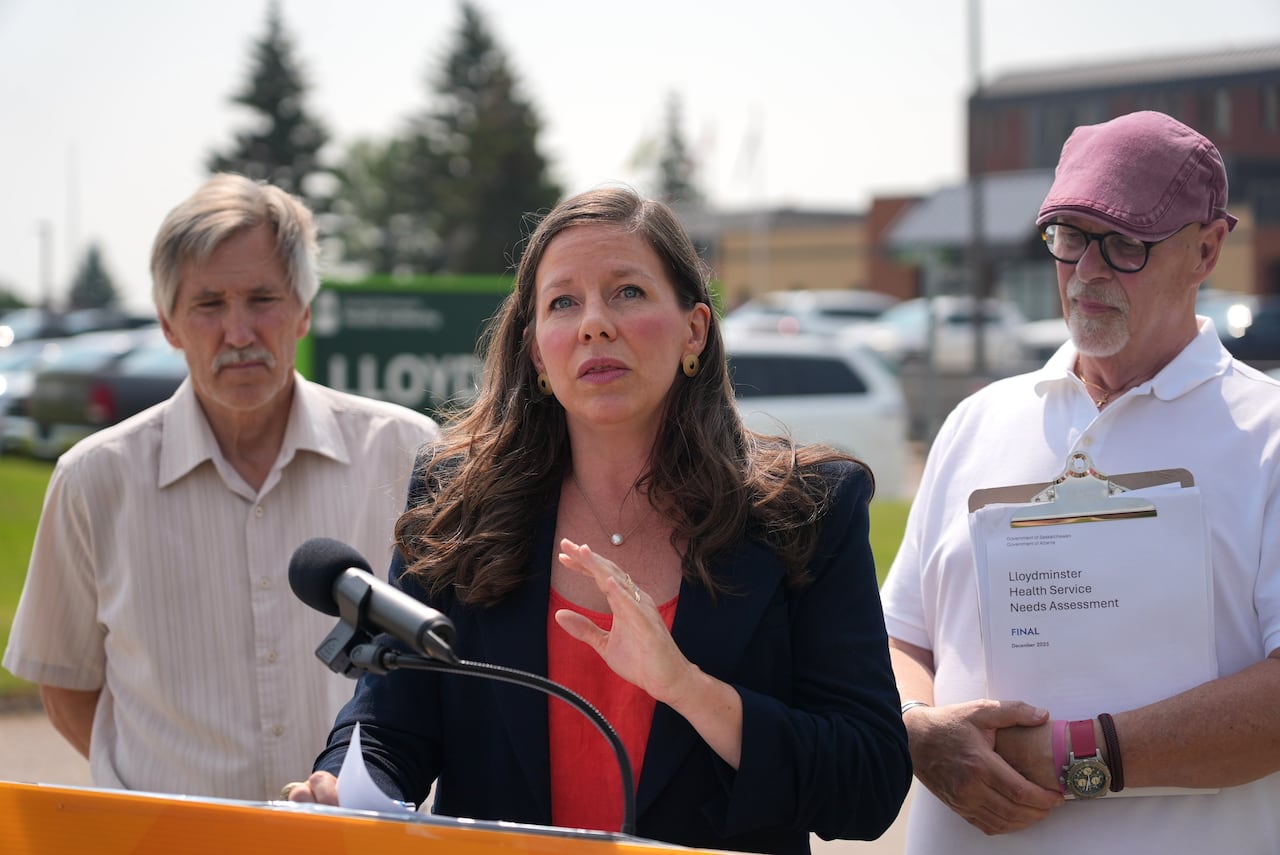 Meara Conway, Saskatchewan NDP MLA and Shadow Minister for Health, speaks at a press conference in Lloydminster, Sask. From left is Paul Richer, chair of Lloydminster & Direct Health Advisory Council, and Darrel Dunn, vice president of the Lloydminster Concerned Citizens for Seniors Care Society. (Lexi Freehill/CBC)
The government of Saskatchewan declined to answer specific questions about the leak, but said in a statement the report will act as a guide for both province’s internal healthcare planning.
“Given the bi-provincial nature of health service delivery in Lloydminster, planning must consider the unique governance and decision making processes of both provinces.”
Kyle Warner, acting press secretary for Alberta’s Ministry of Hospital and Surgical Health Services, said in a statement the ministry is working with Saskatchewan and local partners to review and implement the findings to strengthen services.
“This includes improving access to care, supporting primary care, enhancing patient flow, strengthening system coordination, and planning for future population growth and an aging population,” he said.
So many communities would see themselves in that report.- Tom McIntosh, politics and international studies professor at the University of Regina
The report’s top recommendations include creating an after-hours primary access clinic to reduce “urgent and increasing capacity pressures” on the emergency department.
It calls for nurse practitioners and other primary care providers, including virtual options, to be available to the community.
The report also states hiring mental health nurses, training physicians to deal with mental health emergencies and creating a dedicated mental health short-stay unit could alleviate wait times and increase emergency room safety.
Cross-border communication could be improved, it says, by coordinated data-sharing policies, standardizing referral processes, and aligning provincial regulations to reduce administrative burdens, increase efficiency, and improve patient outcomes.
Ron Gillies is a 37-year Lloydminster resident who relies on home care services for an ongoing health issue.
He hopes to see at least some of the recommendations from the recent report taken seriously, unlike the findings of a similar assessment published in 2013.
The 2013 report identified many of the same issues and potential solutions as the 2025 report, including an after-hours primary care clinic, a mental health stabilization unit in the hospital, and a transitional care unit to improve patient flow to non-acute services.
“At some point, both governments have to sit down with the community and say, ‘These are the priorities. They keep coming up. We need to act on them. How do we do it?’” Gillies told CBC News.
Lloydminster Mayor Gerald Aalbers said he hopes to welcome health ministers from both provinces to Lloydminster for a meeting in the fall, ahead of provincial budget deliberations.
Aalbers encouraged residents of Lloydminster and the surrounding communities who rely on healthcare in the border city to continue pushing both provinces for the official release of the report.
McIntosh said publishing the detailed analysis done of Lloydminster’s health care service gaps could have impacts — and benefits — beyond Alberta and Saskatchewan, and push governments to take action on changes to healthcare that researchers like himself have been suggesting for decades on a national level.
“So many communities would see themselves in that report,” he said.