
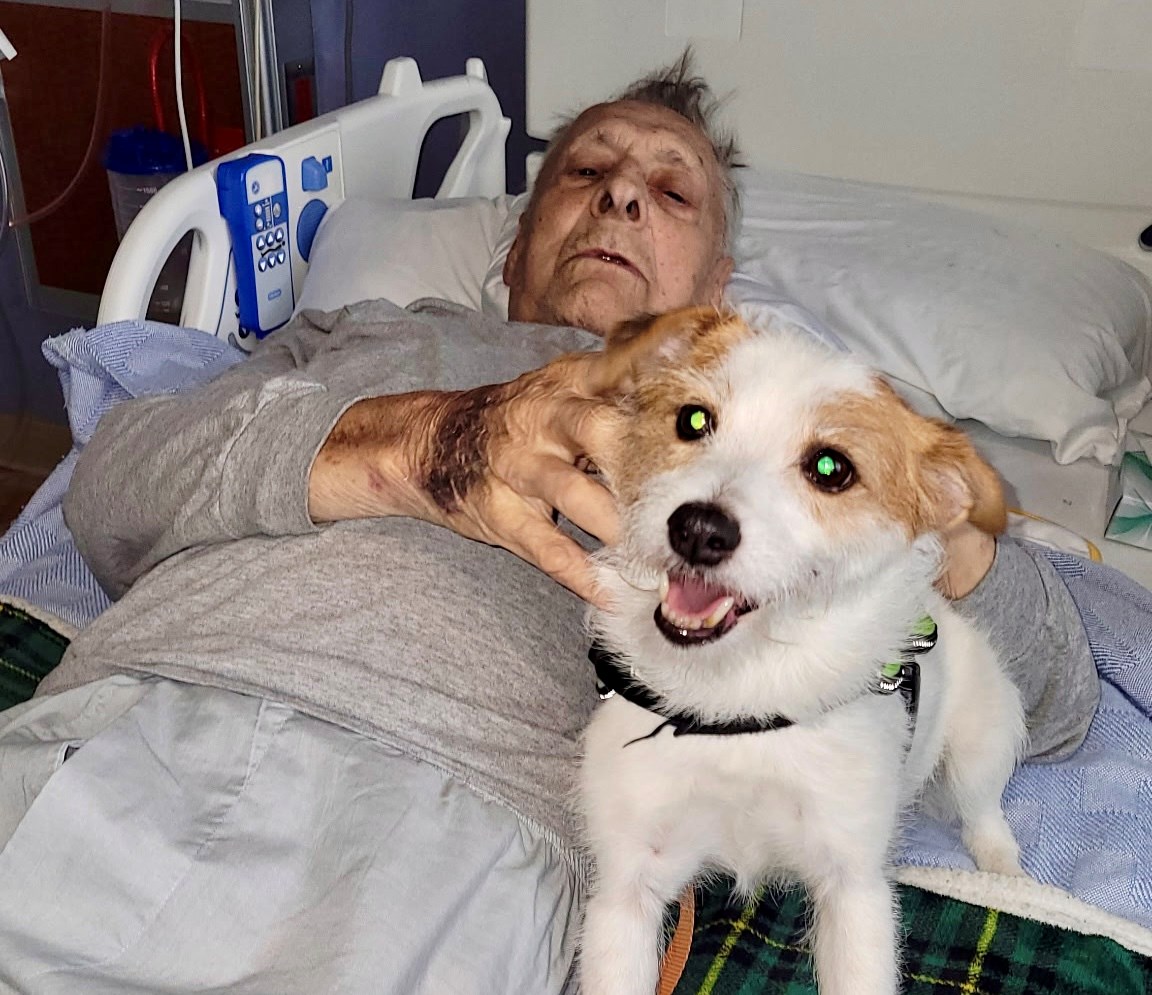
‘He just had no privacy whatsoever,’ said Walter Chikoski’s son, Michael. ‘He basically didn’t want to live’
For several days, Walter Chikoski laid on a stretcher in the emergency department hallway.
The 94-year-old lives with prostate cancer and went to Sault Area Hospital with an infection last Monday morning, but he wouldn’t be admitted to an inpatient room until Thursday afternoon – nearly three-and-a-half days later.
As nurses, doctors, and patients came and went, Chikoski’s spirits deteriorated as his wait dragged on.
“He just had no privacy whatsoever,” Chikoski’s son, Michael, told SooToday.
“He basically didn’t want to live. Nobody should be in the hallway for three-and-a-half to four days. That’s crazy.”
While Chikoski’s lengthy experience with hallway health care sparked grave concern with his son, he’s far from the only patient facing long wait times for a room.
His wait was more than double the hospital’s internal target to transfer nine out of 10 patients to an inpatient bed within 35 hours. Through the 2026-27 year, however, that figure ballooned to 49.2 hours – over two days.
“The elderly that come in or the children that come in, they have to be able to keep an eye on them instead of letting them fall through the cracks,” Chikoski said.
“I know they have to prioritize, but there’s got to be a better way of prioritizing.”
While officials say hallways and other unconventional spaces are never the preferred environments for care – and always meant to be temporary – elevated patient volumes have consistently pushed the hospital to its capacity and beyond in recent history.
“Extended stays in Emergency Department hallways are not standard practice at Sault Area Hospital. They occur only when the hospital is operating at full capacity, and no inpatient beds are immediately available,” said Brandy Sharp Young, director of corporate affairs and patient engagement at Sault Area Hospital.
“While these situations do occur, they fluctuate based on daily demand and bed availability across the health-care system. We continuously monitor patient flow and adjust operations to minimize the need for hallway care whenever possible.”
With an operating capacity of 305 patients for the 2026-27 year, Sault Area Hospital has averaged 295 patients through the year to date, with multiple days where patient volumes spike well above its intended capacity.
This Monday, there were 313 patients at the hospital, and patient volumes have climbed even higher than that since the year began.
On Jan. 7, the hospital saw a volume of 352 patients, a particularly busy day where around 20 people were being cared for in unconventional spaces like hallways, dining rooms, and alcoves – just like Chikoski.
Last week was an experience that weighed heavily on the 94-year-old man – even after he was admitted to an inpatient room.
“We came in here a few days ago, even though he had been in the room for a couple days, and he was like, ‘Just let me go, just let me go, please,’” his son said.
Beyond patient volumes, the hospital also has dozens of patients occupying hospital beds awaiting their next destinations.
This Monday, 78 patients were designated alternate level of care, meaning they no longer require acute hospital services but have not yet been transferred to the appropriate setting.
Of those patients, 35 were awaiting supportive living arrangements and 34 were waiting for placement in long-term care – putting further patient-flow burden on the hospital.
“These delays reduce the number of acute care beds available for patients requiring hospital admission and contribute to ongoing capacity pressures across the hospital,” Young said.
“Improving patient flow remains a key organizational priority; however, the hospital’s ability to meet its targets is influenced by sustained demand for acute care and the availability of community, long-term care, supportive living, and other post-acute care options.”
With several initiatives to improve patient flow and reduce hallway health care – such as proactive discharge planning and close collaboration with community partners – Young said providing compassionate care is a top priority, even in challenging circumstances.
Although he was frustrated with his father’s lengthy wait in the emergency department, Michael said the compassion shown by hospital staff shone through.
“It’s nothing to do with the doctors or nurses or anything like that. I think they’re doing the best they can do with what they have,” he said.
“One doctor came out and she was almost in tears, saying, ‘I wanted to help, I was doing what I could do for him, but my hands are tied as to where to put him in this hospital.’”