
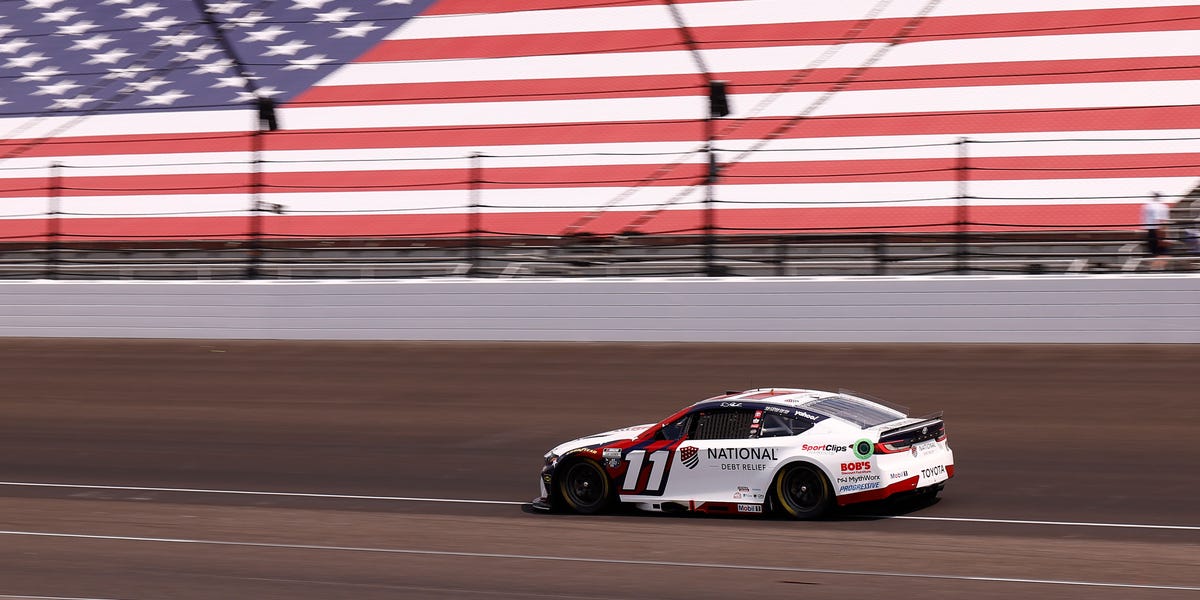
In the PGA, the number of majors a golfer has won is always a topic of conversation, but in NASCAR no one talks about the number of “Crown Jewel” victories a driver possesses.
Denny Hamlin, who has won three of NASCAR’s four Crown Jewel events, isn’t “really sure” why there’s not a similar statistical discussion in stock car racing. He said it was up to the media to build that story. However, he then admitted the drivers don’t talk about it.
“I don’t know why, because it’s certainly part of your resume,” Hamlin said.
Hamlin noted that when a person retires, their accomplishments at Daytona, Charlotte, Darlington, and Indianapolis are the ones that get mentioned as a part of their legacy.
“I think it means a lot to the drivers. I just don’t know why that doesn’t get spoken about quite as much,” Hamlin said.
Perhaps it’s because the term “majors” in professional golf has been around for decades; whereas, the term “Crown Jewel” wasn’t used to describe the Daytona 500, Coca-Cola 600, Southern 500, and Brickyard 400 until the 21st Century.
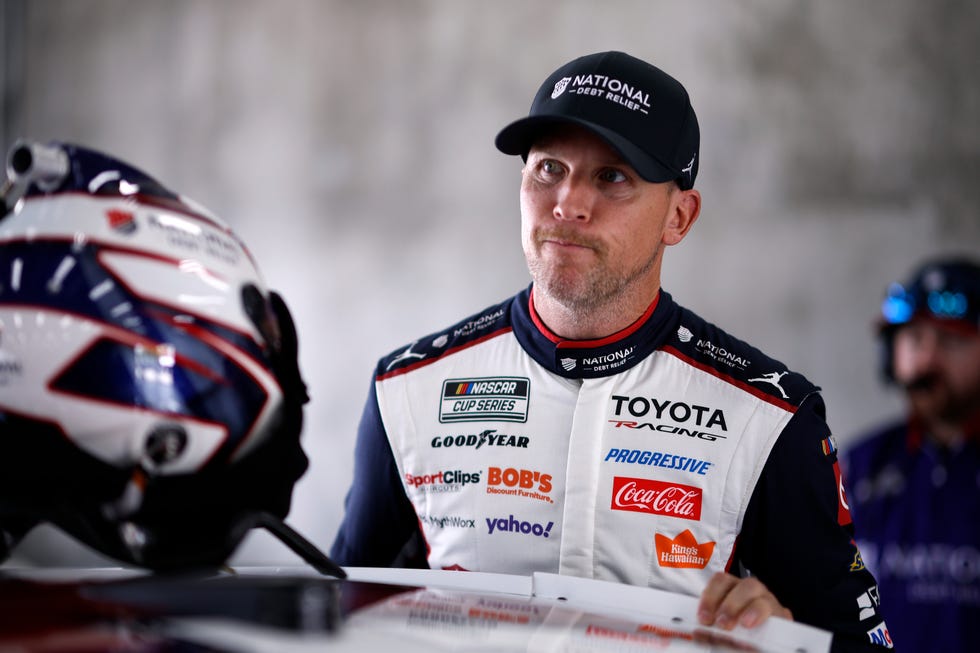 Sean Gardner//Getty Images
Denny Hamlin has won three of NASCAR’s four Crown Jewel events.
Initially, the Daytona 500, Coca-Cola 600, and Southern 500 were known as stock car racing’s triple crown. The Southern 500 was the oldest because it was first held in 1950. The Coca-Cola 600 was the longest at 600 miles. The Daytona 500 possessed prestige from its beginning in 1959 when stock cars raced on a 2.5-mile paved oval for the first time.
Winning all three is a difficult task. So difficult that only two drivers have done it. LeeRoy Yarbrough accomplished it in 1969 driving a Junior Johnson Ford in two of the events and a Mercury in the other. David Pearson claimed his triple crown in 1976 in a Wood Brothers Mercury. In that era, articles about stock car racing’s triple crown began as soon as the Daytona 500 winner was determined. Conversations surrounding stock racing’s triple crown ramped up again the week preceding the Coca-Cola 600.
Winning all three is a difficult task. So difficult that only two drivers have done it.
Everything changed when R.J. Reynolds Tobacco Company announced the Winston Million program for 1985. A driver winning three of the four designated races would win $1 million. RJR took the original triple crown events and added Talladega’s spring race which was named the Winston 500. No one expected the bonus to be won in its first season, but Bill Elliott accomplished the feat.
Next on the agenda was RJR’s No Bull 5 program, which was instituted in 1998 to celebrate NASCAR’s 50th anniversary. That program awarded $1 million to a driver and a paired fan if that driver won a designated No Bull 5 event after finishing in the top five in the previous No Bull 5 race. The Brickyard 400 was added to the Winston Million events. That program existed 1998-2002.
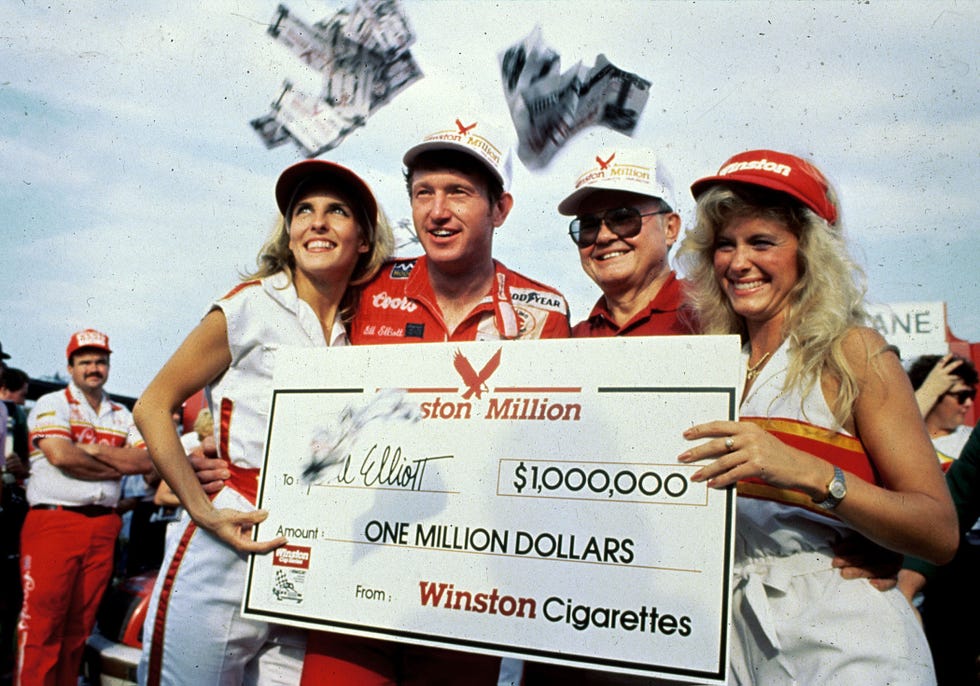 RacingOne//Getty Images
Bill Elliott won the Winston Million in 1985.
When RJR exited the sport at the end of the 2003 season, NASCAR was left with a dilemma of how to recognize it’s top four races – the original triple crown and the Brickyard 400, which joined the Cup Series in 1994. That’s when the “Crown Jewel” name was coined.
It’s become obvious the term “Crown Jewel” isn’t commonly used. In fact, I bet there are many fans who can’t even name the Crown Jewel events. Perhaps it’s time to drop that moniker, revert to stock car racing’s original triple crown and let Indianapolis stand on its own, just as it does in the NTT IndyCar Series.

A North Carolina native, Deb Williams is an award-winning motorsports journalist who is in her fourth decade covering auto racing. In addition to covering the sport for United Press International, she has written motorsports articles for several newspapers, magazines and websites including espnW.com, USA Today, and The Charlotte Observer. Her awards include the American Motorsports Media Award of Excellence, two-time National Motorsports Press Association writer of the year, and two-time recipient of the Russ Catlin award. She also has won an award in the North Carolina Press Association’s sports feature category. During her career, Deb has been managing editor of GT Motorsports magazine and was with Winston Cup Scene and NASCAR Winston Cup Scene for 18 years, serving as the publication’s editor for 10 years. In 2024 she was inducted into the NMPA Hall of Fame.