
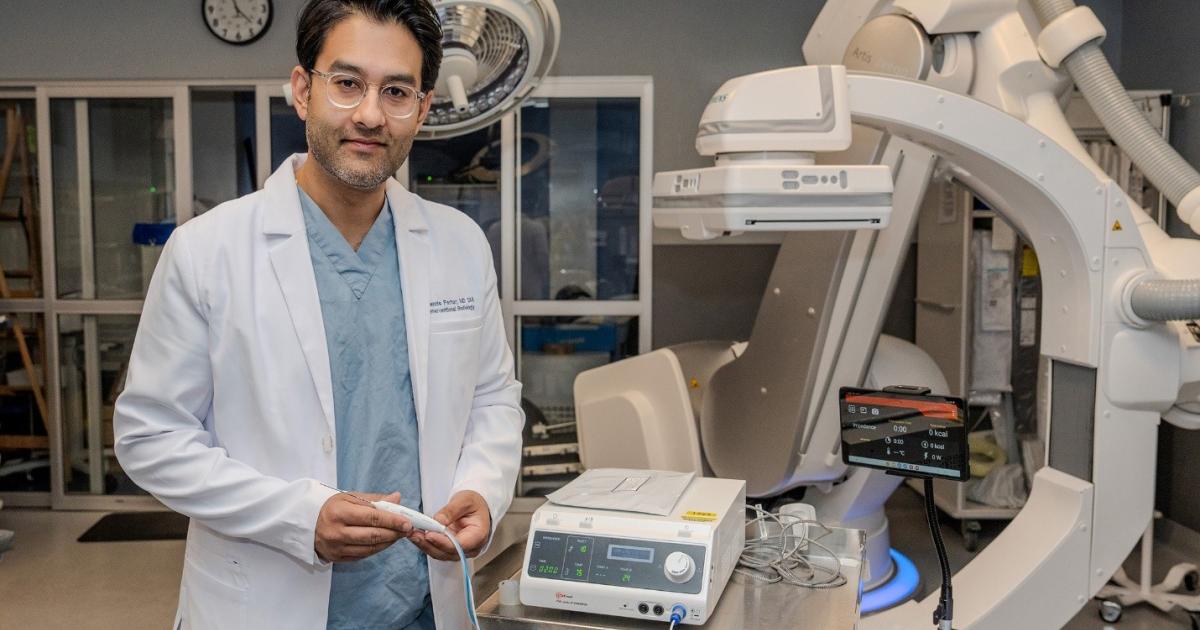
Vancouver General Hospital is the first hospital in Western Canada to offer thyroid radiofrequency ablation (RFA) – a minimally invasive procedure that treats thyroid nodules without surgery.
Thyroid nodules affect more than half of Canadian adults during their lifetime. While many cause no symptoms, some can lead to pain, difficulty swallowing, visible swelling, and in some cases, thyroid cancer. Since launching the program, the Vancouver General Hospital team has treated more than 150 patients, helping them avoid surgery while preserving thyroid function and reducing recovery time.
For many patients, the choice is stark: live with worsening symptoms or undergo invasive neck surgery. Now, patients have a better option.
“We’ve cured people of hyperthyroidism, successfully shrunk nodules that compressed airways and treated certain thyroid cancers in patients who are not surgical candidates,” says Dr. Dennis Parhar, Interventional Radiologist at Vancouver General Hospital.
Using real‑time ultrasound guidance, clinicians can precisely target and treat thyroid nodules through a minimally invasive outpatient procedure performed under local anesthesia. Unlike surgery, RFA preserves the healthy thyroid gland, allowing most patients to return quickly to their usual activities.
Bringing innovation and collaboration together
Through collaboration across Interventional Radiology, Endocrinology, Head and Neck Surgery, and Oncology, teams are working together to ensure patients receive the right care, at the right time, in the right setting.
“We work closely with colleagues in Endocrinology, Head and Neck Surgery, and Oncology to identify the patients who will benefit most from this procedure,” says Parhar. “Providing an alternative to surgery for appropriate patients also helps free up operating room capacity for others waiting for care.”
By combining collaboration with innovation and a patient-centred approach, the Vancouver General Hospital team is expanding access to leading-edge treatments, improving outcomes and enhancing the experience of care for people throughout the VCH region.
Equipment used to support this procedure was generously funded by VGH & UBC Hospital Foundation.