
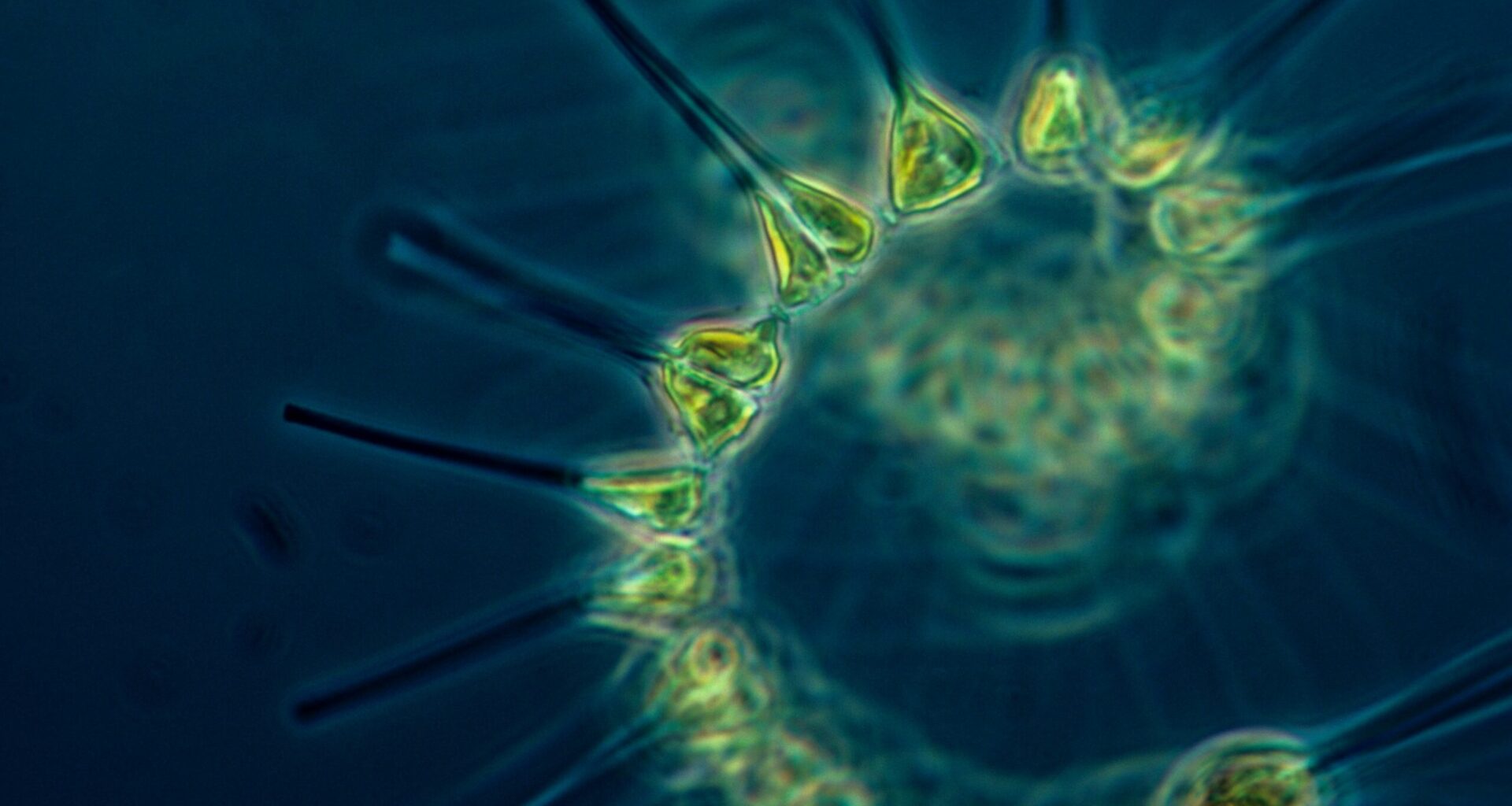
Future warming is expected to further intensify water-column stratification, depleting the levels of nutrients towards the surface of the ocean and reduce overall primary productivity. Smaller phytoplankton species -better adapted to nutrient-poor conditions – are expected to become more dominant, weakening the transfer of carbon to the seafloor that UK seas currently provide, and reducing the ocean’s capacity to draw down atmospheric carbon.
Fish larvae, meanwhile, will likely need more prey to survive as warmer water increases their metabolic demands – a pressure that arrives precisely as the food web producing that prey becomes less productive.
The report, which updates a previous MCCIP assessment published in 2020, was coordinated by Dr Holland alongside 17 co-authors drawn from institutions including the Marine Biological Association, Plymouth Marine Laboratory, the Environment Agency, Cefas, the Scottish Government, and the Scottish Association for Marine Science. Its authors note significant gaps in monitoring across parts of the coastal and marine environment, leading to uncertainty in some regional trends – a gap they argue must itself become a policy priority.
Professor Abigail McQuatters-Gollop, Professor of Marine Conservation at the University of Plymouth and a co-author of the report, has spent decades tracking exactly these changes. “We have been saying for decades that plankton communities are changing as a result of shifts in the global climate and human activities, and more comprehensive evidence is the only way we can bring that to greater attention,” she said.
“This report, and the robust scientific evidence it is based on, can hopefully be another piece of the jigsaw that ultimately leads to joined-up action for marine biodiversity management at a regional and global scale.”
Plankton are rarely the subject of public concern in the way that whales, coral reefs, or seabirds are, remaining invisible to most people while the crisis they face unfolds in waters far from the public eye. However, the authors are quick to note that the food on our plates, the fish in the sea, and the carbon in the atmosphere are all – in the end – plankton problems.
This report – they suggest – is one more piece of the puzzle to give us a clear picture of the health of the global ocean.