
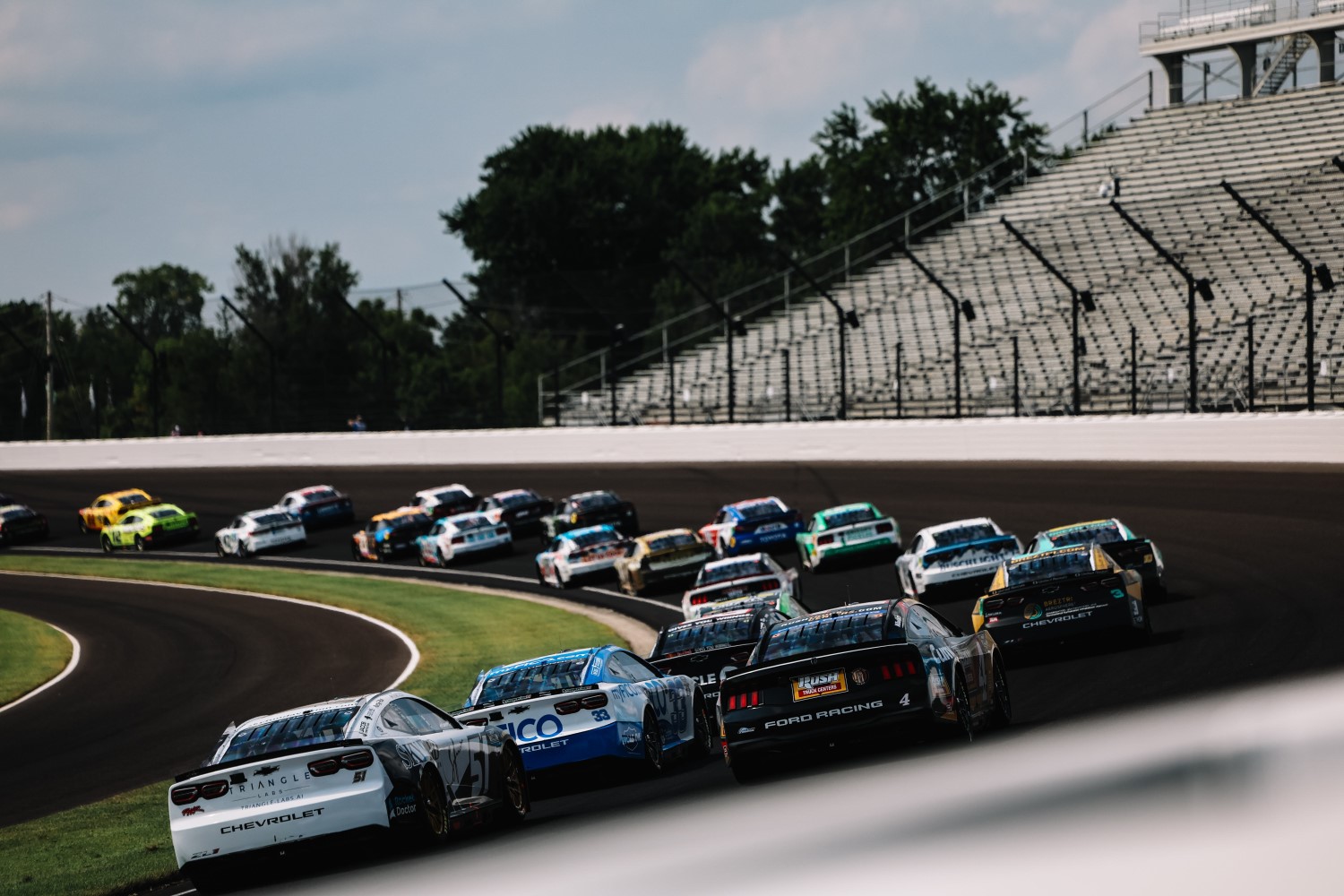
The images from the 2026 Brickyard 400 told the story before the checkered flag even fell. Vast stretches of empty grandstands at Indianapolis Motor Speedway (IMS), sections covered by tarps, and a facility built for 225,000-plus spectators drawing roughly 70,000 fans. On television, it looked sparse and uninspired. For a venue that sells out the Indianapolis 500 year after year, the contrast was stark—and damaging.
–by Mark Cipolloni–
This is not merely an attendance footnote. Combined with the on-track product, NASCAR’s annual visit to the Brickyard has become a liability for both the sanctioning body and the Speedway itself.
Indiana native Chase Briscoe, driving for Joe Gibbs Racing, did not hold back after the July 26 race. Speaking on SiriusXM NASCAR Radio, he called the product a “worst-case scenario.” The 2.5-mile oval is essentially a one-groove track. Drivers must run the bottom; there is no high line, no alternative groove created by the banking or surface. The Next Gen car, which thrives when it can find clean air in multiple lanes, suffers here. “There’s just nowhere to do that,” Briscoe said.
“You’re just stuck in the wake of the car in front of you.” Lead changes independent of pit stops were nonexistent. Passing was nearly impossible. The race devolved into the familiar track-position parade that has defined too many recent Brickyard 400s.
RACER’s Kelly Crandall reached the same conclusion days later: NASCAR needs to stop racing at Indianapolis Motor Speedway—at least for now. Prestige and tradition are not enough when the racing is hard to watch and turns fans off. The Brickyard remains listed among the series’ crown jewels, yet it consistently ranks among the tracks least suited to the current car. Follow-the-leader racing does not retain casual viewers or satisfy core fans who debate good races versus bad ones every week. Schedule real estate is limited. Better products exist at other venues, and the series has shown willingness to drop or rotate tracks when the on-track show fails. Indianapolis can return when the car or package improves. Until then, the date is better spent elsewhere.
The empty seats compound the problem. Officials noted the 70,000 figure roughly matches a sold-out NFL stadium, and it remains one of NASCAR’s stronger attendances in absolute terms. But optics matter. A massive, historic facility appearing one-third full projects decline. Social media filled with comments about the sparse crowd.
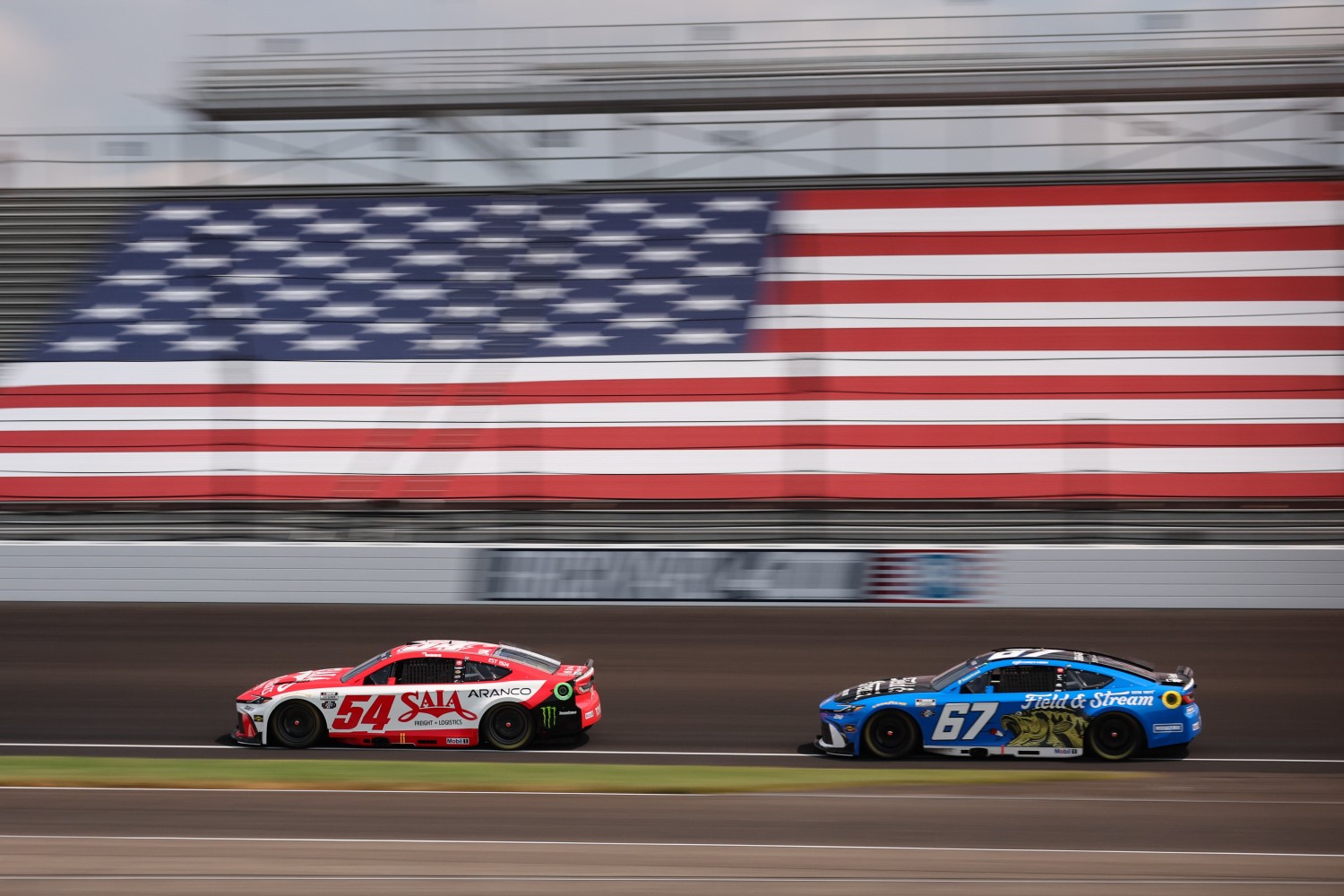 Flags are used to cover the embarrassing empty grandstands – Ty Gibbs and Corey Heim on the one-groove Brickyard 400 Presented by PPG track – By_ Chris Owens/IMS
Casual fans watching on television saw a half-empty cathedral of speed and wondered why. The Indy 500 packs the place; the Brickyard does not. That visual disparity harms the Speedway’s brand just as it undercuts NASCAR’s claim that this remains a marquee event.
For NASCAR, the costs are clear. A poor racing product at a high-profile venue erodes the series’ reputation for competitive entertainment. Television ratings may hold relatively steady, but the long-term damage from repeated “worst-case scenario” races and empty-looking stands is cumulative. Fans notice when a race feels like a parade. Sponsors and broadcasters notice when the product fails to deliver drama. Continuing to force the Next Gen car onto a track that exposes its weaknesses does no favors to the car’s image either.
For IMS, the downside is equally real. The Speedway’s global prestige rests on the Indianapolis 500—a genuine spectacle that still fills the stands and captures the imagination. Hosting a NASCAR event that consistently underwhelms dilutes that aura. Empty seats during a “crown jewel” weekend invite questions about the venue’s drawing power outside of Memorial Day. Partnership with NASCAR has value, but not when the association highlights underperformance rather than excellence.
Both sides would benefit from a pause. NASCAR can prioritize tracks that produce multi-groove racing and closer competition. IMS can focus on events that fill its grandstands and reinforce its status as the world’s most famous racetrack. The Brickyard 400 once felt special. In its current form—with single-file racing, limited passing, and visible empty seats—it no longer does. Continuing the relationship in this state hurts the series that needs strong products and the Speedway that thrives on packed houses and must-see racing.
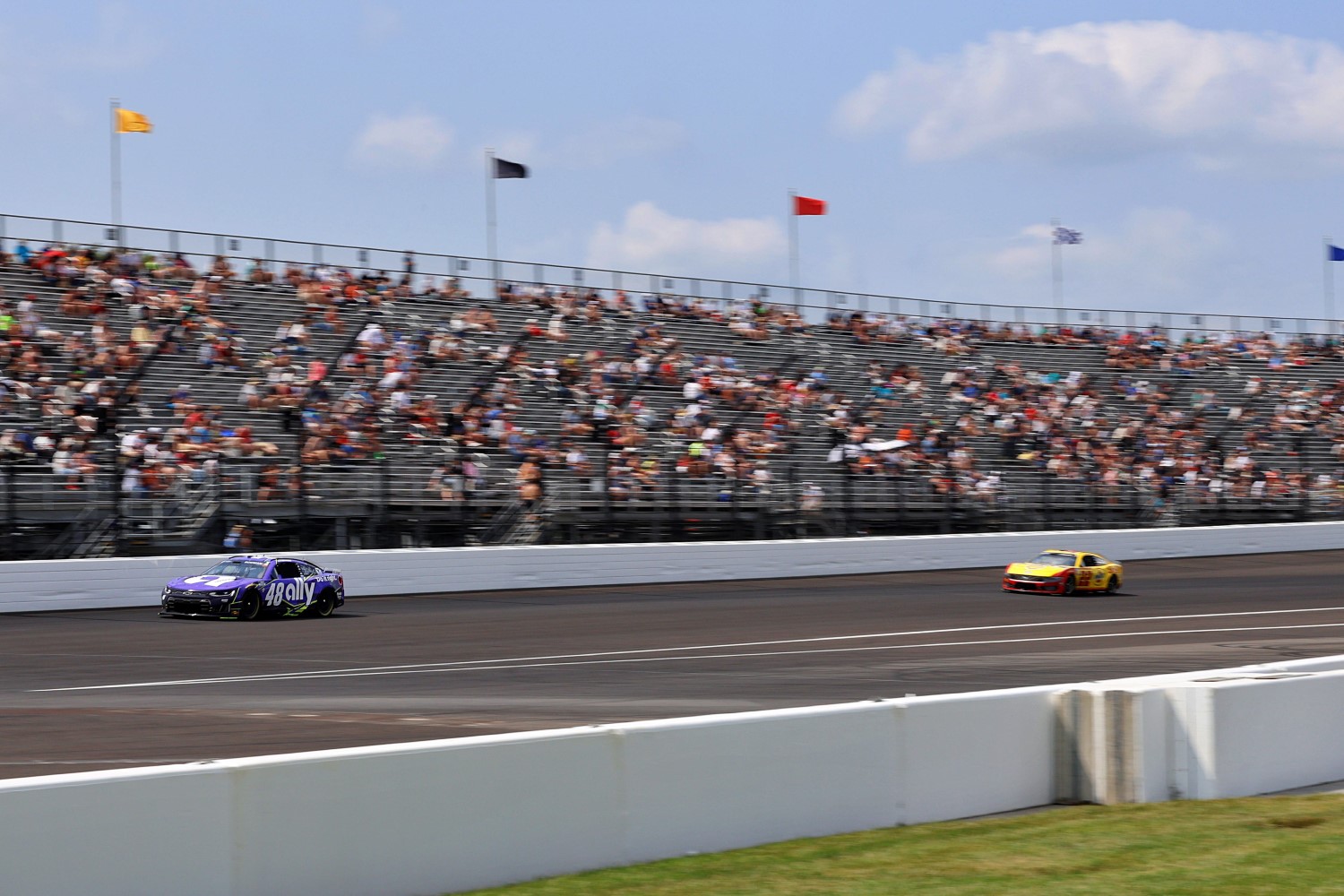 Alex Bowman leads Joey Logano – 2026 Brickyard 400 Presented by PPG – By_ Paul Hurley/IMS