
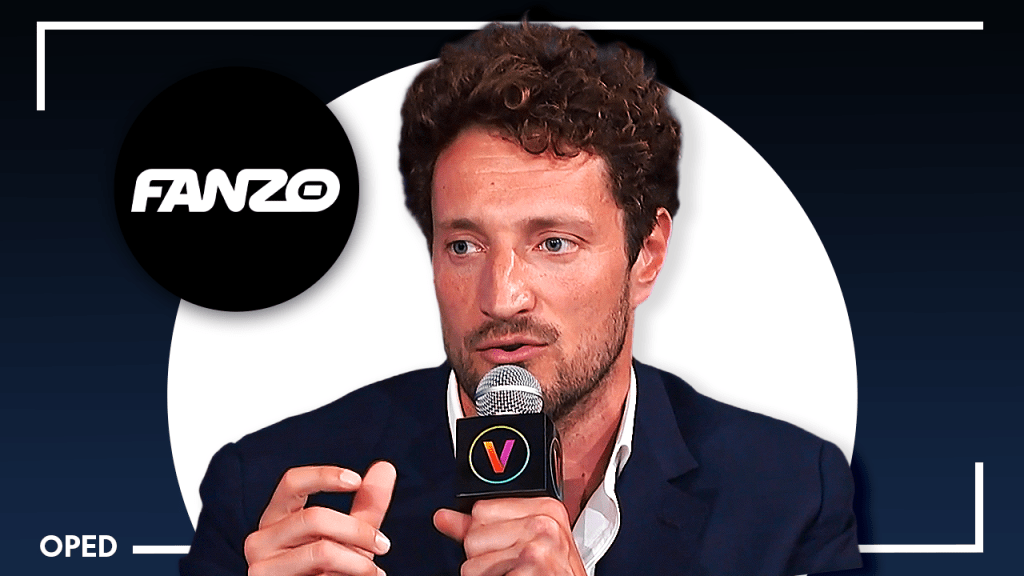
Today’s guest columnist is Leo MacLehose, CEO of Fanzo.
When I reflect on a glorious summer of sport in America, the enduring images should both excite and serve as a reminder to our industry.
More so than I can remember, the stories that cut through during the NBA Finals and FIFA World Cup were about collective fan euphoria.
And the motifs that dominated front pages and became ubiquitous on social media weren’t so much what happened on the court or pitch but how fans came together away from the stadium.
It’s Knicks-mania erupting out of packed dives and onto the New York streets. It’s the Tartan Army charming Boston whilst drinking it dry. It’s fans in bars all around the world gleefully performing their own Viking rows after wins. It’s 10,000 Argentinians turning Times Square into a weekend-long festival before the final.
The last two months have been a reminder that so much fandom exists outside the stadium and the living room. America’s iconic third spaces—bars, restaurants, official and de facto fan zones—have been a circus of joy, noise and genuine human connection.
Fans watching socially in third spaces isn’t a fringe part of the sports ecosystem; it is a core part of the fan experience, and it’s our shop window. It’s where sports grow organically, where genuine community lives and breathes and where infectious images that get beamed around the world are captured. And right now there’s a value gap not being fully recognized.
I’ve spent 15 years building tech platforms to facilitate social viewing in the U.K., Europe and Australia, and seen this pattern play out multiple times. I’ve also seen how UEFA, World Rugby, the Premier League and FIFA have closed this gap via their official sponsors.
The sharpest operators recognize that in these social spaces, community, shared experience and memories that will long outlast the tournament—not the broadcast—become the product they’re selling. All things that the convenience of your sofa and widescreen TV at home will never offer.
The data from the U.S backs this hunch—compared to the weeks before kick-off, Fanzo saw online searches for bars showing live sport grow 302% in host cities during the World Cup, and 125% in U.S. cities with no official activity at all—even with almost every match free on Fox and Telemundo. Chicago, with no games, no teams hosted, basically fewer reasons to expect an outsized swell in interest,still saw bar searches nearly quadruple over that period.
That penny drop in America excites me massively. But out-of-home viewing has to become a core pillar of any rights holder or sponsor’s plans, not an afterthought. And quickly.
America’s major leagues are in real danger of missing out on the value generated by fans coming together to support their team socially whenever they can’t make it to the stadium.
Because life has never been harder for fans who simply want to watch their favorite team on TV.
Years of rights fragmentation mean anyone wanting to watch NFL 2026 in full will need access to 10 different TV channels and streaming platforms. The implications are both confusing and expensive.
At the same time, finding a local bar showing games on TV is about to get harder—NFL Sunday Ticket commercial exclusivity passing from DirecTV to EverPass Media will mean an initially smaller subset of bars as venues adapt to a shift from satellite dishes to streaming via EverPass.
The risk here is a tangible drop in choice and visibility for fans. And when things get complicated, we know online piracy soars.
Instead of rapturous scenes in bars, fan zones and dedicated watch parties, you lose millions of fans to their laptops, because juggling 10 different subscriptions is too much or the bar nearby that used to show it may not have the means to anymore.
If that sounds bombastic, consider the case of this year’s Champions League final, where it sat behind a British paywall for the first time ever. It resulted in 3.7 million unique IPs across the U.K. firing up an estimated 16 million illegal streams during the showpiece event.
When the net cost of global sports piracy is estimated at $27 billion, it’s both money lost and a mountain of cultural opportunity flattened.
So my question for every commissioner and network exec reading this: What is your sport doing to promote shared fan experiences at scale and bring commercial partners along with you?
Because for sports spread thin across multiple broadcasters, and fewer bars, the headache for fans is only getting sharper.
Leo MacLehose is co-founder and CEO of sports tech company Fanzo. Their products match fans looking to watch socially with a global network of 47,000 partner venues while helping broadcasters, such as TNT Sports, Canal+ and Stan Sport, deliver and market live sports digitally. Since 2012, Fanzo has worked with brands and rights holders including Guinness, UEFA and World Rugby—most recently partnering with Michelob Ultra to power the official FIFA World Cup venue finder.