
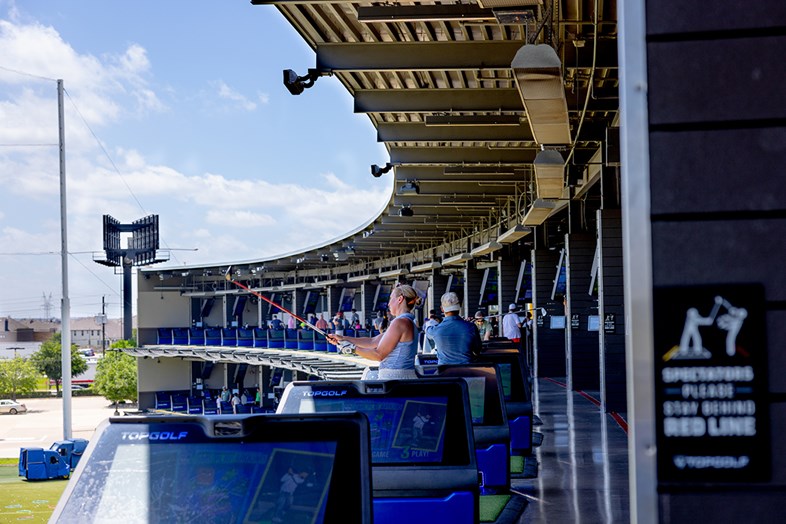
Topgolf welcome more than 40 million visits each year. New CEO David McKillips wants the business to help bring 10 million new committed golfers into the game by 2030.
After rapid expansion, slowing venue sales and a major corporate reset, Topgolf are entering a new chapter. Speaking exclusively to Today’s Golfer at The Open, McKillips explains why he believes golf, rather than entertainment alone, will define the company’s future.
A refreshing breeze is beginning to sweep across the burnt-out grass of the driving range, finally offering some relief on another baking hot day in Southport. Rory McIlroy, Cameron Young and Xander Schauffele are among those warming up for the afternoon wave on Thursday at The Open Championship just across from the wooden picnic bench where David McKillips and I are sitting.
Every shot is tracked by Toptracer. The numbers appear on giant screens overlooking the range and inside The Open app, allowing the fans gathered behind the ropes to follow the ball speed, carry distance and shape of drives they would otherwise lose against the bright sky.
The practice ground is busy in every direction. The grandstand packed as pink faces sip pints and gawp in awe at the world’s best players. A group of youngsters run past with Open flags and Sharpies in their hands, heading for the kids’ autograph zone, presumably in the hope of getting McIlroy’s coveted squiggle. A couple of spectators, coffees and donuts balanced between them, perch on the end of our bench, smiling politely and clearly curious about a conversation that moves between golf participation, private equity and the future of a brand most people associate with a night out.
From the screens at Sky Sports’ Open Zone, the unmistakable Scouse accent of local golfer and influencer Georgia Ball drifts across the warm air as she explains the local lingo.
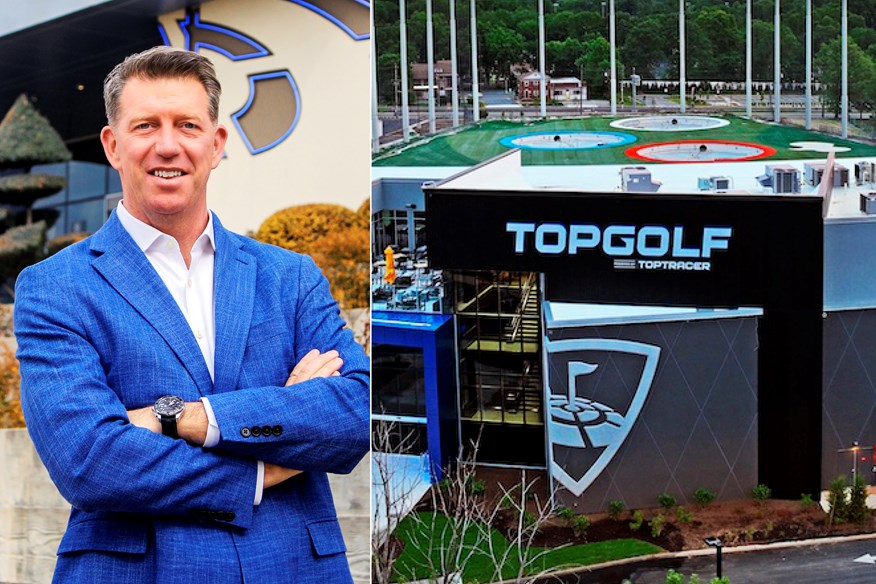
It is an appropriate place for McKillips to set out what he wants Topgolf to become.
“We have a two-pronged strategy,” he says. “There’s an opportunity for us to cater more to the avid golfer while also understanding our responsibility within the golf ecosystem.
“Quite frankly, we are the gateway to golf.”
Since launching in Watford in 2000, Topgolf have opened a further 113 venues globally. Unsurprisingly, the majority are in the United States, where 101 further venues have opened since the first balls were hit in Alexandria, Virginia, back in 2005.
For many of the customers visiting those 102 US venues, it is their first experience of holding a club and trying to send a ball toward a target. McKillips wants more of them to keep going.
“We introduce young golfers, women and people trying golf for the first time,” he says. “We believe we can help grow and elevate their game until they’re ready to transition onto green grass.
“Whether it’s simulator golf, entertainment venues or traditional golf courses, it’s all one ecosystem, and we think we have a great opportunity to grow the game.”
The big goal
The target is 10 million new committed golfers by 2030, with women accounting for around 30 percent. Around us, families and juniors, part of the record 306,000 people who would attend The Open across the week, watch at close quarters as the pros prepare for their shot at glory in golf’s oldest major championship. McKillips sees an audience already interested in golf but not necessarily playing it regularly.
The difficult part is rarely getting somebody to enjoy striking a good shot. It is persuading them to return often enough for the game to take hold. Topgolf sit between a social introduction and the traditional course, with clubs already in the bay, no dress code, no pressure to keep up with the group behind and no need to understand the rules before starting.
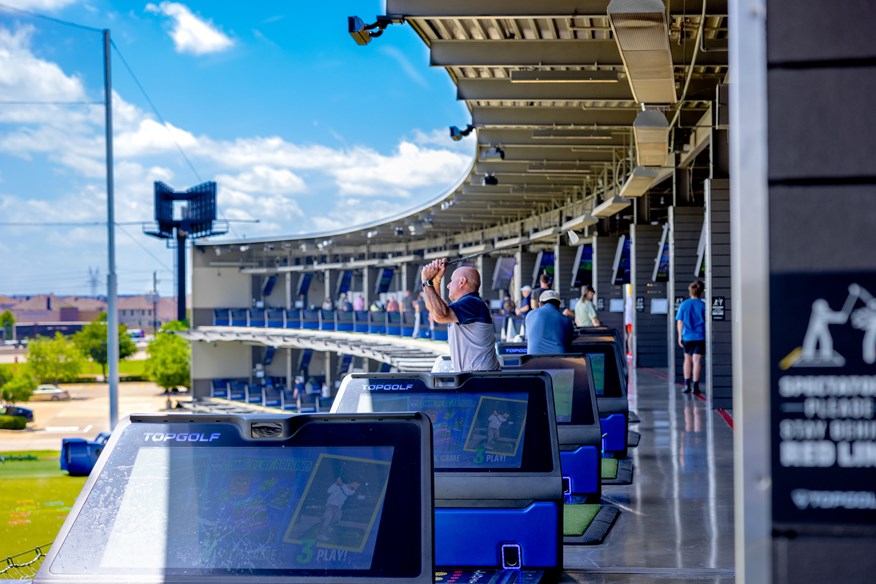
McKillips has inherited that opportunity at a pivotal time for the business. Earlier this year, private equity firm Leonard Green & Partners acquired a 60 percent stake in Topgolf, while Callaway retained the remaining 40 percent. The deal returned Topgolf to life as a standalone company after years in which rapid venue expansion had been followed by weaker sales and questions about its direction.
New locations remain part of the plan. Spain, Colombia and Portugal all have their first venues coming soon, Abu Dhabi, Riyadh, China and Madrid will follow, while in the United States, Wisconsin is about to get its first and the country’s 103rd. McKillips expects Topgolf to open between three and five company-owned venues in the United States each year, alongside two to four international franchise sites. The immediate task, though, is to get more from the venues Topgolf already have, sharpen the experience for regular golfers and give occasional visitors a reason to return.
The new CEO began by going to see the business for himself. His aim was to visit 100 venues in his first 100 days, a schedule that took him across the United States and into the international operation. By the time we meet during Open week, he has exceeded the original target.
“A little bit more,” he says with a laugh when I ask how far beyond 100 he has gone.
Before making major decisions, he wanted to meet the people running the venues, talk to customers and understand how the experience changes from one location to another. His route into the job makes that particularly important.
McKillips is a golfer, although, like many of us who work in the game, his role has left him with little time to play. His career was built in entertainment. He started at SeaWorld Orlando and Sesame Place before joining DC Comics, where he launched its sports division and worked on projects with LeBron James and NASCAR. He then spent 13 years at Six Flags, working across sponsorship, food and beverage, engineering and design before becoming President of International.
In January 2020, he joined Chuck E. Cheese. Six weeks later, Covid forced the company to close its venues and enter bankruptcy. McKillips helped rebuild it as what he describes as a full entertainment company rather than a restaurant with arcade games.
That experience makes him a logical appointment for a business built around food, drink, music, groups of friends and competitive games. It also raises the obvious question: will the new chief executive take Topgolf further into entertainment, or put more emphasis on golf?
“When I got the call about the position, I got really excited because I see Topgolf as a transformational brand, not only in the world of entertainment but also in sports and, ultimately, golf,” he says.
“I look at Topgolf as the ultimate sports entertainment and golf destination. Golf is certainly having a moment. I’m a fan, and I think our opportunity to grow the game and bring in new committed golfers is incredibly exciting, especially the two areas that are growing the fastest: youth and women.”
Around 60 percent of customers still visit Topgolf primarily for social reasons, and McKillips has no intention of pushing them away. Arcades, darts in the bars, trivia nights, bingo and licensed games will remain part of the experience, with more entertainment properties due to arrive from 2027. Food and drink will continue to matter, as will birthdays, work nights and groups who care more about beating their friends than the quality of their swing.
“But the backbone will always be golf,” he says.
 Getting the balance right
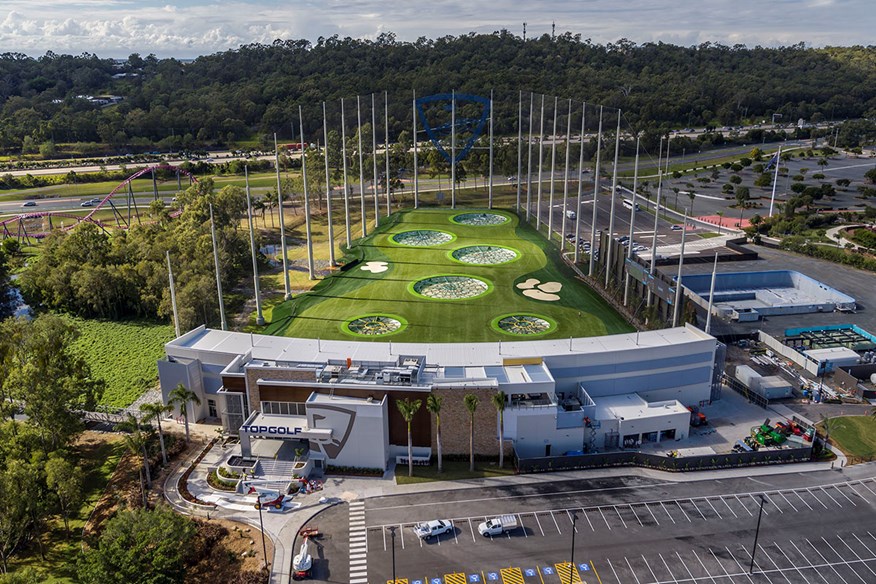
McKillips is not trying to turn more than 100 large leisure venues into traditional driving ranges. He wants the same building to work for the family picking up clubs for the first time, the group ordering drinks and playing games, and the low-handicap golfer who arrives with their own clubs and wants useful practice.
I put that contrast to him directly. Can somebody who has never touched a golf club come with friends for food and drinks while another group has a genuinely competitive golf experience in the next bay?
“Exactly,” he says. “If you think of Topgolf as a membership club or destination, we want there to be something for everybody.”
The serious golfer has not always been central to the way Topgolf have presented themselves. McKillips accepts there is an established golf audience to win back, particularly at a time when participation and viewing figures are strong.
“We’ve got to give them the right reasons to come,” he says.
Those reasons include more virtual courses, tournaments, leaderboard technology, member-member and member-guest events, and a new membership program. Topgolf are also replacing the RFID ball-tracking system across their venues with Toptracer – the same tech being used on the range by the world’s best players some 50 yards from us – with McKillips expecting every location to have the technology by the middle of next year.
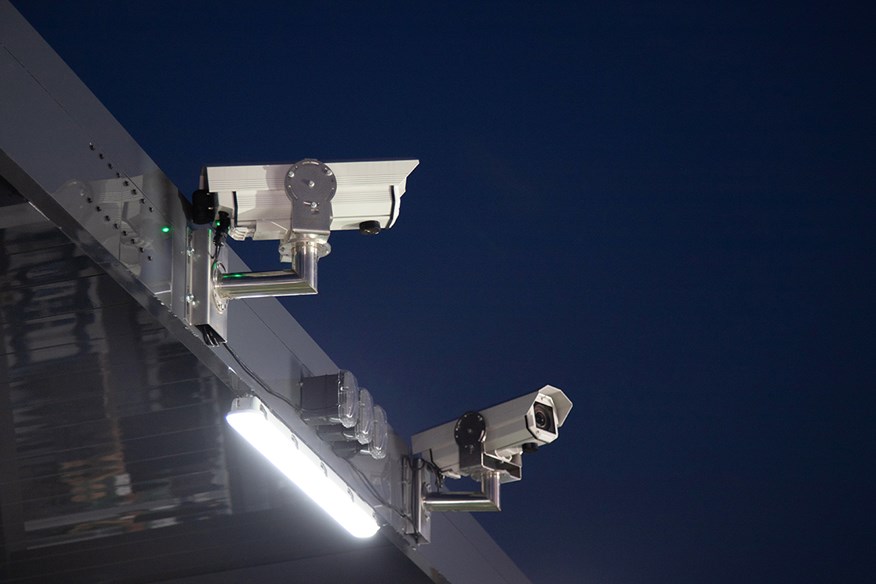
Across the practice ground, coaches, players and spectators check the screens after almost every shot. McKillips wants that same level of meaningful feedback to become part of an everyday practice session.
McKillips takes out his phone to demonstrate the consumer side of the technology. ‘My Bay, My Way’ will allow customers to control their visit from their own device, from ordering food and choosing games to opening Toptracer and checking the leaderboard.
“Let me show you something quickly,” he says, waiting a few seconds for the video to load. A shot trace appears on the screen.
“There we go. Isn’t that cool?”
The system records the shot and gives the player the option to share it immediately on social media. Alongside it, Toptracer IQ is being developed as an AI-driven platform to help driving range operators understand and improve their businesses. McKillips sees considerable room for growth across the range product, venue technology, television broadcasts and the interactive features being used by fans at Birkdale.
The technology is only useful if golfers believe the experience offers value. I ask whether price is a barrier, particularly for somebody comparing Topgolf with a bucket of balls at a local range.
“There are definitely opportunities for us to create more value for golfers who simply want to practice, and we’re developing new programs around that,” McKillips says. “Overall, though, you have to look at the total value proposition. Sometimes that’s misunderstood.”
Topgolf charge by the bay rather than by the person, with space for up to six players. McKillips argues that the individual cost compares favorably with bowling, the cinema or a theme park, while acknowledging the pressure on discretionary spending. Promotions such as Half-Off Golf and Sunday Funday are designed to bring the price down, and a separate offer aimed specifically at golfers who want to practice is on the way.
The social customer can still eat, drink and play Angry Birds. The golfer can bring their own clubs, use the Callaway sets already provided, track every shot and compete on a virtual course. McKillips does not see those as competing versions of Topgolf. His task is to improve both and make the step from a social night out to regular golf feel natural rather than intimidating.
McKillips argues that the path is already well established. “If you look at new golfers over the past several years, nearly three quarters have started either at a Topgolf entertainment venue or using a simulator before eventually moving onto green grass,” he says.
The statistic is central to his case for Topgolf having a role beyond its own venues. A customer does not need to arrive with ambitions of becoming a golfer. They only need to enjoy the first experience enough to have another one. The clubs are already there, the game is explained on screen and a poor shot does not leave anybody searching through knee-high rough while the group behind waits.
“Our relationship with the governing bodies, the tours and the players is only going to get stronger,” McKillips says. “We want young golfers to have that dream that one day they can play professionally. I think that’s really important.”
Not everybody will make that leap, and Topgolf do not need them to. Millions will continue to visit for dates, family occasions and work socials without ever keeping a handicap. But if even a small percentage develop into a more committed interest, the effect reaches driving ranges, golf courses, coaches and equipment companies.
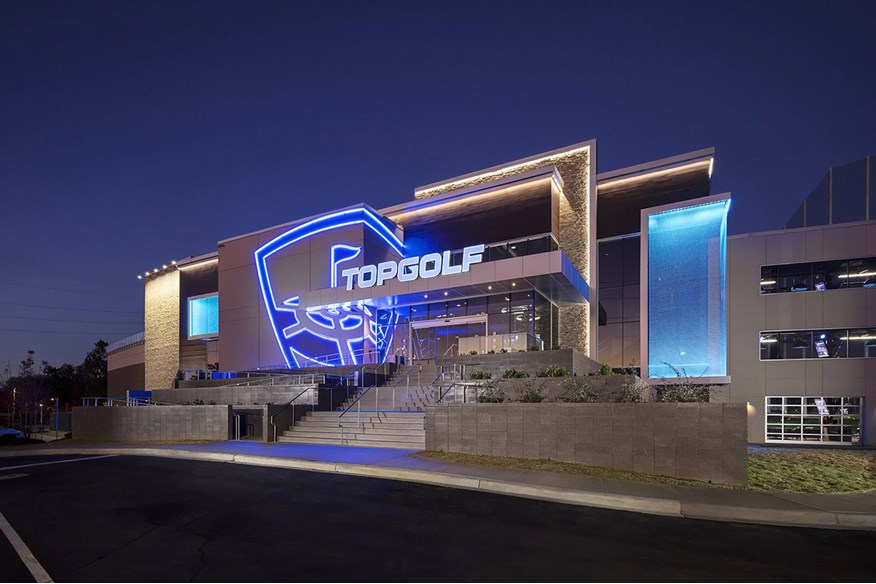 Investing in competition
Competition may be the most useful bridge. The moment a score appears on screen, a casual hit between friends becomes a contest. It works for the beginner trying to reach a target and the established player chasing a number on the leaderboard, without asking either of them to play the same version of the game.
“One of the biggest insights we’ve learned is that competition drives engagement,” McKillips says. “People love competing. We’re going to invest much more heavily in that.”
Topgolf currently offer four virtual courses, which he readily accepts is not enough. The plan is to add more and use them as limited-time experiences around the biggest tournaments, allowing customers to play a recognizable course while watching the real event unfold elsewhere. McKillips also points towards partnerships that link competitions inside Topgolf venues with events on traditional courses.
The pieces are already spread across the game. Toptracer powers the technology used by TGL, appears in broadcasts and is installed at ranges that have no connection to a Topgolf entertainment venue. Topgolf Swing Suite takes the simulator product into hotels, casinos and other indoor spaces. McKillips’ argument is that these should reinforce one another rather than operate as separate businesses.
An announcement made after our conversation offered the first clear example of how that could work. Topgolf have partnered with the World Series of Golf to stage qualifying events across 30 venues, followed by a national championship in Scottsdale. The eventual winner will earn a place in the World Series of Golf Championship, where the top prize is worth up to $250,000.
The competition uses nine holes of virtual golf and a format that brings poker-style decision-making into each hole. The exact mechanics will not be for everybody, but the structure is significant: local venue qualifying, a national final, a route into a green-grass championship and content distributed through Topgolf’s own screens. It turns a night in a bay into part of a wider tournament rather than an isolated game.
That last element matters because McKillips is looking well beyond revenue from bay bookings, food and drink. On the day of our interview, Topgolf launched the Topgolf Media Network, bringing the company’s media, licensing and sponsorship activity together for the first time.
He describes Topgolf as one of the largest live sports entertainment properties in the United States. “We welcome more than 40 million visits every year,” he says. “In terms of live attendance, that’s second only to Major League Baseball. It’s more than the NBA, more than the NHL and more than the NFL.
“We want to build bigger commercial partnerships around that audience. We see media and sponsorship as another major growth area for the business.”
Those comparisons are based on visits rather than 40 million different people, but the number still explains why Topgolf believe they have something valuable to sell. Customers remain in a bay for a sustained period, looking at screens that control the game, show leaderboards and carry sports coverage. Toptracer then extends the reach into independent driving ranges, major championship broadcasts and digital products.
The new Media Network gives commercial partners a way to appear across those places rather than buying a single sign inside a venue. It also creates an outlet for Topgolf’s own competitions. Highlights from the World Series of Golf qualifiers, for example, are due to run across the network after each event.
A bright future
This is a much larger operation than the familiar rows of outfield targets can suggest. Topgolf employ around 24,000 people, with their US headquarters in Dallas, the Toptracer business based in Sweden and a further corporate office in the UK.
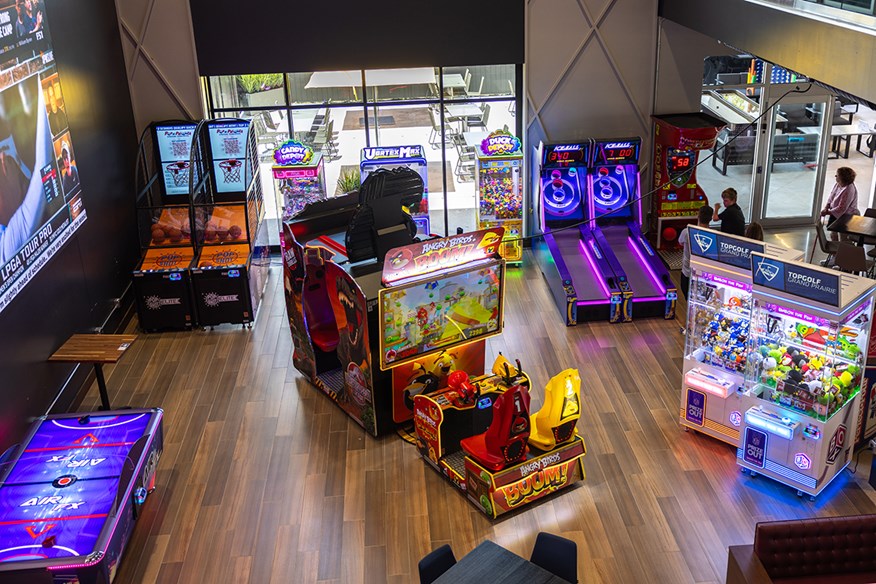
The recently opened Parsippany venue in New Jersey includes a sunken outfield, new lighting, customer-controlled televisions, lounge seating, an arcade, sports-viewing areas and a revised menu. My Bay, My Way brings the golf, games and ordering into the same phone-based experience. One group can watch a game and order another platter; in the next bay, somebody can work through their bag and leave with a record of every shot.
That approach will be tested against the difficult years McKillips has inherited. Opening new venues creates headlines, but the future of the business depends more heavily on repeat visits, stronger sales at established locations and convincing golfers that Topgolf belongs in their routine. When I ask directly whether he genuinely believes the future is bright, there is no hesitation.
“Absolutely,” he says. “The future is incredibly bright. Our focus is on bringing golfers back to Topgolf.
“We’ll continue expanding the entertainment experience, introduce membership programs and keep delivering something new every quarter and every year. That’s what will keep the brand fresh.”
By now, the breeze across the range has stiffened further and the heat is marginally less oppressive as another ball climbs into the Southport sky, its trace appearing almost immediately on the giant screen to the left of the packed grandstand. Fans behind the ropes can follow the same flight on their phones as Matt Fitzpatrick’s caddie tosses him another ball.
The setting strips McKillips’ argument down to its simplest form. On one side of us, the best players in the world are using data to prepare for The Open. On the other, spectators are consuming the same shots through technology that many of them will recognize from a driving range or Topgolf bay.
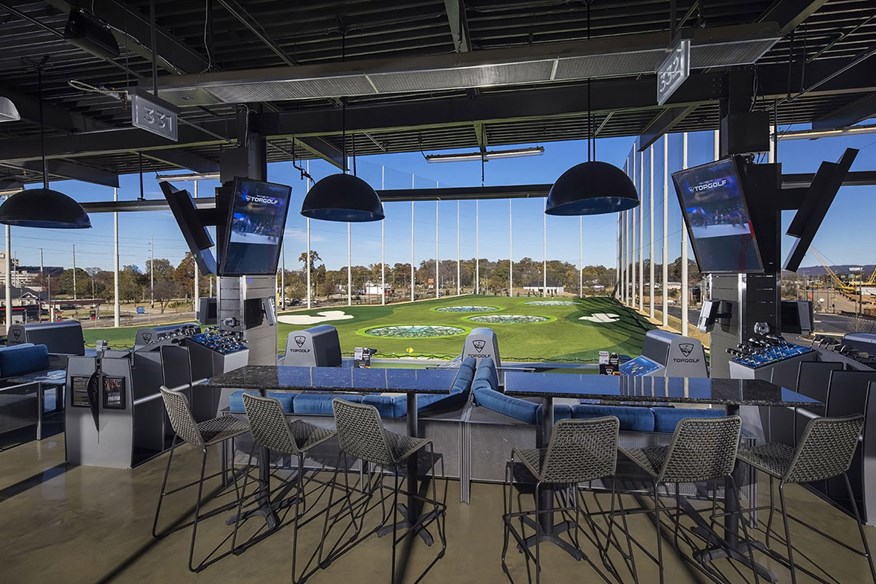
Topgolf will continue to sell food, drinks and nights out. For most guests, entertainment may still be what gets them through the door. McKillips’ challenge is to make golf the reason they come back. And if he delivers on those ambitious 2030 targets, he might prove a bigger superhero than those that once adorned his office walls at DC Comics.