

Listen to this article
Estimated 4 minutes
The audio version of this article is generated by AI-based technology. Mispronunciations can occur. We are working with our partners to continually review and improve the results.
After mopping up water that flooded the basement or seeped through the ceiling, the next step for many Edmonton homeowners is filing an insurance claim.
Rob de Pruis of the Insurance Bureau of Canada said Edmonton’s unusually stormy summer has resulted in thousands of claims and hundreds of millions of dollars in damage. June alone saw $230 million in insured damages and the storms just kept coming in July.
Will insurance policies cover these claims? And what can you do to prevent damage and limit your costs? CBC asked four people familiar with insurance and property restoration for advice on navigating the process.
Am I covered?
Experts say standard home insurance policies do not cover flooding.
David Mayer, the director of insurance and underwriting at rates.ca, said overland water coverage — a relatively new type of insurance — is becoming a more common add-on. It covers damage caused by rain, snowmelt, or water coming from lakes or rivers.
Flooding, and especially basement flooding, can also be caused by sewer backups, when wastewater flows into homes from sewer lines. Sewer backup coverage protects homeowners from paying the cost of damage in that scenario. Like overland flooding coverage, it’s also an optional add-on.
Some policies cover homeowners in cases where water seeps into the home from below the ground, but not all.
Mayer said it’s always a good idea to double-check what is covered and consider adding more coverage if needed.
What to do first?
Mayer said homeowners should make sure the flooded area is safe and then photograph all damage before doing any cleanup.
“You might need that evidence, whether you’re going to make an insurance claim or not,” he said.
He also recommends homeowners call their broker before making a claim to see if fixing the damage might cost less than their deductible amount.
Who cleans up?
Most insurance policies require that homeowners mitigate their losses by trying to remove standing water and prevent damage from getting worse.
Tom Bell, vice-president of operations for the property restoration company First General Edmonton and Fort McMurray recommends homeowners first get their belongings out of the way and try to remove standing water with a sump pump or vacuum pump.
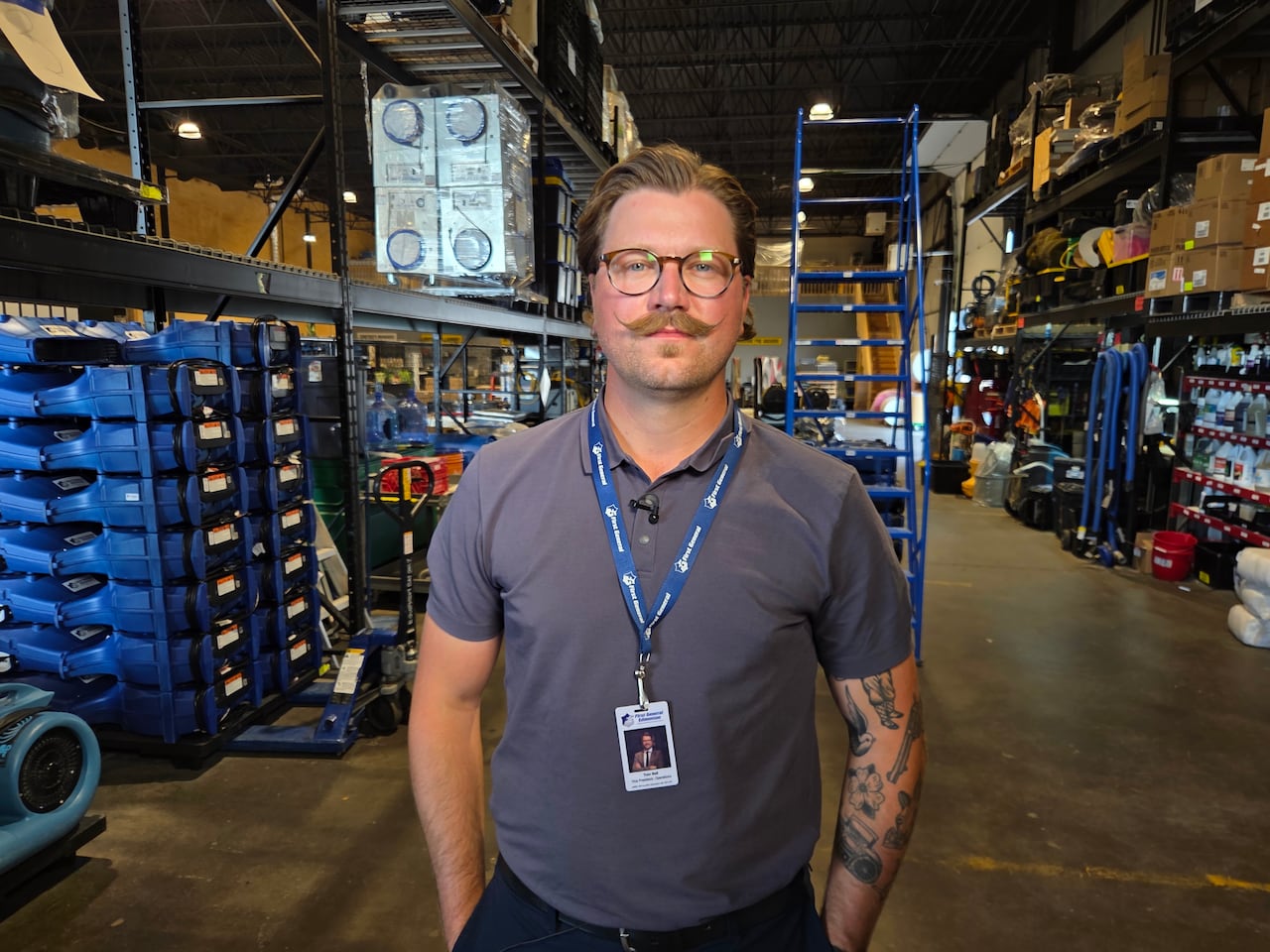 Tom Bell of First General Edmonton and Fort McMurray said property restoration companies are busy responding to water-damage related jobs. (Nathan Gross/CBC)
Bell said homeowners can call restoration companies for help before making insurance claims but they might have to make a few calls before finding one that can respond quickly. Not surprisingly, companies like his have been swamped all summer.
“I’ve been with this group for almost 15 years and this has been the most chaotic series of events in Edmonton,” he said.
He said the company has been bringing in people and rental equipment from other provinces and restoration specialists have been working 12-hour days.
“It’s a lot more difficult than typical conditions right now for a homeowner if they’re reaching out just to get support and mitigate their loss,” he said.
What to ask for?
Glenn Durkin, who runs GD Consulting and helps Alberta clients with property damage insurance claims, recommends speaking to an adjuster and asking for compensation for hours of cleaning work.
He said sometimes companies will pay homeowners for that work or apply it against a deductible.
“You can get your deductible written off if you do enough work,” he said.
Mayer said in many cases, additional living expenses may also be covered, for example if homeowners need to stay in a hotel or rental for a long period of time.