
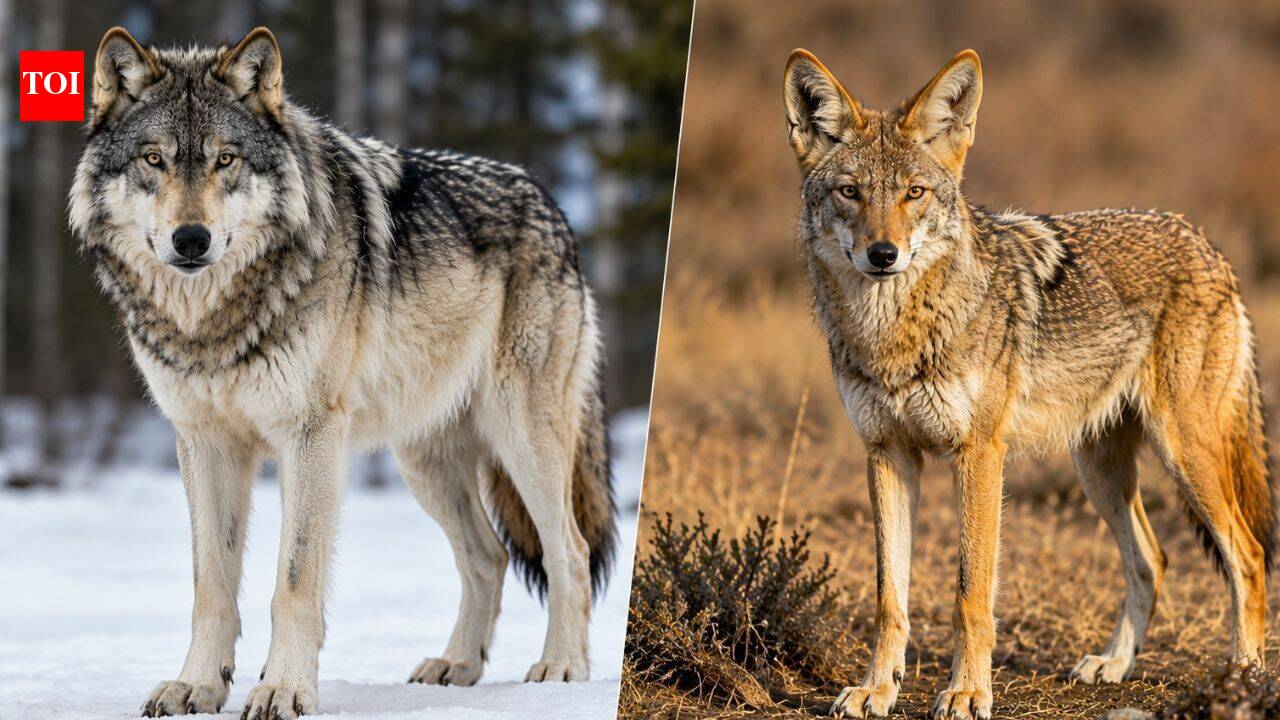
 Wolves and coyotes, both canids, share North America but exhibit distinct survival strategies. Wolves hunt large prey in packs, requiring wild habitats and extensive territories. Coyotes, however, are solitary or form small groups and adapt readily to diverse environments. Their differing adaptations have led to contrasting conservation statuses and widespread distribution. These two iconic canines showcase divergent evolutionary paths from a shared ancestry. Wolves and coyotes have shared North America’s wild landscapes for thousands of years, roaming the same forests and plains beneath the same night sky. From a distance, they may seem like different versions of the same animal. But both belong to the same family, ‘Canidae’, skilled hunters, and have survived alongside humans for centuries.A wolf mainly depends on teamwork to hunt some of the largest animals in North America. A coyote relies on speed, caution, and an extraordinary ability to adapt. Wolves remain closely tied to wild landscapes, while coyotes have adapted so well that they now roam farmland, suburbs, and even major cities.
Wolf vs coyote: How to tell the difference between North America’s two iconic wild canines
FeatureWolfCoyoteScientific nameCanis lupusCanis latransFamilyCanidaeCanidaeSize14–65 kg, up to 2 m long9–23 kg, 1–1.3 m longBody buildLarge, muscular and powerfulSlim, lightweight and agileSocial structureLives in organised packsMostly solitary or small family groupsHabitatForests, mountains and tundraPlains, forests, deserts, farms and citiesDietDeer, elk, moose and other large mammalsRabbits, rodents, birds, fruit, fish and carrion
Understanding the differences between wolf and coyote
1. Size
A wolf carries a broad chest, powerful shoulders and paws built for covering vast distances. Adult males can stretch to two metres in length and weigh as much as 65 kilograms.A coyote has narrower jaws and smaller feet. It weighs as much as 23 kilograms and is about 1.3 m long. The largest coyotes mainly live in the northeastern United States and eastern Canada.
2. Appearance
A wolf has a broad face, a thick neck, and a heavy coat that can appear grey, brown, black, or even white depending on where it lives. Its ears are short and rounded. A coyote has pointed ears, and a bushy tail gives it a sharper outline. The grey-brown coat blends easily into dry grass and woodland.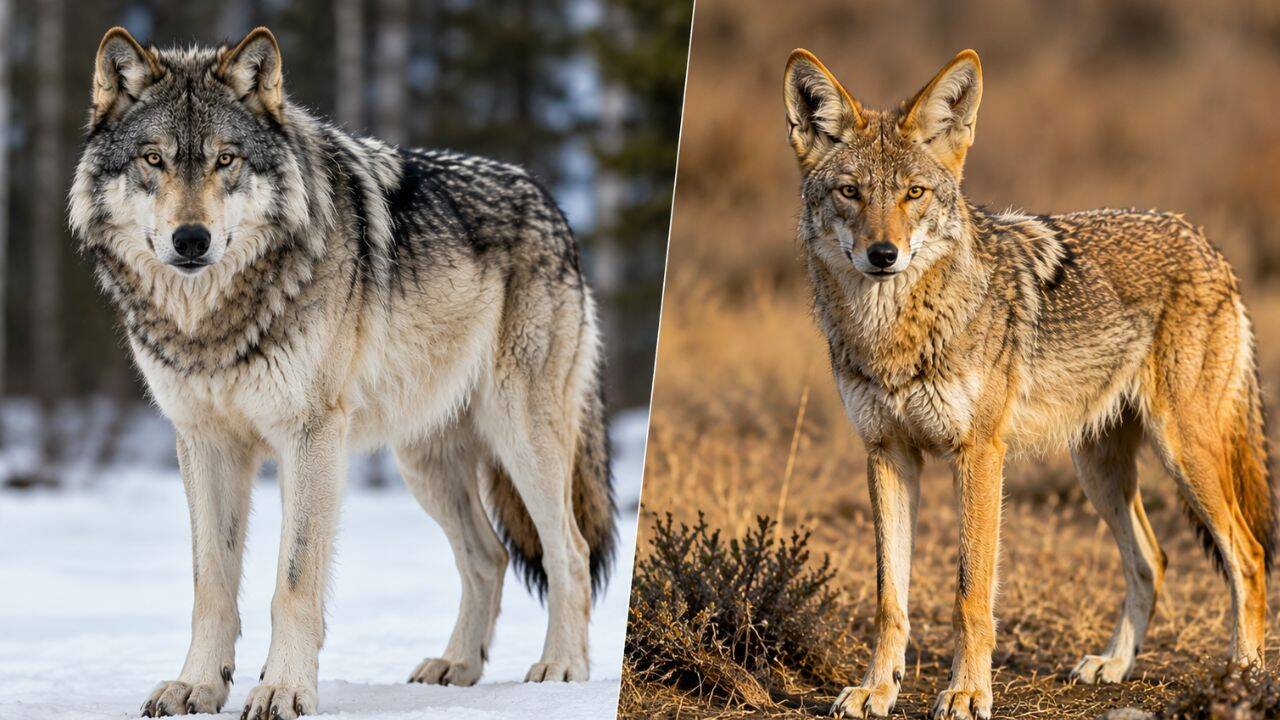
PC: AI Generated
3. Social behaviour
A wolf community is more than just a hunting group. It is a tightly connected family led by a breeding pair and supported by their offspring. Every member helps defend territory, raise pups, and bring down prey.Coyotes follow a quieter path. Most live alone or with a mate. Small family groups form during the breeding season, but they rarely develop the complex social structure compared to wolves.
4. Hunting style
A wolf group works together with remarkable precision. Deer, elk, moose, and even bison become possible targets because every animal has their role during the chase.Coyotes prefer flexibility. Rabbits, rodents, birds, insects, fruit, and carrion all become food when available. During winter, they sometimes work together to hunt larger prey.
5. Habitat
Wolves still depend on the stretches of forest, mountains, and northern wild forests where healthy populations of large prey survive.Coyotes are largely confined to the plains and deserts; they now thrive across all parts of North America. Farms, suburbs and city parks have become an important part of their range.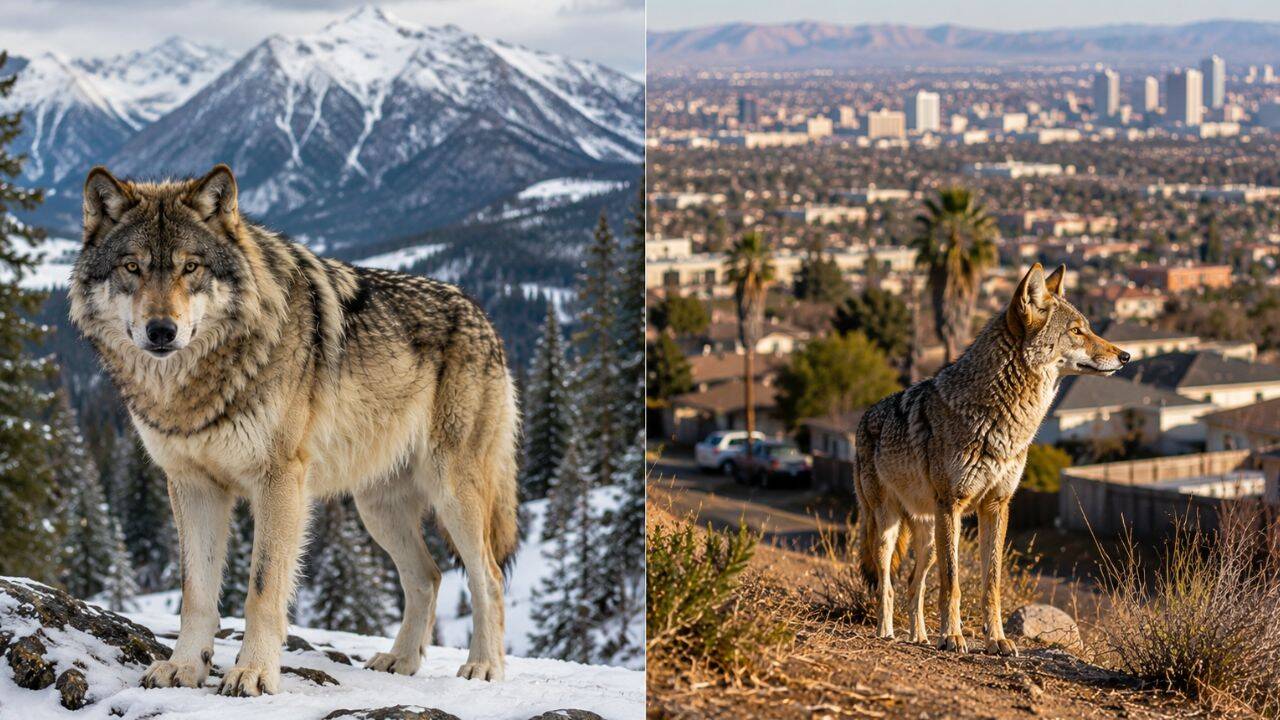
PC: AI Generated
6. Adaptation
Wolves remain less tolerant and need larger territories and reliable populations of wild prey, making them much less common around towns and cities.Coyotes move easily through neighbourhoods, golf courses and green spaces. They hunt, scavenge and adjust their behaviour with their remarkable ease.
8. Conservation status
Wolf populations declined after decades of hunting and habitat loss. Conservation efforts have helped restore some populations, though there are many that remain carefully managed.Coyotes are listed as Least Concern by the International Union for Conservation of Nature. Their adaptability has allowed them to spread across North America despite continuous hunting and control programmes.
Why wolves and coyotes are often mistaken for each other
Wolves and coyotes both belong to the same family and share many physical traits. They can even interbreed, producing hybrids known as coywolves.Yet after evolution, they are very different now. One became a symbol of wilderness that is built on strength and cooperation. The other became one of nature’s greatest survivors, living almost anywhere wherever it finds a space to live. They began with the same ancestry, but today they tell two very different stories of survival.