
Your support helps us to tell the story
From reproductive rights to climate change to Big Tech, The Independent is on the ground when the story is developing. Whether it’s investigating the financials of Elon Musk’s pro-Trump PAC or producing our latest documentary, ‘The A Word’, which shines a light on the American women fighting for reproductive rights, we know how important it is to parse out the facts from the messaging.
At such a critical moment in US history, we need reporters on the ground. Your donation allows us to keep sending journalists to speak to both sides of the story.
The Independent is trusted by Americans across the entire political spectrum. And unlike many other quality news outlets, we choose not to lock Americans out of our reporting and analysis with paywalls. We believe quality journalism should be available to everyone, paid for by those who can afford it.
Your support makes all the difference.Read more
Nearly two-thirds of American children, aged 2-19 years old, have caffeine as a regular part of their daily diet – including half of kids under age 5, a new federal report shows.
Kids consumed an average of 19.4 milligrams of caffeine a day – the majority of a can of original Coca-Cola – between August 2021-2023, the Centers for Disease Control and Prevention found.
While it’s a myth that the stimulant can stunt growth, drinking caffeine during childhood can still come with concerning impacts to health.
It can interrupt crucial hours of sleep needed for kids to grow and for their brain to develop, experts say.
“Caffeine-containing foods and beverages can have effects on the body and mind that interfere with every aspect of what children need to thrive,” Columbia University Irving Medical Center pediatrician Dr. David Buchholz said in a prior statement.
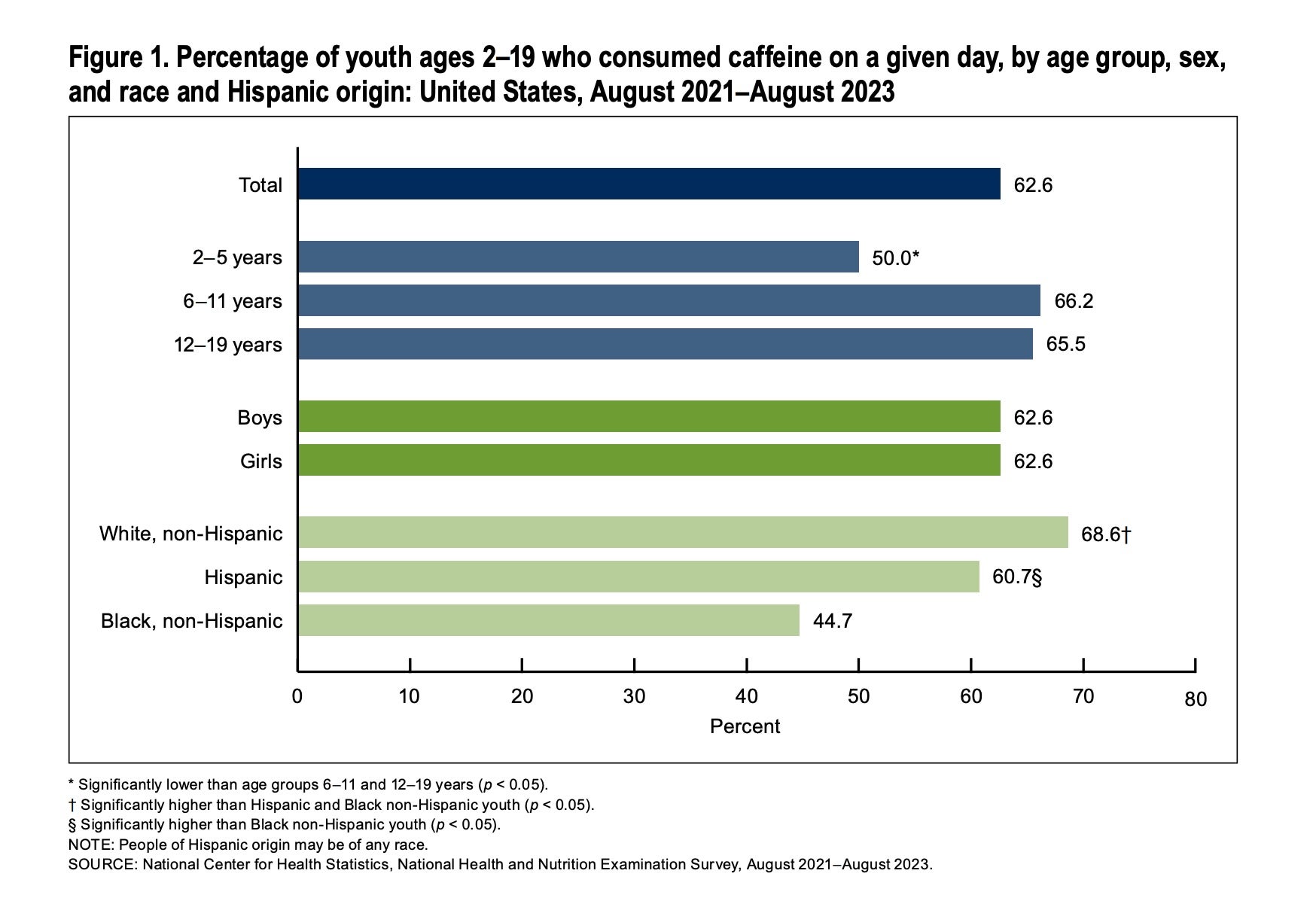 This chart from the Centers for Disease Control and Prevention shows the percentage of youth between the ages of 2-19 who have caffeine in their diet on any given day from August 2021-2023, broken down by age group, sex, race and Hispanic origin. There is no known safe amount of caffeine for kids age 11 and younger (CDC)
Interrupting a child’s sleep cycle increases symptoms of anxiety, creates stomach problems and – in some cases – can lead to a dependency on caffeine or even a rare fatal overdose.
An increase in heart rate and adrenaline after chugging caffeine can cause the electrical system of the heart to “misfire,” Dr. Paul Thompson, co-physician-in-chief of the Hartford HealthCare Heart & Vascular Institute, explained in 2017.
Other symptoms include headaches, dehydration, diarrhea and high blood pressure, the medical center noted.
Part of the problem is that kids are smaller than adults and it takes much less caffeine to cause problems. While adults are able to handle around 400 milligrams of caffeine a day, there is no known safe amount of caffeine for anyone age 11 and younger.
Teens should limit their consumption to no more than 100 milligrams – or one cup of coffee. But many energy drinks popular with teens far exceed that amount, the American Academy of Pediatrics says.
“This might be why so many labels carry warnings that the drink is meant for adults only,” the academy wrote.
The academy says kids and teens should not consume energy drinks.
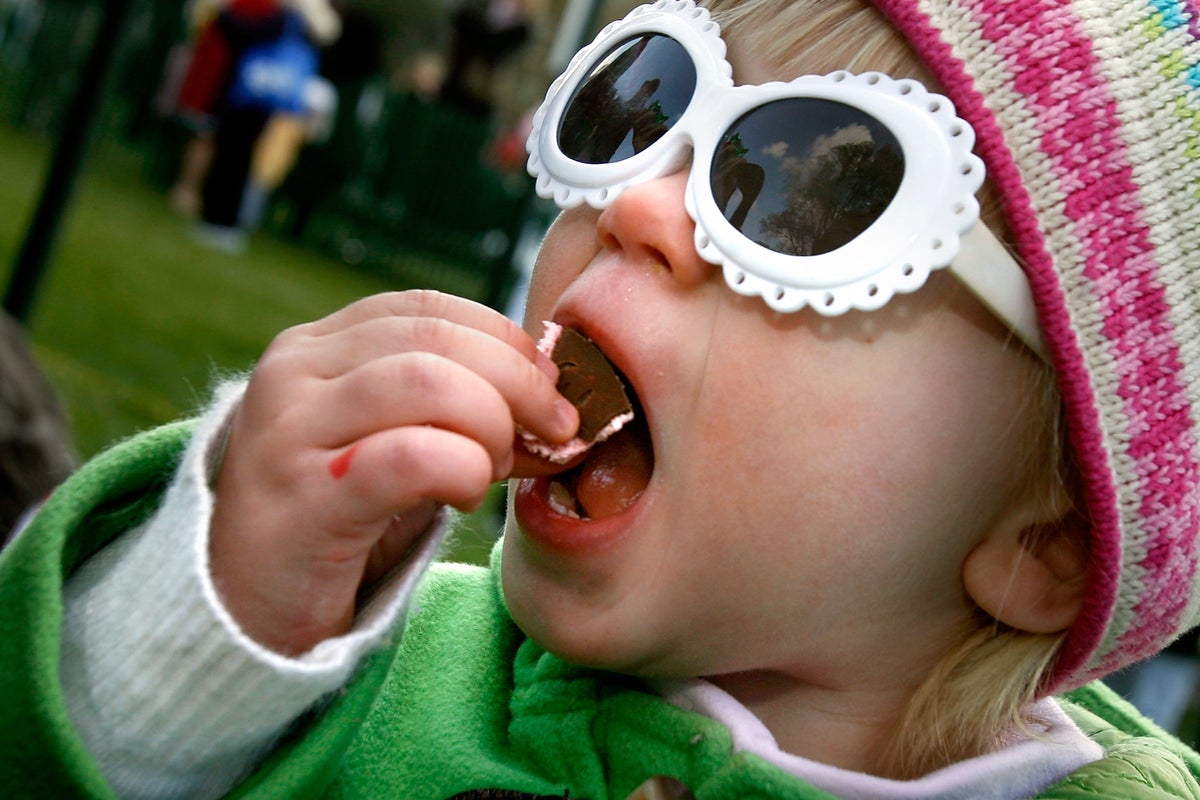
Drinks aren’t the only products to blame, either. Candy and sweet bakery products were in the top five sources of caffeine consumed by youth, the CDC report said.
Products that parents might feel safe to serve for dessert could have more caffeine than they realize, as well as bad sugar that leaves children at risk of developing obesity or diabetes.
“A 3.5-ounce dark chocolate bar might have anywhere from 50-150 milligrams of caffeine. Ice cream, protein bars, chocolate chips, energy bars and even chewing gum can have hidden caffeine,” the academy explained. “Nutrition labels do not have to list caffeine content.”
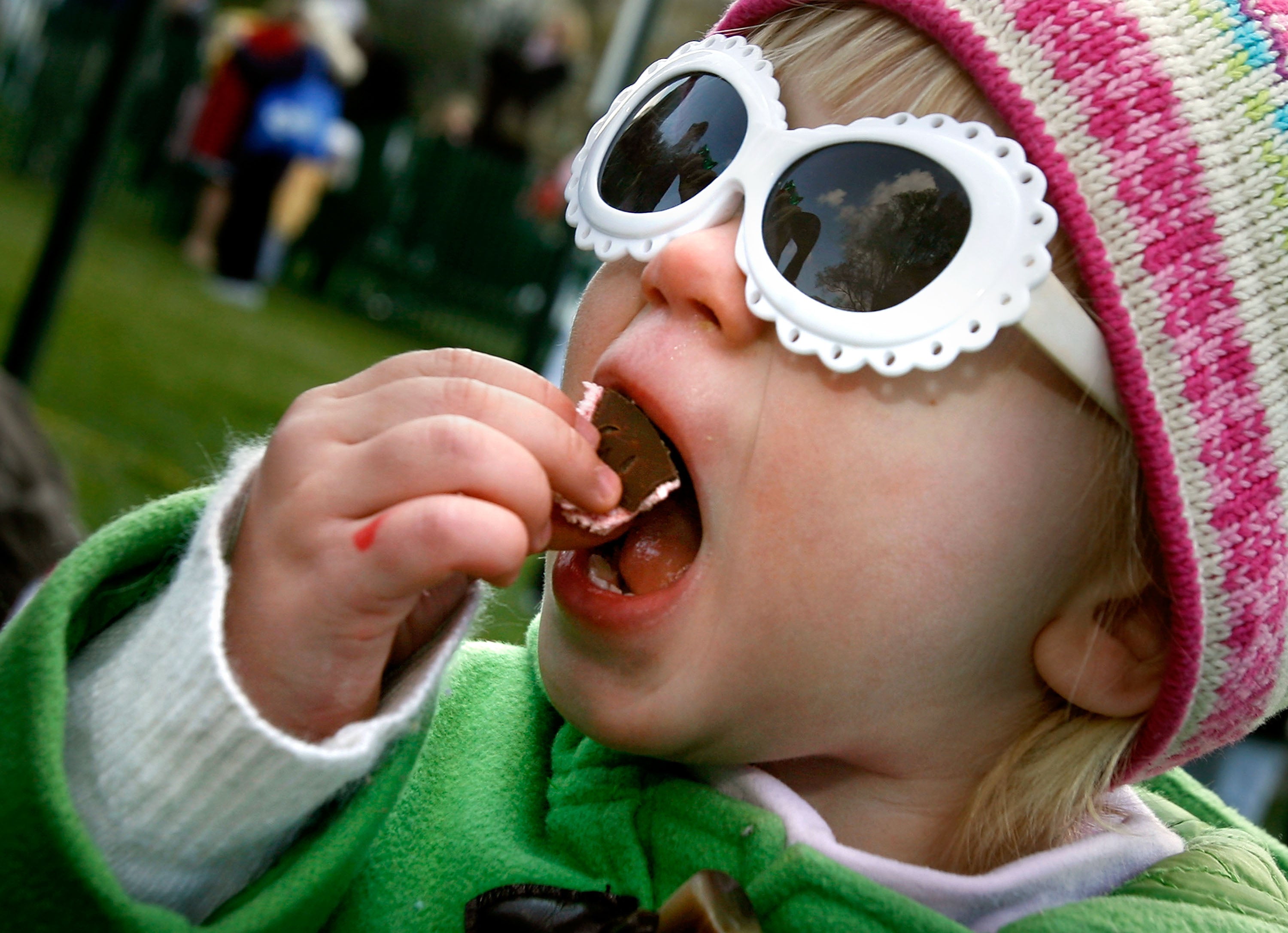 Many kids eat chocolate and other sweet treats. Caffeine can be lurking inside and candy and sweet bakery products were in the top five sources of caffeine consumed by youth (Getty Images)
There are several recommended practices to help kids and teens to avoid caffeine. First, remind children where it may be lurking and explain what could happen to them if they have too much.
Second, ensure they are getting enough water. On a typical day – without extreme heat as a factor – younger children aged 1-3 might only need four cups of water, but those aged 4-8 need five cups and older kids need 7-8 cups, the Seattle Children’s Hospital says.
Teenagers need 10 or more cups, according to the Academy of Nutrition and Dietetics.
And lastly, there’s no substitute for good sleep. Preschoolers should get 10-13 hours, older kids should get between 9-12 hours and teens should get between 8-10 hours, per the CDC.
“If you suspect your child or teen may be struggling with sleep deprivation, consulting a health care or mental health professional can help you determine a path toward restoring good sleep habits and ensuring a successful future,” the Mayo Clinic advises.