

Listen to this article
Estimated 5 minutes
The audio version of this article is generated by AI-based technology. Mispronunciations can occur. We are working with our partners to continually review and improve the results.
For the first time in six years, police will march in the Vancouver Pride Parade on Sunday, marking a major shift for the annual event after organizers barred police in 2020.
Concerns over police participation remain, however, with one longtime vendor saying transparency from organizers about police presence would’ve helped them decide whether to participate in this year’s parade.
Out On Patrol, a non-profit peer support organization for 2SLGBTQ+ members of law enforcement, confirmed its participation in a statement to CBC News.
The group represents active and retired officers, civilian employees, and volunteers for law enforcement agencies, including the RCMP and Vancouver Police Department (VPD).
“This is an exciting milestone for us as we continue to build connections between the 2SLGBTQ+ community and those working in law enforcement,” the group’s statement reads.
This will be the first time the group will march in Vancouver Pride since it was formed in 2019.
The Vancouver Pride Society would not confirm whether Out On Patrol is participating this year. It said no uniformed VPD officers would participate, but that it could not disclose information about individual groups due to safety protocols.
The VPD separately confirmed that some of its sworn and civilian members would march with Out On Patrol.
WATCH | Security a top priority at Sunday’s Pride Parade: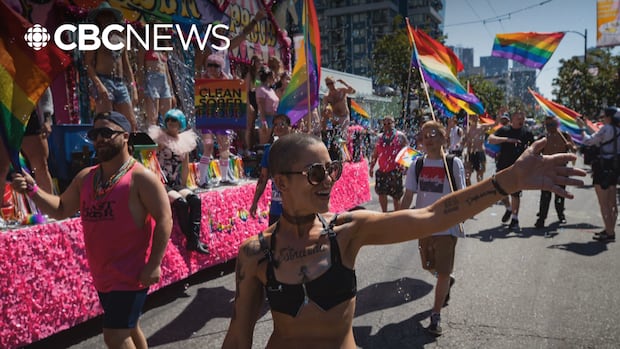
Police, security measures ramped up for Vancouver Pride Parade 2026
Pride Week has kicked off in Vancouver. Organisers say they’re expecting more than 9,000 people at the Sunday parade. After a Pride attack in Berlin earlier this month, security is a top priority. The CBC’s Ruby Cornish has more.Police participation barred since 2020
The Vancouver Pride Society has not approved police entry for the parade since 2020.
In the lead-up to that year’s Pride Week, the society barred all law-enforcement participation in the wake of the murder of George Floyd by a police officer in Minneapolis, and after years of pressure from Black Lives Matter activists.
“The roots of Pride are in righteous anger, riot and uprising against police brutality,” an online statement at the time read.
WATCH | Black Lives Matter Toronto stalled Pride Parade: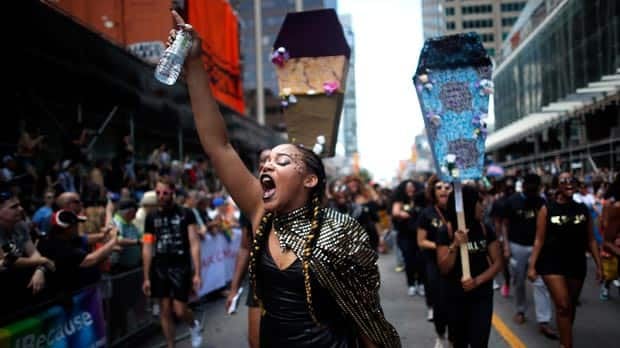
Black Lives Matter interrupts Toronto Pride Parade
Activist Alexandria Williams says her group temporarily shut down the parade to challenge ‘Pride’s anti-blackness’
The public debate over police involvement in Pride began in 2016, when Black Lives Matter activists brought Toronto’s parade to a temporary halt, in part because of concerns with police participation in the parade.
That summer, Black Lives Matter Vancouver called on police to voluntarily withdraw from the parade, writing an open letter reminding organizers that Pride has its roots in the Stonewall riots of 1969 — an event prompted by police raids on a gay bar in New York City.
Vendor wants transparency over police participation
Longtime Pride vendor and volunteer Noah Vestrum said their concern is not with police providing security at the event, but with law-enforcement organizations being given a platform to march or operate booths.
Vestrum, who is non-binary and uses they/them pronouns, began contacting organizers in January to ask how police would be involved in their events. They said the information would help them decide whether to apply as a vendor or volunteer.
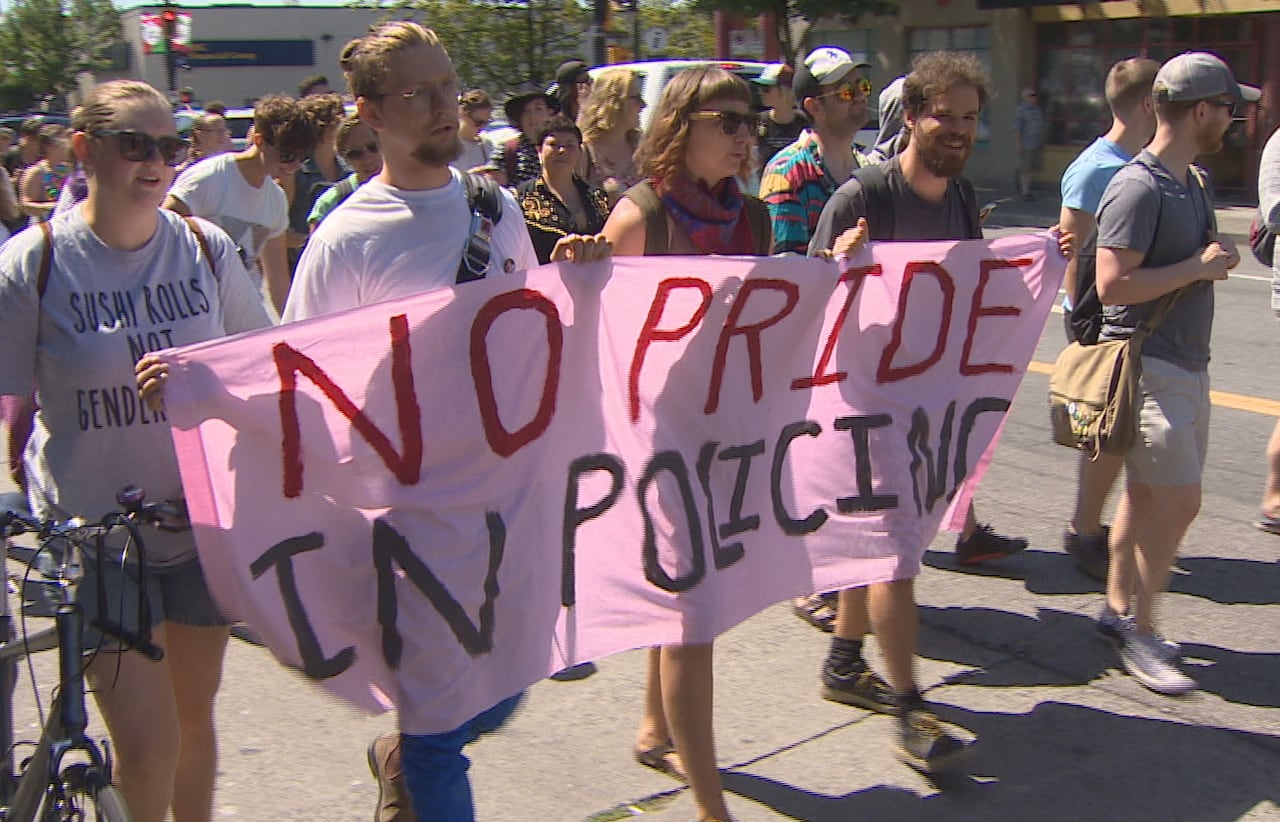 Participants at the 2016 Dyke March in Vancouver hold a sign in protest of the police participating in the annual Pride parade. (Doug Kerr/CBC)
“I wanted to … know what I was walking into,” they said.
After receiving no clear answer for months, Vestrum said a society co-chair finally confirmed on Tuesday that Out On Patrol would march — less than a week before the parade.
They said organizers have not explained what changed over the past six years.
“If they’re going back on their [previous stance], they should make a new statement so that people know ahead of time what they’re going to see at this event,” Vestrum added.
Vestrum said advance notice matters to people who have had traumatic experiences with police.
“For me, it’s personal,” they said. “More than once in my life police have been called in to help and they have made it significantly worse.”
Former RCMP officer welcomes the move
Surrey-Cloverdale MLA Elenore Sturko, a former RCMP sergeant, said Out On Patrol’s participation recognizes the contributions of 2SLGBTQ+ officers.
“They too have faced a history of discrimination,” she said.
Sturko, who is gay, said the relationship between police and the 2SLGBTQ+ community has been damaged by a history of discriminatory government and policing practices, but believes marching together could be a first step toward rebuilding trust.
“Slowly we need to be able to repair that relationship and interacting together, not only at Pride but throughout the year through different outreach programs is important,” the MLA added. “It’s a good start.”
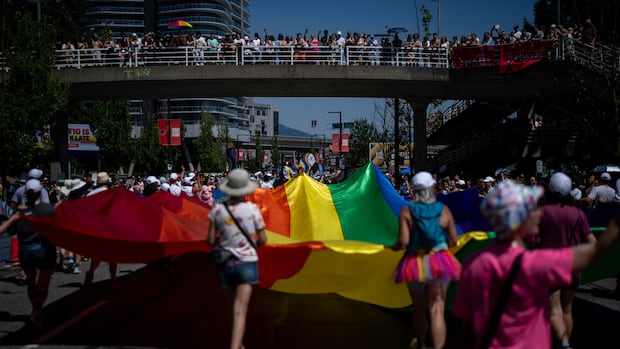
Over 100,000 attendees are expected to line the streets — from the north side of False Creek to Davie Village — for the 48th Vancouver Pride Parade on Sunday.