
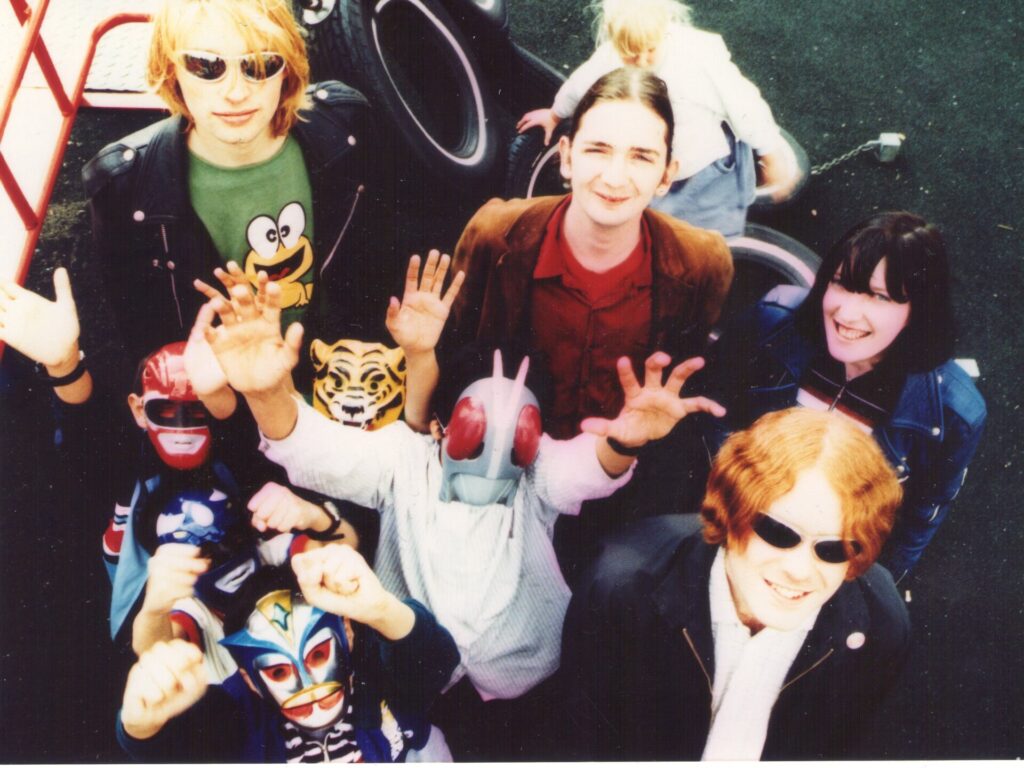
The dawn of the 1990s was a very different proposition for Glasgow’s independent music scene from that at the beginning of the previous decade. Postcard and Fast had long vanished, and the distribution network that had buoyed the majority of 1980s ‘indie’, The Cartel, had collapsed, bringing down with it many of the labels it supported. But things were about to look brighter.
In late 1994, Urusei Yatsura recorded a Peel Session and utilised the payment to form their own record label, Modern Independent Records. The aim was to bring their own – and their friends’ – music to the world, essentially taking their Kitten Frenzy fanzine one step further. The first 7-inch release was a split single, with Urusei Yatsura on one side and Alex Kapranos’ The Blisters on the other.
Urusei Yatsura were able to draw on the experience of putting together The Kazoo Collection, a DIY compilation celebrating the first anniversary of the seminal 13th Note Club, ‘The Kazoo Club’, which was run by Alex Kapranos and RM Hubbert. This collection featured the first Urusei Yatsura live recordings, and, in what would prove fundamental to this new emerging scene, it was manufactured at an obscure – but importantly cheap – pressing plant in the Czech Republic.
Modern Independent Records would be hugely influential for future Glasgow labels and, in a nod to Scritti Politti, their fanzine, Kitten Frenzy, also included instructions on how to make a DIY record.
Graham Kemp (guitar/vocals, Urusei Yatsura)
I had sent John Peel a three- track cassette of songs from the [Kazzo] compilation and he told me later he had it in his car for ages and would listen to it on his journey into the BBC to do his show. We met him in ’94 when he was in Glasgow for Sound City, and I went in to be interviewed on his show, which he was doing from the old BBC studios on Queen Margaret Drive. Alex Kapranos had invited him and [John] Walters to the 13th Note the night before and he caught our last two songs. He asked us then to do a session and we had to admit we had no gear of our own and no way to get to London as we were all broke. He arranged for us to do it in CaVa Studios with Stewart Cruikshank the day after we recorded the tunes for the ‘ALL HAIL’ record in Maryhill at The Practice Pad. They came out a lot better, maybe because Stewart and Tony Doogan were really good, or maybe the random amps we managed to borrow were less broken. Who can say?
We did ‘It Is’, ‘Thread’, ‘Road Song’, ‘Teen Dream’ and ‘Taster’. The night of transmission we were all listening at my flat again. It was quite odd and exhilarating to hear ourselves on the radio, like we were a proper band or something. I had been listening to Peel for ages and never seriously considered any band I was in would ever be played on the show. We were all delighted, and the songs were the best we had ever managed to record up to then. We used the money to put out a split single with The Blisters, and previous plays on Peel had got us an offer to put out the ‘ALL HAIL’ record. We started getting offers and being taken more seriously in our hometown, so that exposure helped immeasurably.
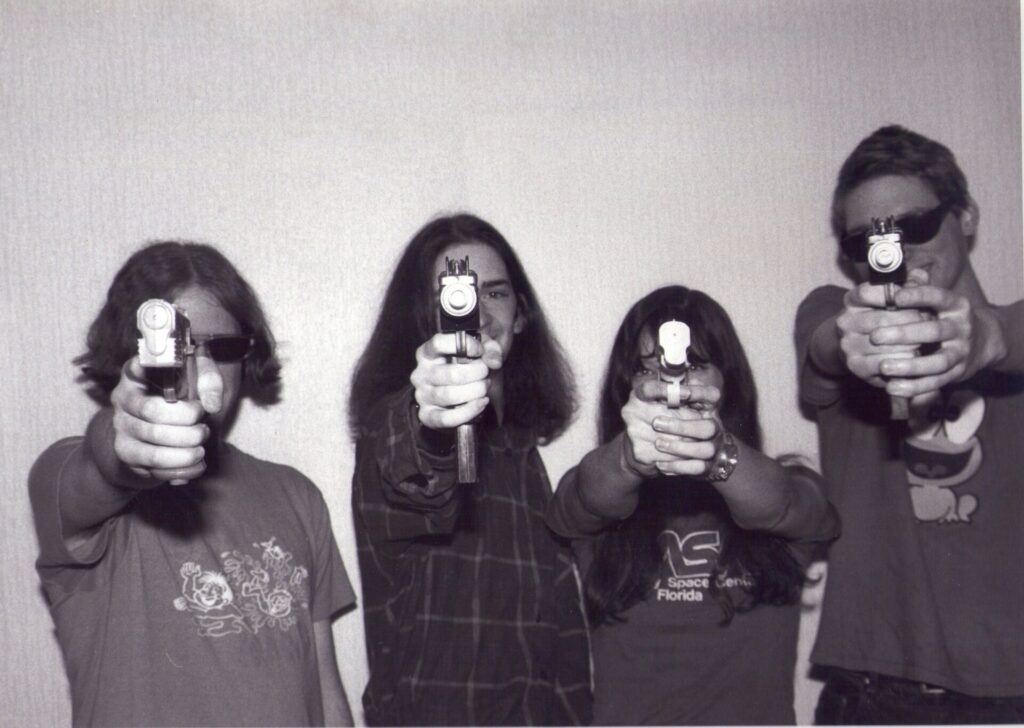
Elaine Lawrie (bass, Urusei Yatsura)
For me the biggest thrill was when we recorded our first Peel Session with Stuart Cruickshank at CaVa Studios. Because we always played very loud on stage and at rehearsals, we couldn’t hear ourselves a lot of the time. We kind of imagined what we sounded like and hoped for the best. When I heard ‘Road Song’ played loud, for the first time I felt like we were a band that I would be excited to see or buy records from.
Graham Kemp (guitar/vocals, Urusei Yatsura): We did the Modern Independent label. We chose that name to put out The Blisters/Urusei split single the Peel Session fees paid for. We ended up doing singles for Pink Kross and Eska, and Domino Rally, which was Fergus’s brother Magnus with us backing him up. (That single was part of his final show at art school. We went over for the degree show and set up in front of his paintings, but we didn’t play. It was more of an installation.)
We found a pressing plant in the Czech Republic which was affordable. We’d do wrap-around covers on the Drumchapel Youth Centre’s poorly supervised Gestetner machine and put them in plastic bags, classic indie style. Kitten Frenzy would organise launch nights in the 13th Note and Nice N Sleazy, which would set an entrance fee, which paid for the pressing. We’d give out a single to everyone who came and managed to make our money back pretty handily. We had distribution with SRD and managed to sell runs of 500 singles. We pretty much just wanted to spread the word about bands we liked, so there was no thought of making it a business. Just pure enthusiasm. There’s a comic strip ‘how to’ that we had on the back of the fanzine that showed how we did it.
Fergus Lawrie (guitar/vocals, Urusei Yatsura)
Momentum started to build, people were putting out fanzines and you started to see posters and flyers all around town. We got our friends involved and started reviewing shows and interviewing the other 13th Note bands and touring groups. It was our first chance to get backstage and up close to gigging professional musicians. There were a lot of established indie labels from the eighties but grunge and Britpop were creating a signing frenzy and major labels were encroaching into their territory as well which meant there were a lot of tremendous bands touring during that period. One of my first interviews was with Sebadoh and I didn’t have a clue what I was doing but Lou Barlow was fantastic and basically interviewed himself! My activist friend Gehan turned us on to a free copying machine at Drumchapel community centre. It was a clunky old Gestetner that would jam every few sheets until you set it up just right. We printed all the copies of our fanzine Kitten Frenzy on it, and I rode the bus out there several times with other bands to introduce them to it.
The success of The Blisters/Urusei single led to an expansion of the scene outside of the confines of the 13th Note. The attention led to Ché Records releasing Urusei Yatsura’s later single ‘Siamese’ in 1995.
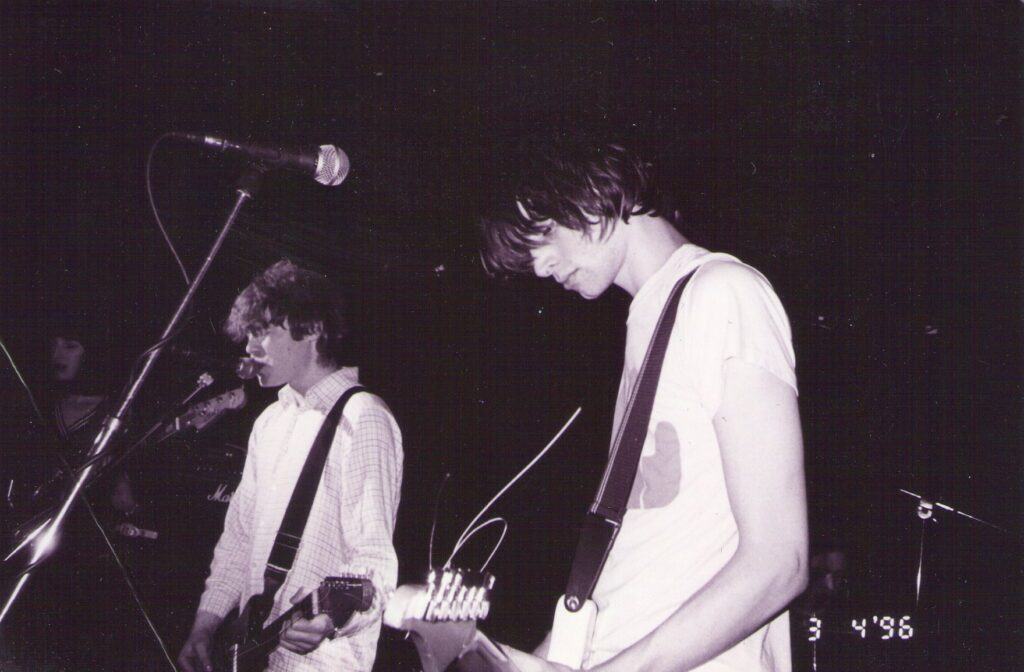
Fergus Lawrie (guitar/vocals, Urusei Yatsura)
We started to get support slots and put on our own shows at venues like Nice N Sleazy and book other bands from beyond the 13th Note scene like The Delgados and Spare Snare, who would reciprocate. Spare Snare brought us up to Dundee for a show and we all got drunk together afterwards and crashed at Jan’s house. AC Acoustics were fantastically kind and gave us our first support show at King Tut’s Wah Wah Hut. Outside of the band I had a bunch of drinking buddies and some small-time dealers I was friends with so I could always find someone to get drunk or wasted with pretty much every day.
‘Siamese’ was our hymn to the Kazoo Club really. ‘Form a gang, a lo-fi band!’ The first time we played it was at a gig at Sleazy’s that Alex Kapranos had booked that turned out to be the same night as the first T in the Park so everyone was out of town! The only people in the audience were Kazoo Club bands! It became our signature song and we would always end our sets with it in a massive noise freakout. There is footage of it being played at the Highbury Garage which gives a sense of the total chaos and energy of our shows. We crammed as many Kazoo Club bands into the words as we could and I think we managed to name check at least Pink Kross, Eska, Lung Leg, The Yummy Fur, The Blisters and Poison Sisters, and rip off a Trout lyric for good measure! Our songwriting was improving and we were growing in confidence. ‘Siamese’ was the first of a bunch of songs I wrote that included ‘Plastic Ashtray’ and ‘Kewpies like Watermelon’ that would all go on to be singles off the first album that got good radio play and helped establish the band and became a core part of our set.
Graham Kemp (guitar/vocals, Urusei Yatsura)
Ché came up to see us play at the Cathouse based on hearing us on Peel and a mad letter and tape I sent them as one of six record companies I would consider working with. We were all big fans of the 18th Dye album recorded with Steve Albini, and Ché had put that out, so we thought they were cool. We liked them. They got us into a small studio under some railway arches in Leytonstone with a guy called Charlie Mackintosh and I think we recorded six songs. We were only initially going to do one single. Ché were very open to things like colour vinyl, which was a bit uncool at the time but we really loved it. Everything now is colour vinyl so it’s hard to believe, but it was viewed as being substandard and maybe un-serious back then. I think they put out 500 copies (which was viewed as a really limited run in 1995) and quickly sold them, so did a couple more re-presses in different colours. I remember walking home with my copy in a carrier bag and stopping at Charing Cross because I had to look at it again. I was very pleased with it as an object and because we had the best song we had at the time on it. One of my many major malfunctions is being totally uninterested in the numbers side of things. I remember the initial quantity, I remember there being two represses, but I never thought to ask (and this continued throughout our so- called career) how many copies we sold. Of anything. I just cared whether we could do another one.
Elaine Lawrie (bass, Urusei Yatsura)
We were used to playing to our friends; suddenly there were people we had never met packing the place. We were getting given boxes full of letters and presents from fans, even from Japan, America and Europe. But everyone seemed to have the same sensibility as us, so it was more like we had found our audience and they had found us. Our gigs became celebrations of everything we loved. Disjointed fuzzy pop, fanzines, vinyl, cartoons, manga and pop-culture. If I hadn’t been in the band I would have come to see us, and would have loved it.
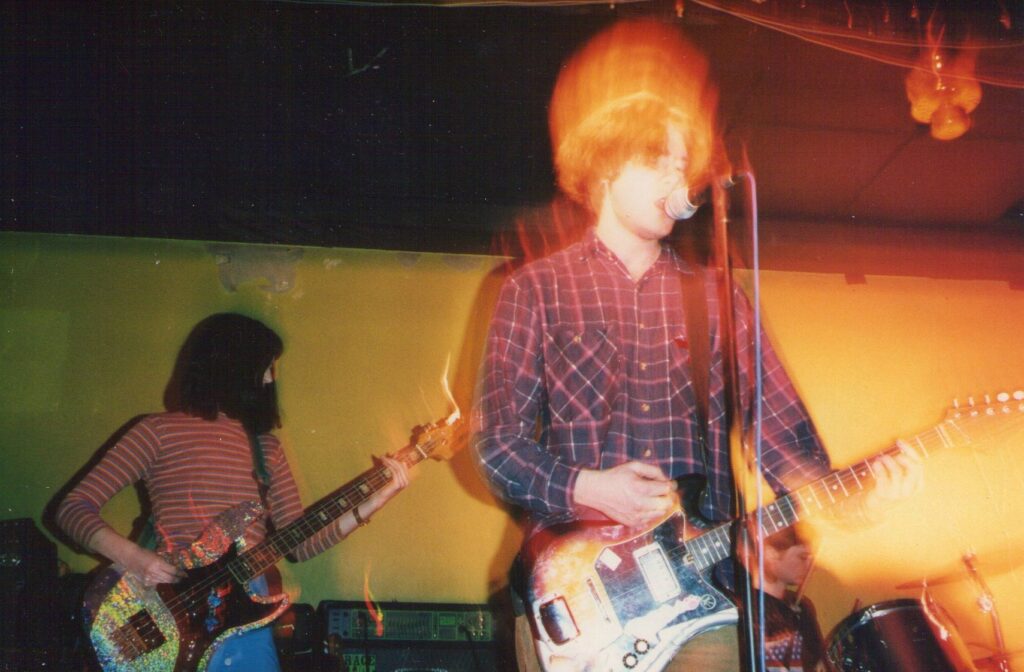
Fergus Lawrie (guitar/vocals, Urusei Yatsura)
Ché had hooked up with Seymour Stein at Sire Records and were shopping for bands. He had made a lot of money in the 80s licensing British bands for the US market. The idea was – instead of licensing – to develop a stable of bands in the UK, where it was easier to break bands, and get them into the press and then sell them to US anglophiles. A sister label called Primary was to be set up in New York to handle the imports. But Ché weren’t suits: Nick and Vinita were real indie fans who knew all the bands and had been putting out fanzines and records in London since their teens. They were the same age and dressed the same as us. I’m not sure if it was a demo we sent or they heard us on Peel but they got in touch and came to a couple of shows and we trusted them straight away: they could offer us a wage and
US releases and tours. We were concerned about selling out, as Ché was just a front for Sire really, but we knew the band wasn’t sustainable for much longer as things stood – we were all on the dole except Elaine and we had reached the limits of our local scene and needed another step up. We had total respect for The Delgados and what they were doing with Chemikal Underground but we knew we didn’t have the right dynamic or business sense to follow that route.
Before the Modern Independent label went into hibernation though they, as a further document of a moment they released two further 7 – inches, the ‘Abomination’ EP by Pink Kross, and ‘Trucking & Paving’ by Eska.
Colin Kearney (guitar/vocals, Eska)
Urusei Yatsura were big boosters for Eska from early on, which was very exciting as they were a band who’d released actual, honest-to-God records and were on the rise. I think the first interview we ever did was with Graham, and maybe Fergus, from Urusei Yatsura for the Kitten Frenzy fanzine, and I’m forever grateful for their sensitive editing of my puerile drivellings. They proposed a 7-inch release, so we went to The Practice Pad in Maryhill and banged out ‘Trucking & Paving’, ‘False Start’ (the one and only Kenny Macleod composition in the Eska catalogue, and it probably clocks in at the sub ten-second mark!) and ‘These Are The Dry Years’.
Our friend Mark designed the artwork, inspired by one of the many lies we trotted out about the meaning/origin of our band name, in this case that it was an acronym for Eagles Sometimes Kill Antelopes (other fibs included other acronyms, such as Esoteric Secret Knowledge Association, and apocryphal yarns about spontaneous chants at football matches – we talked a LOT of shit during interviews).
The Modern Independent trick of printing the covers on A4 coloured card, which when wrapped around the 7-inch left a semicircle of the record on display at the back, is still a stroke of genius in my opinion.
Scene Within a Scene // Scottish Indie Music from 1992-2001 by Grant McPhee will be published by Omnibus Press on 6 August