
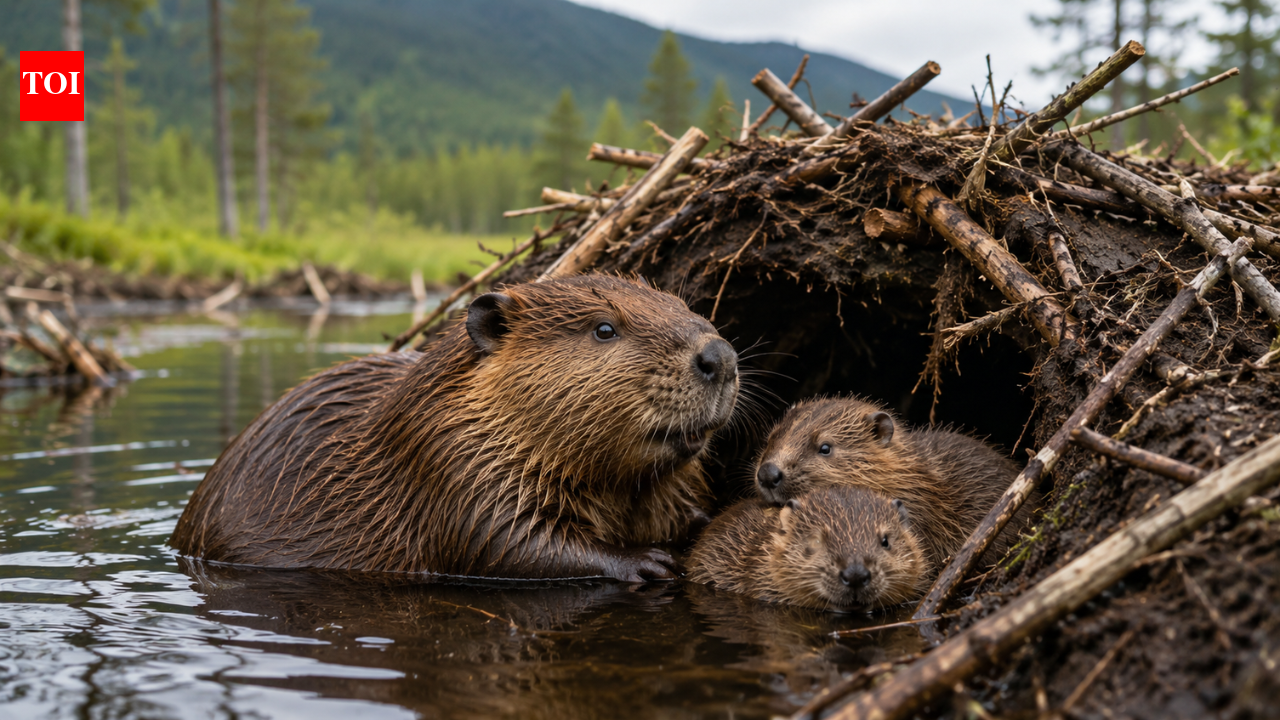
 Beaver kits have been born in Glen Affric for the first time in four centuries, a milestone for one of Scotland’s most closely watched rewilding projects. At least two kits have been spotted at Loch Beinn a Mheadhoin, both appearing healthy and active, according to Trees for Life, the charity behind the reintroduction alongside government agency Forestry and Land Scotland (FLS). The births follow a carefully staged release of 11 beavers into the glen over the past year, carried out under licence and with extensive community involvement. Wildlife cameras have already captured footage of the kits, including one swimming alongside its mother, as part of ongoing monitoring work. The animals were likely born in May or June and have only recently emerged from their lodge into open water. Their arrival marks the first evidence that the reintroduced beavers have successfully bred and settled into their new habitat, a promising sign for the population’s long-term survival. Conservationists hope the kits’ presence will encourage natural dam-building, helping restore wetlands, boost biodiversity and reduce local flood risk across the glen.
Why beavers disappeared from Glen Affric nearly 400 years ago
Beavers vanished from Glen Affric roughly 400 years ago, hunted for their pelts, meat and musk oil until none remained in the area. Records suggest small numbers may have survived elsewhere in Scotland until as late as the 16th century, but by the time formal reintroduction efforts began, the species had been absent from the country’s landscape for generations. Breeding activity in the glen is being treated by conservationists as proof that the reintroduction has properly taken hold, rather than the population simply persisting on the animals originally introduced.Tobias Leask, Trees for Life’s locally based Beaver Management Officer, has followed the animals closely since their release and has filmed the kits from a canoe during his monitoring visits. Reportedly, he described the moment of seeing them for the first time as one he will never forget, calling it a rare instance of witnessing history unfold in real time. He added that the kits symbolise a wildlife recovery centuries in the making and represent proof that nature can recover meaningfully when given the right conditions and enough time.
How 11 beavers were reintroduced to Glen Affric
The project traces back to 2022, when FLS and Trees for Life began laying the groundwork for a formal reintroduction, with Beaver Trust supporting the release phase and contributing expertise on beaver management. Eleven beavers in total were relocated under licence by NatureScot from agricultural land in Tayside, following a formal application from FLS, which manages the 17,604-hectare Glen Affric National Nature Reserve where the releases eventually took place.The releases happened in two separate stages spaced several months apart. A family of five beavers and a separate breeding pair were released at two sites on the loch last October, followed by a further family of four beavers in February. Before any animals were introduced, the project went through three distinct phases of consultation with local communities and land managers, and local volunteers have remained closely involved in the process, both before and after the releases took place.
Why baby beavers are important for Glen Affric’s ecosystem
Dr Roisin Campbell-Palmer, Head of Restoration at Beaver Trust, said the arrival of kits is a strong indication that the beavers have settled well into their new surroundings and are functioning as an established breeding population, rather than simply persisting as individual animals. She noted that every reintroduction requires careful planning and close monitoring after release, which is what makes early signs of successful breeding particularly meaningful for the team involved.Beyond the immediate wildlife story, the kits are expected to shape the glen’s ecology directly in the years ahead, as beavers are known for creating wetlands, filtering water and adding resilience against the effects of climate change. Trees for Life has also set up a local volunteer monitoring group to track the animals’ progress, with close to 30 people from across the area already involved, and the charity says further volunteers remain welcome as the project continues.