
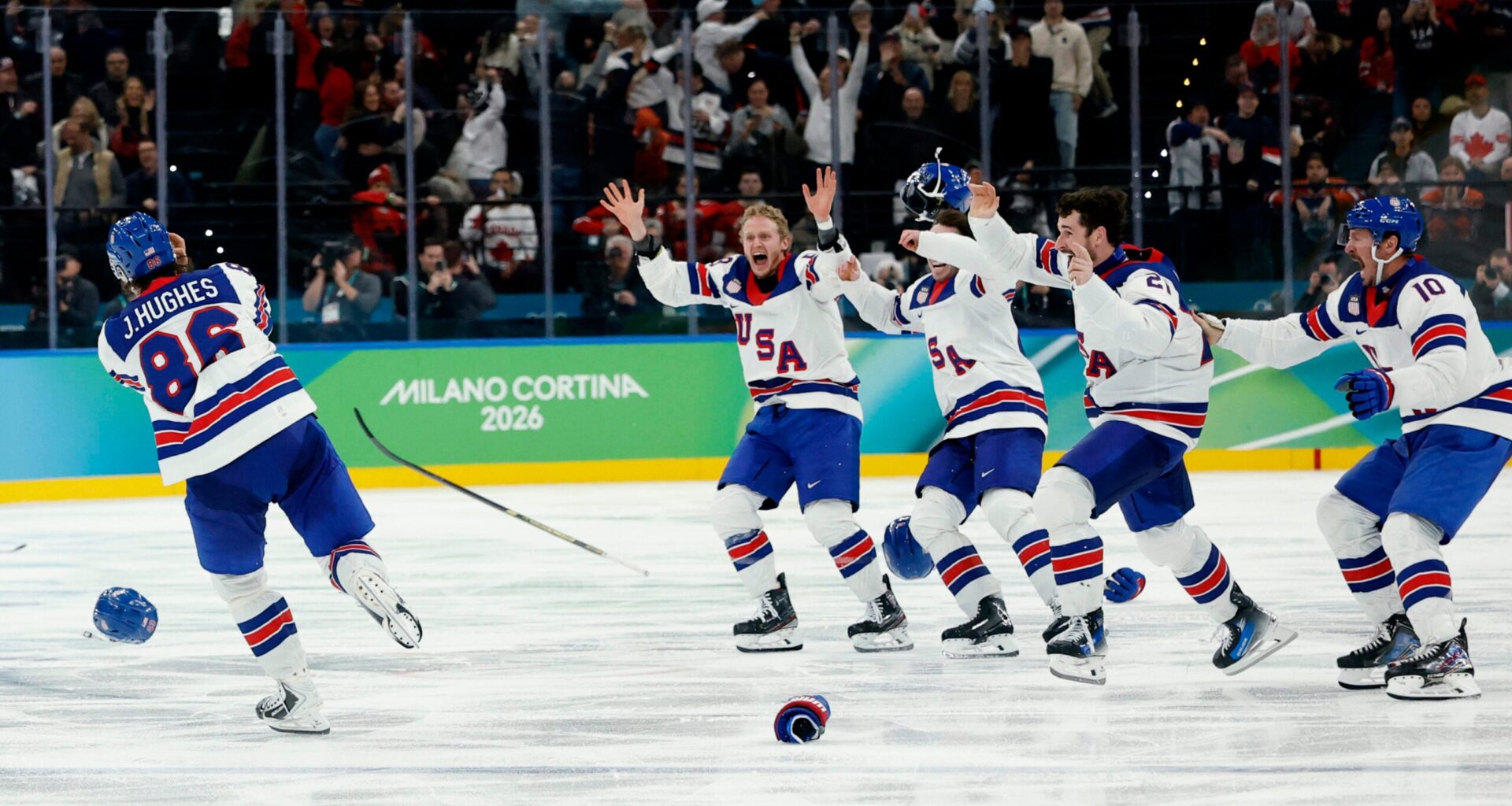
One of the habits I carried with me from more than 40 years as a university professor is that I still tend to think in research questions. When something interesting happens, I don’t immediately jump to an answer. I start with a question. Then I look at what the evidence seems to be saying. Watching the Atlantic Division this past season while thinking about the coming season led me to ask a few research questions.
Here are the questions I found myself asking: Was last season’s Atlantic Division standings an aberration? If so, did the Olympics play a role? Did the Olympic schedule really affect every team equally, or did it favour certain roster constructions? If it didn’t affect every team equally, did it influence where teams ultimately finished?
Most fans seem to assume the answer is obvious. Every team dealt with the compressed schedule. Every team lost players to the Olympics. Every team had to play more games in fewer nights. So everyone was affected equally. That sounds reasonable. But I’m not sure it’s true.
The Same Event Doesn’t Necessarily Produce the Same Results
One of the first lessons researchers learn is that people can experience the same event but not the same consequences. The event may be identical. The impact rarely is.
That made me look at the Atlantic Division a little differently. The Toronto Maple Leafs and Florida Panthers did not make the postseason. The Buffalo Sabres finished first with 109 points. The Tampa Bay Lightning and Montreal Canadiens both finished with 106. The Boston Bruins ended with 100. Those aren’t huge gaps. When the standings are that close, little differences begin to matter. One extra win. One extra injury. One week when tired legs don’t quite recover.
 Oliver Ekman-Larsson of the Toronto Maple Leafs played for Team Sweden at the Olympics.
(Photo by Mark Blinch/NHLI via Getty Images)
Those little things can change who wins a division. Now think about how these teams were built.
The Lightning, Bruins, and Maple Leafs Depend Upon Elite Players
Tampa Bay and Boston have depended on veteran stars for several seasons. Toronto also depends heavily on elite players who log big minutes and are exactly the kind of players selected for Olympic rosters.
There is absolutely nothing wrong with that. In fact, that’s usually what successful teams look like. But veteran players recover differently than younger players. If they also spent two intense weeks competing in the Olympics before returning to an already compressed NHL schedule, they weren’t simply playing more hockey. They were recovering less.
Now compare those teams to Buffalo and Montreal. Both teams have become younger. Both have more speed throughout the lineup. Both can spread minutes more evenly across four lines.
That doesn’t automatically make them better hockey teams. But it may make them better equipped for a season where recovery became almost as important as talent.
Looking at the Olympic Rosters of Atlantic Division Teams
Looking at the Olympic rosters of select Atlantic Division teams, the Sabres had two Olympic team members (Rasmus Dahlin (RD) – Sweden and Tage Thompson (C) – United States) and the Canadiens had four (Oliver Kapanen (C) – Finland; Juraj Slafkovský (LW) – Slovakia; Nick Suzuki (C) – Canada; and Alexandre Texier (RW) – France). By and large, they are younger players.
In contrast, look at the Bruins, Panthers, Lightning, and Maple Leafs. While Toronto has the least excuse for an Olympic impact, the other teams made a huge contribution to the Winter Games.
Boston Bruins (7)
Henri Jokiharju (D) – Finland
Joonas Korpisalo (G) – Finland
Elias Lindholm (C) – Sweden
Hampus Lindholm (D) – Sweden
Charlie McAvoy (RD) – United States
David Pastrnak (RW) – Czechia
Jeremy Swayman (G) – United States
Florida Panthers (10)
Uvis Balinsksis (RD) – Latvia
Sam Bennett (C) – Canada
Gustav Forsling (LD) – Sweden
Anton Lundell (C) – Finland
Eetu Luostarinen (LW) – Finland
Brad Marchand (W) – Canada
Niko Mikkola (LD) – Finland
Sam Reinhart (RW) – Canada
Matthew Tkachuk (W) – United States
Sandis Vilmanis (W) – Latvia
Tampa Bay Lightning (8)
Oliver Bjorkstrand (LW) – Denmark
Erik Černák (RD) – Slovakia
Jake Guentzel (LW) – United States
Zemgus Girgensons (LW) – Latvia
Brandon Hagel (LW) – Canada
Victor Hedman (LD) – Sweden
Pontus Holmberg (RW) – Sweden
JJ Moser (LD) – Switzerland
 Feb 22, 2026; Milan, Italy; Auston Matthews #34 of Team United States celebrates after the game against Team Canada during the Milano Cortina 2026 Olympic Winter Games at Milano Santagiulia Ice Hockey Arena. Mandatory Credit: Geoff Burke-Imagn Images
Toronto Maple Leafs (3)
Oliver Ekman-Larsson (RD) – Sweden
Auston Matthews (C) – United States
William Nylander (RW) – Sweden
Technically, Every NHL Team Played a Similar Schedule
Fans might say that every team played the same schedule. Technically, that’s true. But the same schedule isn’t necessarily the same experience. If five people run the same marathon, nobody assumes they’ll all feel the same the next morning. Age matters. Conditioning and recovery matter. Previous injuries matter.
Why would hockey be any different? I’m not arguing that Buffalo won the Atlantic because of the Olympics. Nor am I arguing that Tampa Bay, Boston, or Toronto would automatically have finished higher without them. That’s impossible to prove.
What I am suggesting is that the Olympic schedule may have rewarded younger teams with more depth while placing a heavier burden on older, star-driven clubs.
Should We Expect the Atlantic Division to Finish the Same Way Again?
If that’s true, then perhaps the final standings weren’t simply a reflection of talent. They may also have reflected which roster construction was best equipped to handle one of the most unusual NHL seasons we’ve seen in years. If that’s the case, then we should probably be careful about treating last season’s standings as a reliable predictor of what comes next.
Buffalo and Montreal may indeed be emerging powers in the Atlantic Division. Their young cores have earned that respect. But it’s also possible that veteran teams like Tampa Bay, Boston, Florida, and even Toronto were asked to navigate a season that placed a heavier burden on the very players they rely on most.
That doesn’t excuse disappointing seasons. It simply reminds us that context matters. That’s one reason I still enjoy thinking like a researcher. Research questions don’t always produce definitive answers. Sometimes they simply encourage us to look at familiar evidence from a different angle.
Did the Olympics Change the Atlantic Division Race?
The question isn’t whether the Olympics affected the NHL season. They almost certainly did. The better question is whether they affected every team equally. If they didn’t, then last season’s Atlantic Division standings may tell us as much about an unusual schedule as they do about the true balance of power in the division.
That’s a question worth keeping in mind before we assume the Atlantic Division will unfold the same way this season.
Free Newsletter
Get Season Previews coverage delivered to your inbox
In-depth analysis, breaking news, and insider takes – free.