
Stay up to speed with stories written by drivers, for drivers.
Get automotive news, DIY tips, market trends, in-depth car profiles, and more right in your email inbox.
In the mid-1950s, Alejandro DeTomaso left his native Argentina to pursue his racing passion in Italy. By the end of the decade, he had settled in Modena and with his American wife, Isabelle Haskell, traded racing cars for race car manufacturing.
Early efforts of DeTomaso Automobili included single-seaters for several categories, including Formula 1, as well as sports racers. The enterprise lasted a few years with mixed results, before he pivoted to building something more sustainable: road cars. The fledgling company’s first effort resulted in the Vallelunga, named for the racing circuit north of Rome.
Giorgetto Giugiaro penned the design, and around 50 copies of the fiberglass-bodied coupe were produced by Ghia from 1964 to ’67, each riding on a pressed steel backbone chassis and tubular subframe, with power from a mid-mounted 1.5-liter Ford Kent four-cylinder. The key ingredients of the Vallelunga—Giugiaro, Ghia, the chassis, and Ford—would carry DeTomaso into that car’s lovely successor.
 Bring a Trailer/Louielouie
 Bring a Trailer/Louielouie
 Bring a Trailer/Louielouie
 Bring a Trailer/Louielouie
There was a certain amount of spite, too, in the Mangusta’s genesis, following a sports racing partnership with Carroll Shelby in 1965 that fell apart before it ever really got off the ground. The fallout from that failed P70/Sport 5000 program, however, left a determined DeTomaso with a chassis made to swallow a V-8, and he soon got to work on his Cobra killer, aptly named after the one animal designed to do just that—the mongoose.
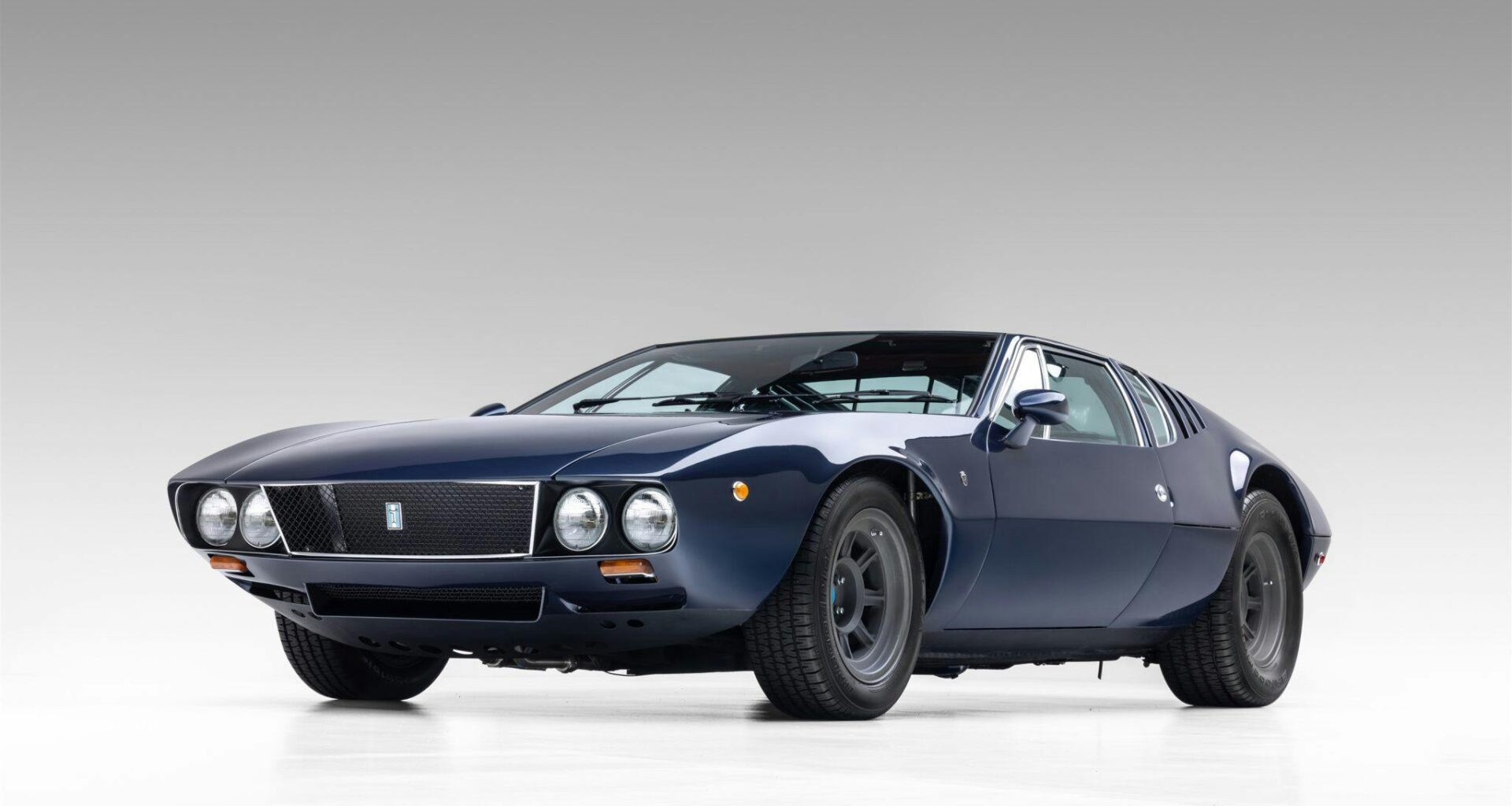
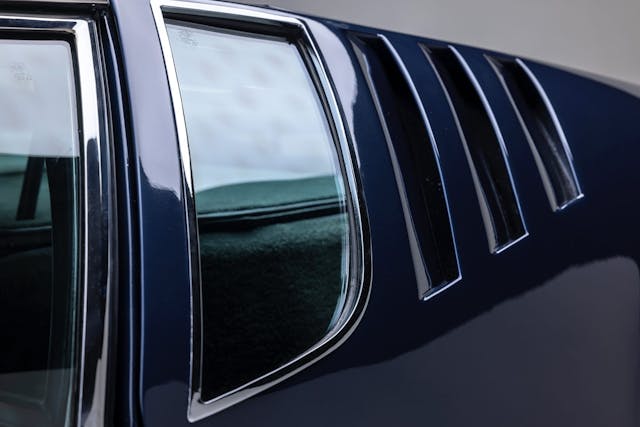
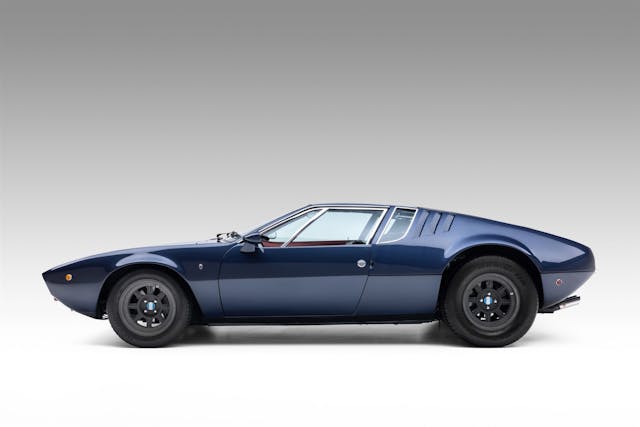
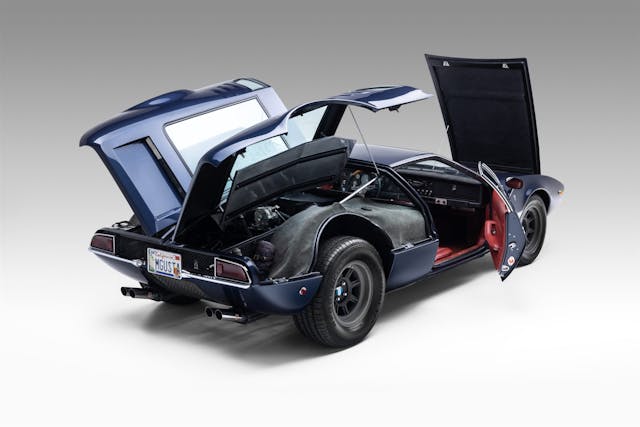
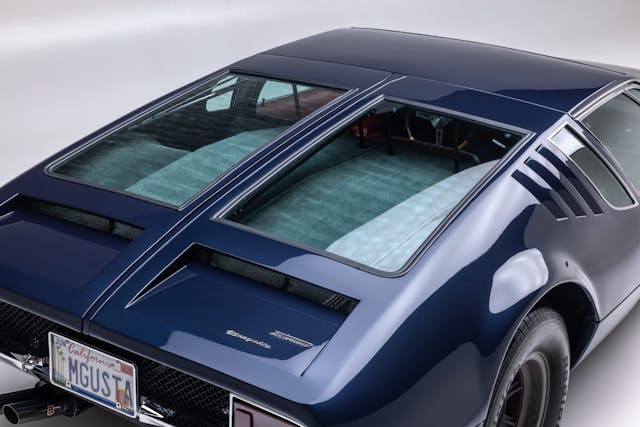
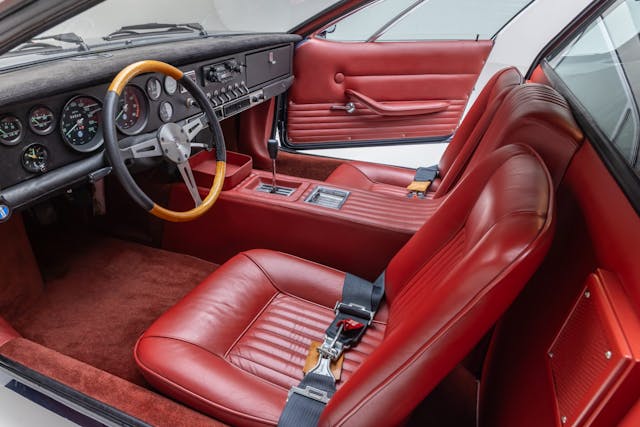
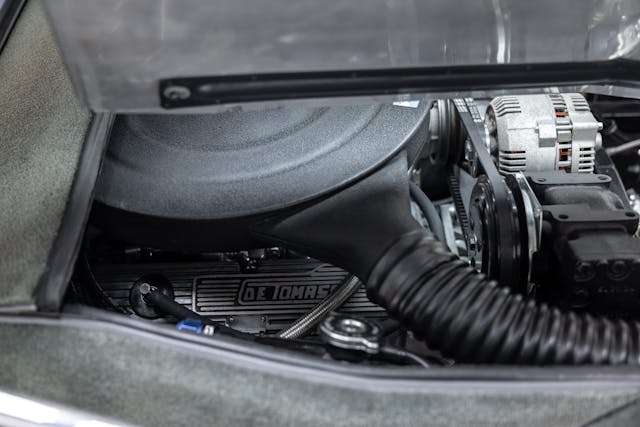
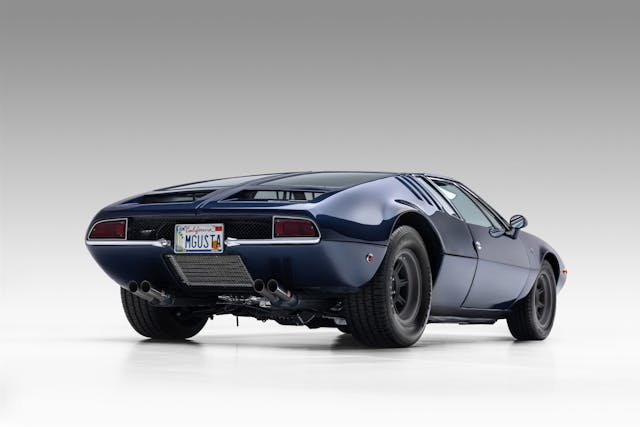
DeTomaso’s timing was ideal, as Giugiaro, now employed by Ghia, already had the Mangusta’s design in hand—a 43-inch-high exotic mid-engine fiberglass body he had done for Iso, which had no plans for such a car. The car’s showpiece feature was its centrally hinged gullwing engine covers, each framing large windows and allowing access to the small-block Ford beneath, which was a stressed member of the platform. It was connected to a ZF five-speed transmission, and each corner of the 2900-pound car was independently sprung and stopped by power disc brakes. Inside, DeTomaso fitted the Mangusta with leather seats, power windows, and air conditioning.
 Bring a Trailer/Louielouie
The Mangusta debuted at the Turin Motor Show in November 1966, with production beginning in 1967 and running through 1971, by which time 401 cars had been built. Early ones utilized Ford’s 289 HiPo V-8 making just over 300 horsepower, while subsequent Mangustas carried the 302, with an output closer to 250 hp. One car, special-ordered by GM design chief Bill Mitchell, was fitted with a Chevy 350. Regardless of the engine powering them, the Mangusta’s chassis never quite lived up to its billing, and handling could be tricky as you approached the limit.
Given their rarity (by comparison, more than 7200 Panteras were built over two decades) Mangustas don’t show up for sale all that often—roughly a couple a year. This week, one traded hands for $432,500, which isn’t quite a record but is nearly $80,000 above the Hagerty Price Guide #1 (concours) valuation.
 Bring a Trailer/Louielouie
 Bring a Trailer/Louielouie
 Bring a Trailer/Louielouie
 Bring a Trailer/Louielouie
 Bring a Trailer/Louielouie
 Bring a Trailer/Louielouie
 Bring a Trailer/Louielouie
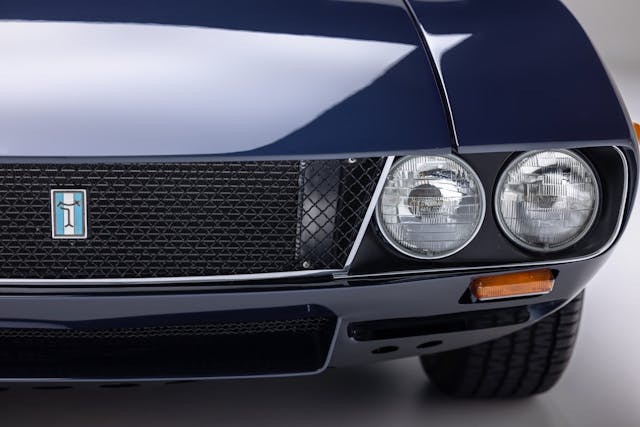
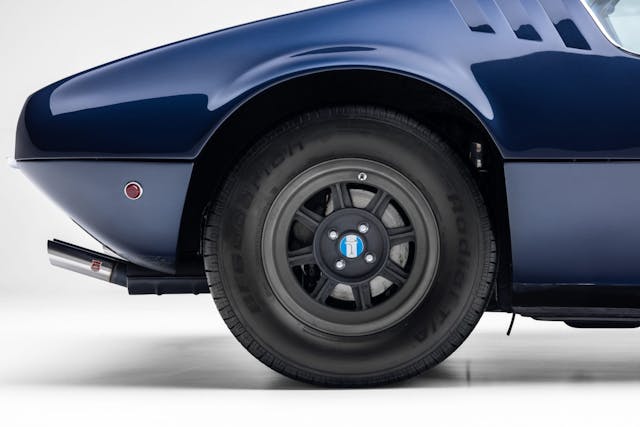
Beyond its rarity, this Mangusta had a lot going for it. First, that color—a lovely shade of dark blue that is only two years old. The listing says the car was first color changed (the original color isn’t noted) to dark blue in the 1970s, so while this hue isn’t original, it is faithful to much of the life of the car. Paired with those gunmetal Campagnolo magnesium wheels, it’s a wonderful combination.
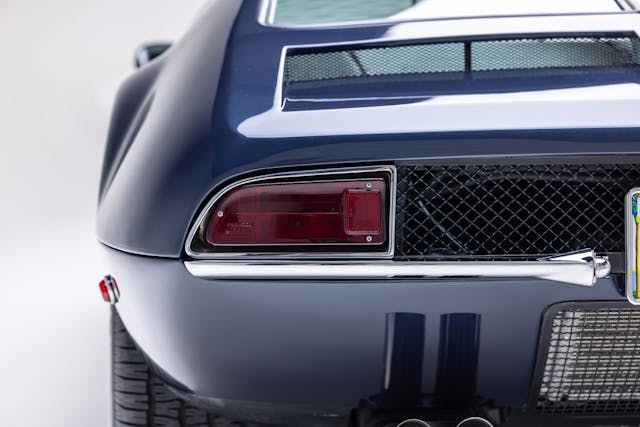
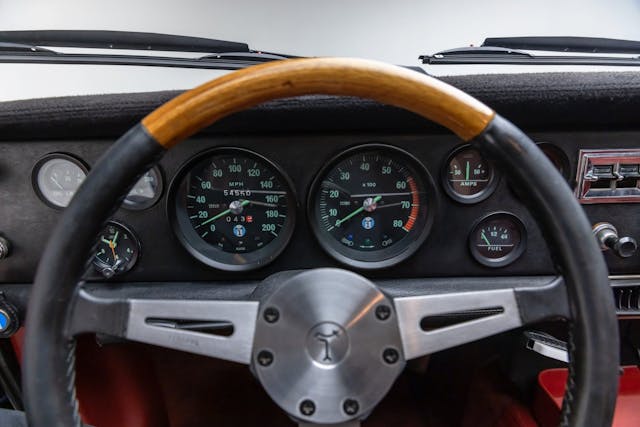
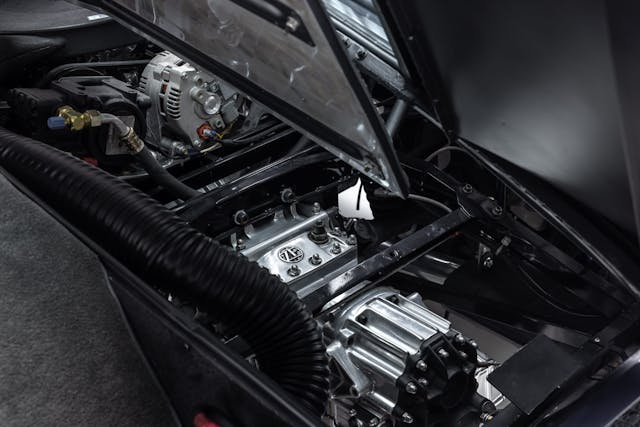
The seller has owned the car since 2003 and in their care had the red leather upholstery redone in 2005, with the headliner and bulkhead trimmed to match five years ago. The engine was rebuilt in 2006, reportedly with aluminum heads and upgraded internals, and many ancillary bits have been installed to either aid ease of use (an aluminum radiator, SPAL cooling fan, and 150-amp alternator) or for pure badassery (ceramic-coated headers and powder-coated ANSA mufflers). The floorpans were replaced in 2017, and the A/C has been converted to R134a. The odometer shows 55,000 miles, with just 6000 of those coming under the seller’s tenure. This is a car that has been well kept and upgraded smartly, and, if one were so inclined, one could eat off of any surface.
Panteras have historically been the poster child for cool Italo-American hybrids, and they’re a fine choice. But for those in search of something a bit different, it’s hard to go wrong with the Mangusta. It represents one of Giugiaro’s finest designs, even if it wasn’t originally intended for DeTomaso. And who cares, really, if the Mangusta never proved to be the Cobra killer its maker hoped it would be. It is something else entirely. The buyer gave not one hoot, clearly, and was willing to pay up to own a stellar example.
 Bring a Trailer/Louielouie