

Listen to this article
Estimated 5 minutes
The audio version of this article is generated by AI-based technology. Mispronunciations can occur. We are working with our partners to continually review and improve the results.
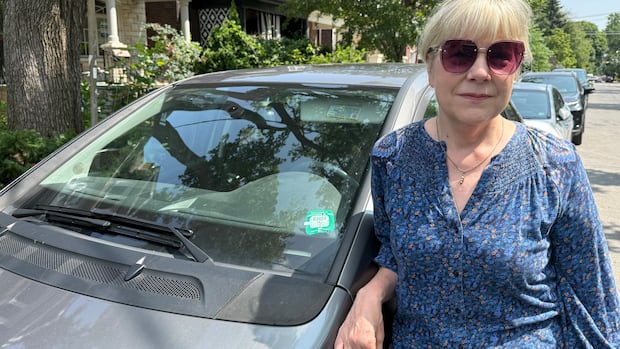
Patricia Westerhof lives in a two-story home on a broad street in the Dufferin-Dupont neighbourhood, but she is feeling a bit cramped for space these days — street parking space, to be exact.
As more multiplexes sprout around her home, she and her husband are increasingly finding they sometimes need to drive blocks away from their home to find a parking space.
This is especially concerning in nighttime situations, says Westerhof, or when she’s carrying groceries or bringing her 91-year-old mother for a visit.
“I’m all for increasing density when necessary, but I think parking and traffic needs to be part of the decision-making process,” she said.
“The multiplexes are a whole new complication that hasn’t been thought through.”
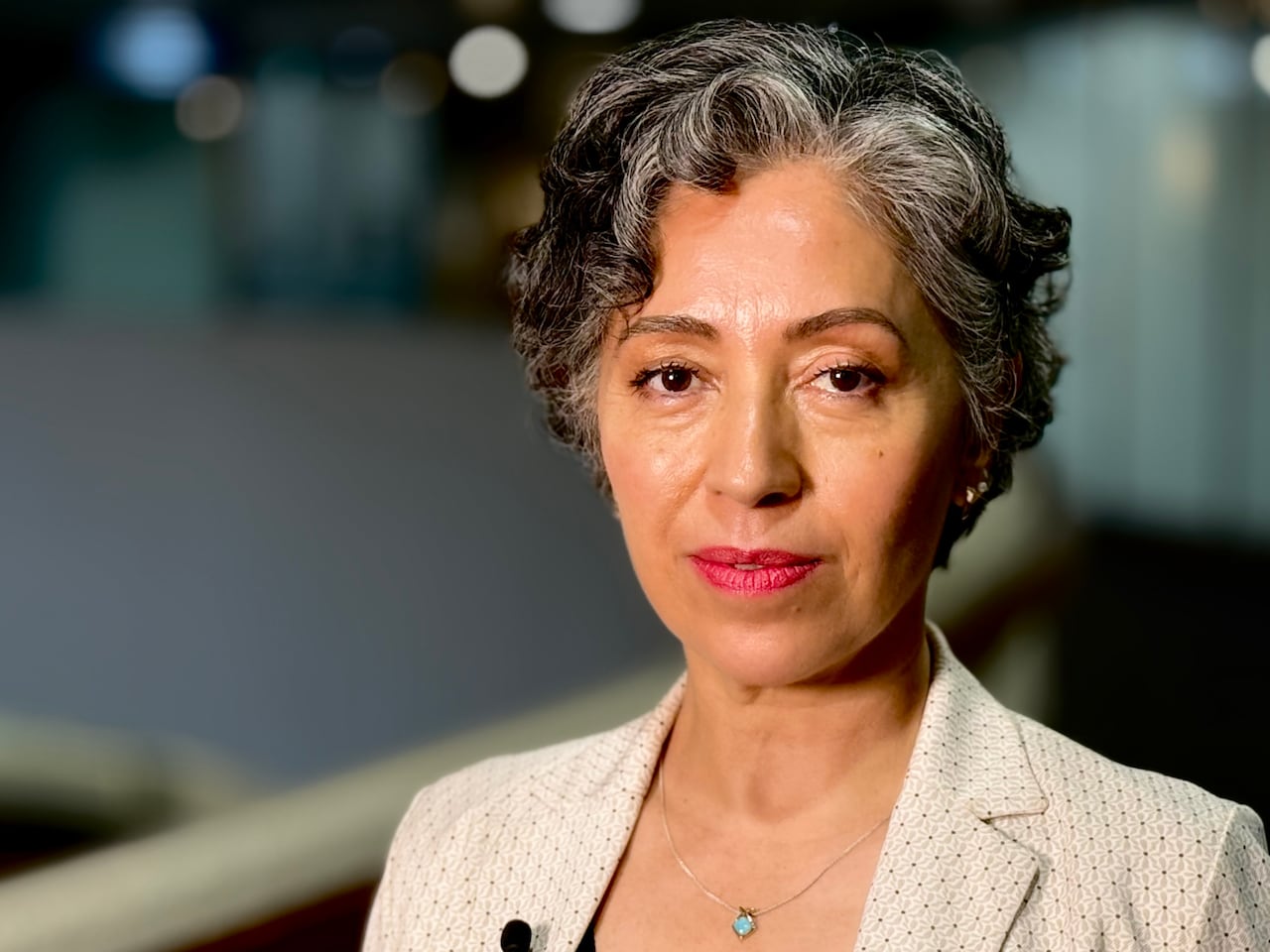 Coun. Alejandra Bravo says her ward has seen more multiplex construction projects than any other, and it’s causing parking problems for other residents. (Tina MacKenzie/CBC)
At city hall’s last session before the summer break on Thursday, Ward 9—Davenport Coun. Alejandra Bravo passed a motion aimed at easing the street parking crunch while encouraging public transit use — it proposed limiting the number of street passes issued to each new multiplex that’s built.
“I’m actually concerned that as we make sure that as we make policies to create more housing, that we’re considering what the parking implications are,” she told CBC News.
“We can’t make more road space, we can’t invent more parking space, and it puts a huge amount of pressure on the community.”
Bravo said it may be reasonable for the city to decide that not everyone who lives in a multiplex in future gets a street parking permit.
Right now, the city’s street parking permit regulations don’t set a limit on the number of permits that can be issued per address. Applicants need only produce a drivers license, vehicle registration and proof of occupancy.
Street parking permits are issued every six months and cost about $165 per vehicle, per term, according to the city’s website.
Visitors can also be given temporary permits, for periods of 24 hours, two days or seven days, on streets that are not full.
Those rules also apply to people moving into units within a multiplex, according to the city’s Director of Street Permits Nazzareno Capano.
Davenport has city’s most multiplex construction
Increased multiplex construction is the root cause of the recent crunch in street parking, Bravo says.
In 2023, as a way of easing the housing crisis, council allowed multiplexes to be built without special zoning permissions anywhere in the city, and many of these started cropping up in Bravo’s Davenport ward, according to a staff report last May.
“The five most active wards for multiplex building permits are grouped in the western side of Toronto and East York District,” the report states, “with the most activity in Ward 9 (Davenport).”
Although there are no statistics available for that ward alone, the report states about half of the 452 building permits issued for multiplexes are within western Toronto and East York District.
But Bravo and some of her constituents who spoke with CBC New say they’re concerned that there has been no effort to address the impact the increased population is having on the availability of street parking.
Her motion calls on staff to look into ways of limiting the number of street parking permits that are issued per new multiplex across the city — not just within her ward.
She said it will be up to staff to determine whether it’s appropriate to limit the number of permits issued per new multiplex, or per household within the building.
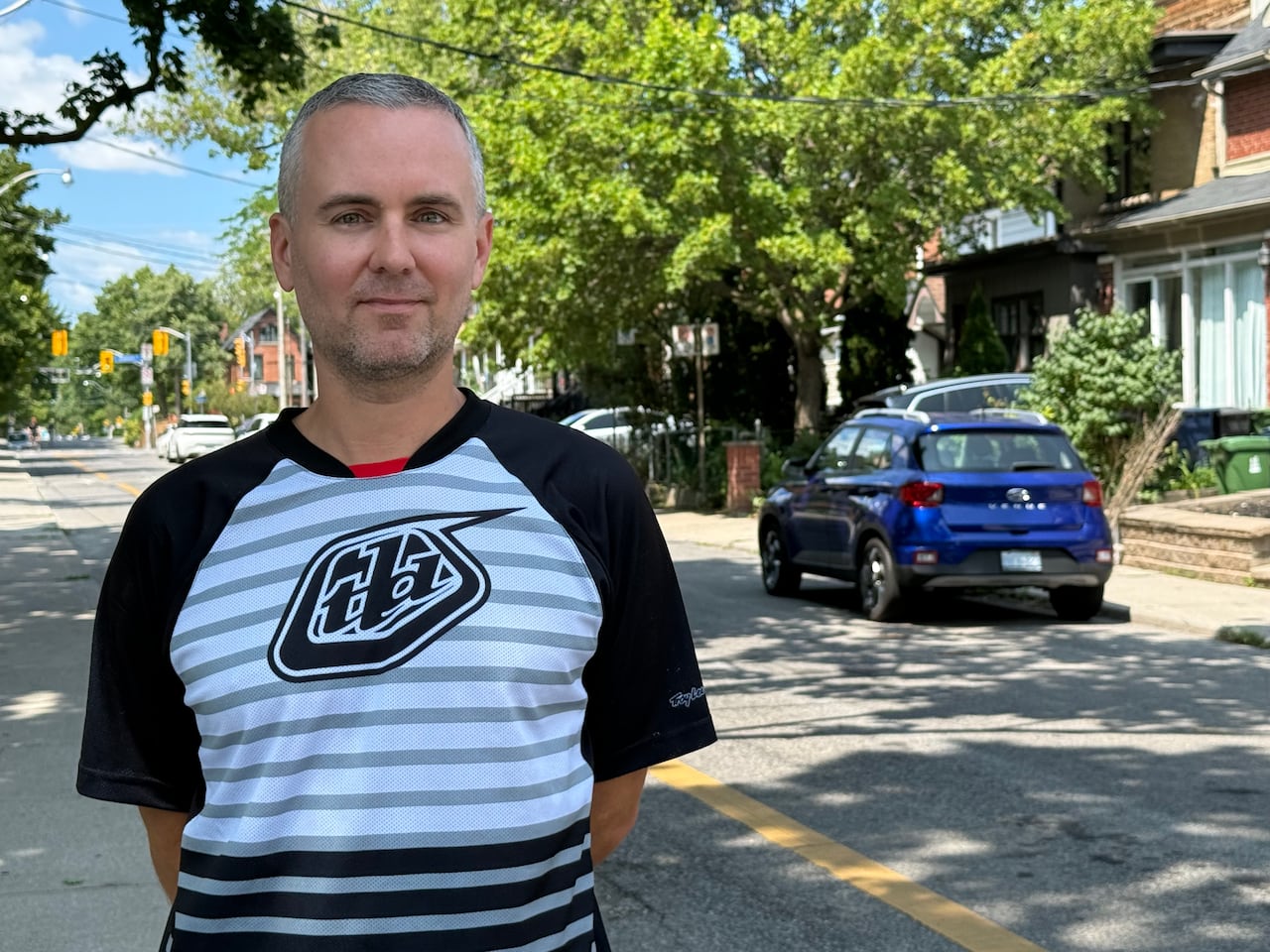 Craig Szreier has lived in Ward 9 for about ten years and says he’s noticed a street parking crunch in recent years — ever since the city paved the way for developers to build multiplexes with less red tape. (Tina MacKenzie/CBC)
Bartlett Avenue resident Craig Szreier has been living in the neighbourhood for ten years and says Bravo’s motion makes sense.
“If you have more people moving into what used to be one dwelling, and you get five, six cars out of that, it makes it very difficult … to find parking,” he said.
City staff told CBC News that each of the city’s 105 street parking areas has a set number of spaces. Another 378 individual streets allow permit parking. Once those spaces are believed to be full, the city starts a waiting list.
However, the Toronto Municipal Code allows the city to issue up to 10 per cent more permits than there are spaces available.
Right now, staff say eight permit parking areas and 25 individual streets have waitlists. However, information on which areas and streets have the longest wait lists historically isn’t kept, they say.