
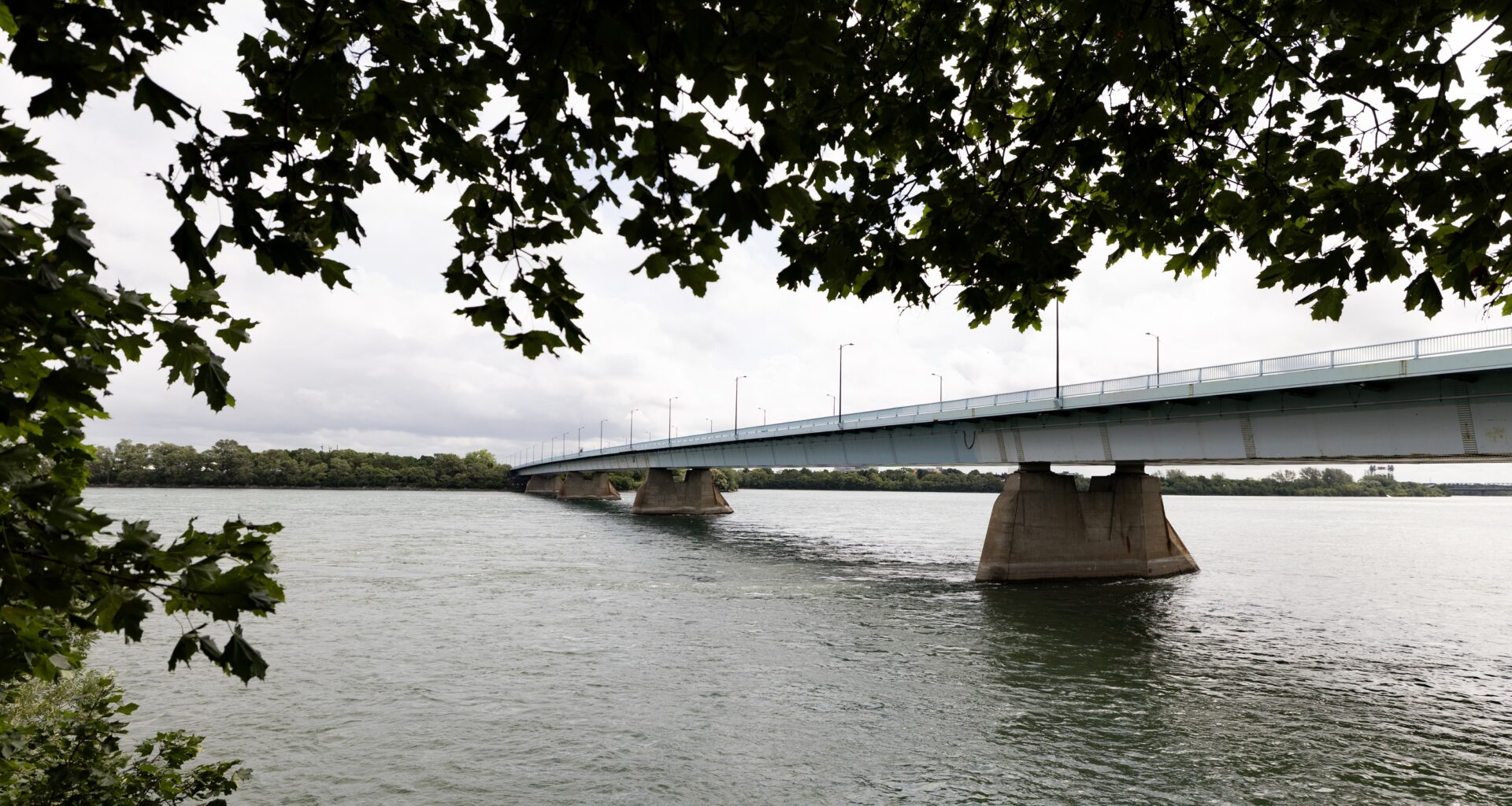
More than a decade after an earlier attempt at the same site ended, underwater turbines could once again generate electricity in the St. Lawrence River near Montreal’s Old Port.
ARECOR Energy wants to revive the idea with a redesigned turbine, while Hydro-Québec has conditionally agreed to buy some of the electricity if the project obtains the necessary permits.
The proposal raises a broader question: Could turbines anchored to the riverbed provide Quebec with a useful source of steady, renewable electricity, or would their contribution be too small and costly to matter in a province already powered largely by hydroelectric dams?
What is ARECOR proposing?
ARECOR plans to install nine hydrokinetic turbines, machines powered by moving water, in two phases.
Chief executive Imad Hamad said the first two would be installed in 2027, followed by seven more the next year. Each turbine would have a capacity of about half a megawatt.
The company estimates that one turbine could generate the equivalent of the electricity used by roughly 250 homes. Hamad said the full project would represent an investment of about $84 million.
Hydro-Québec’s power purchase agreement covers a maximum capacity of one megawatt, equivalent to the planned output of the first two turbines.
The agreement does not amount to approval of the project. Hydro-Québec said it could buy the electricity only if the turbines are eventually installed and all conditions are met, including the required regulatory authorizations.
How would underwater turbines generate electricity?
The idea is similar to a wind turbine, except moving water turns the blades instead of air.
As the St. Lawrence current passes through each turbine, it would turn a rotor connected to a generator. The electricity would travel through underwater cables to equipment on shore and then into the grid.
Hamad summed up the difference from conventional hydroelectricity in five words: “We don’t build a dam.”
Without a dam, the project would not require a reservoir, flood surrounding land or block the river across its width. ARECOR says the steady flow of the St. Lawrence could also produce electricity more consistently than wind or solar installations, whose output changes with the weather and time of day.
Hamad said the Old Port site was chosen because “it has a strong current, sufficient depth and nearby infrastructure for connecting the turbines to the grid.”
Hasn’t this been tried before?
The earlier attempt began in 2010, when RER Hydro installed a first-generation turbine at the same site.
Hamad, who also led that company, said the turbine operated for four years and provided data used to develop later versions. RER Hydro entered bankruptcy in 2014.
Hydro-Québec said the turbine had a planned capacity of 100 kilowatts, one-fifth of the capacity proposed for each of ARECOR’s new turbines, and it fed electricity into the grid from 2010 to 2013.
ARECOR says its new third-generation model has been redesigned partly to solve one of the obvious difficulties of placing machinery beneath a river: reaching it when something needs to be repaired.
The new turbine uses magnetic bearings, allowing key parts to rotate without rubbing directly against one another. Hamad said the change removes the need for oil-lubricated bearings and is designed to reduce costly repairs beneath the river.
“If there’s no friction, there’s no wear,” he said. “If there’s no wear, there is no maintenance.”
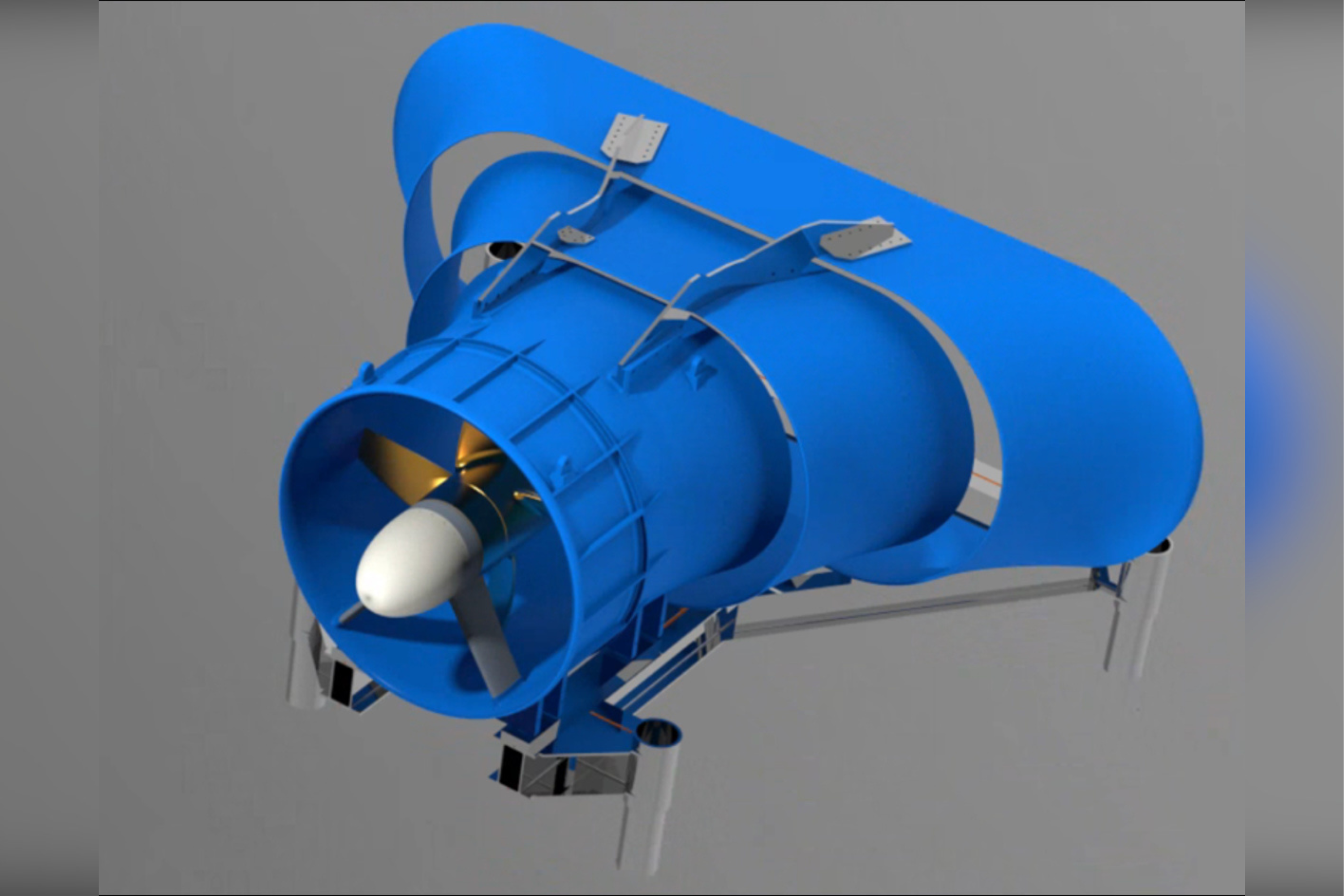 ARECOR Energy’s redesigned turbine uses magnetic bearings, allowing key parts to rotate without rubbing directly against one another. (ARECOR Energy)
Would the project make much difference?
Jean-Pierre Finet, an analyst and spokesperson for the Regroupement des organismes environnementaux en énergie, said the challenge is proving that hydrokinetic power can work economically beyond small demonstration projects.
“I don’t know of any larger-capacity system in operation that’s cost-effective anywhere,” he said.
Finet said underwater machinery can be expensive to maintain, particularly when mud or debris interferes with moving parts. Inspecting or repairing equipment anchored to the riverbed can also require specialized vessels and crews.
Hamad projects that ARECOR’s redesigned turbine could operate for about 40 years before a major maintenance cycle is required. Finet responded: “It is too early to assess that claim because the new design has not yet been demonstrated in a pilot project.”
There is also the question of scale.
Quebec has about 40,000 megawatts of installed generating capacity, Finet said. Hydro-Québec’s agreement with ARECOR covers one megawatt.
Against Quebec’s overall electricity system, he described hydrokinetic power’s potential contribution to the energy transition as “kind of marginal.”
Hamad argues the Montreal project should not be judged solely by the electricity produced by its first two turbines. He sees it as a demonstration of technology that could eventually be installed at other sites in Quebec, Western Canada and the United States.
Could the turbines harm fish?
The turbines would sit on the riverbed rather than block the St. Lawrence, but their effect on aquatic life remains one of the issues regulators will examine.
Finet said fish could be disoriented by the machinery and that any risk would need to be mitigated.
Hamad said six years of monitoring around RER Hydro’s earlier turbine near the Old Port (including after the turbine ceased operating) found a 0.3 per cent probability of affecting fish, according to studies commissioned by the company.
“That’s negligible,” Hamad said.
The figure is ARECOR’s estimate, and the environmental effects of the new turbines will still be considered as permits are renewed.
What does Montreal’s mayor say?
Mayor Soraya Martinez Ferrada has neither endorsed nor rejected the proposal.
Asked about it at a July press conference, she said installing turbines in the St. Lawrence raises “a lot of questions,” including where they would go, how they would be installed and what their effects would be.
She also questioned whether Quebec, with its extensive hydroelectric resources, needs another way of generating power from the St. Lawrence. The project is not among her administration’s current priorities, she said.
What happens next?
ARECOR says it has started the renewal process for permits issued for the earlier RER Hydro installation. On the federal side, the process involves Fisheries and Oceans Canada, the Canadian Coast Guard and the Port of Montreal.
The company says it does not expect delays.
Most people walking through the Old Port would never see the turbines beneath the surface. What may become more visible is the debate over whether Quebec’s rivers have room for a different kind of hydro power — one without dams, but not without questions.
Editor’s Picks

I’m a reporting intern at the Montreal Gazette, covering breaking news and the issues affecting communities across Montreal. I believe some of the most interesting stories begin with an ordinary conversation.
amclaughlin@postmedia.com