
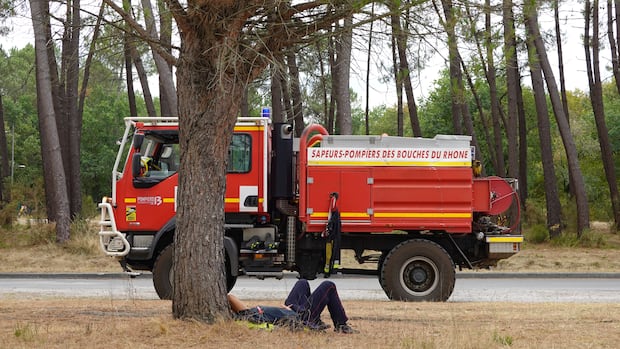
When he walked into his home after evacuation orders were lifted in nearly a dozen French communities hit by wildfires Thursday, Frédéric Delbreil says everything was frozen in time.
“It was strange,” said Delbreil, 51, a chef at Bistrot La Nautique in Bordeaux. He lives in a small hamlet near Saint-Jean-d’Illac, a suburb of the large city in southwestern France.
Every surface inside his home was coated with grey ash, Delbreil told CBC on Friday at a volunteer hub set up in a sports complex next to a middle school.
The night before, Delbreil and his family were among the 144,000 people in France given the go-ahead to return to their homes. When he returned, he found objects in places they didn’t belong — they’d been scattered in his family’s rush to leave late last Friday night.
“It’s not easy to describe,” he said. “You feel like smiling and crying at the same time.”
WATCH | The rush to save Bordeaux: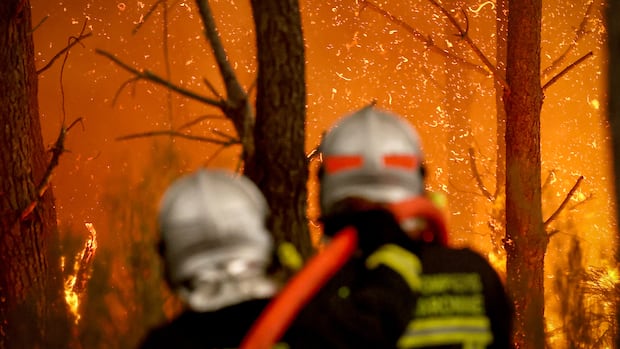
Inside France’s battle to save Bordeaux from unprecedented wildfires
CBC News gets a frontline look at France’s pitched fight against unprecedented wildfires in the historic Bordeaux region, where another heatwave is expected to fuel flames that have forced at least 250,000 people from their homes.
The community’s homes were spared but flames brushed the edges of town as they inched closer to Bordeaux. If it weren’t for firefighters and water bombing planes, Delbreil says the 20 homes on his street would be gone.
Delbreil’s restaurant has been cooking food for firefighters all week in Saint-Jean-d’Illac, even as its workers are displaced. Eighty per cent of the municipality’s staff had to evacuate their homes, according to Charlène Bailleul, the town’s services director.
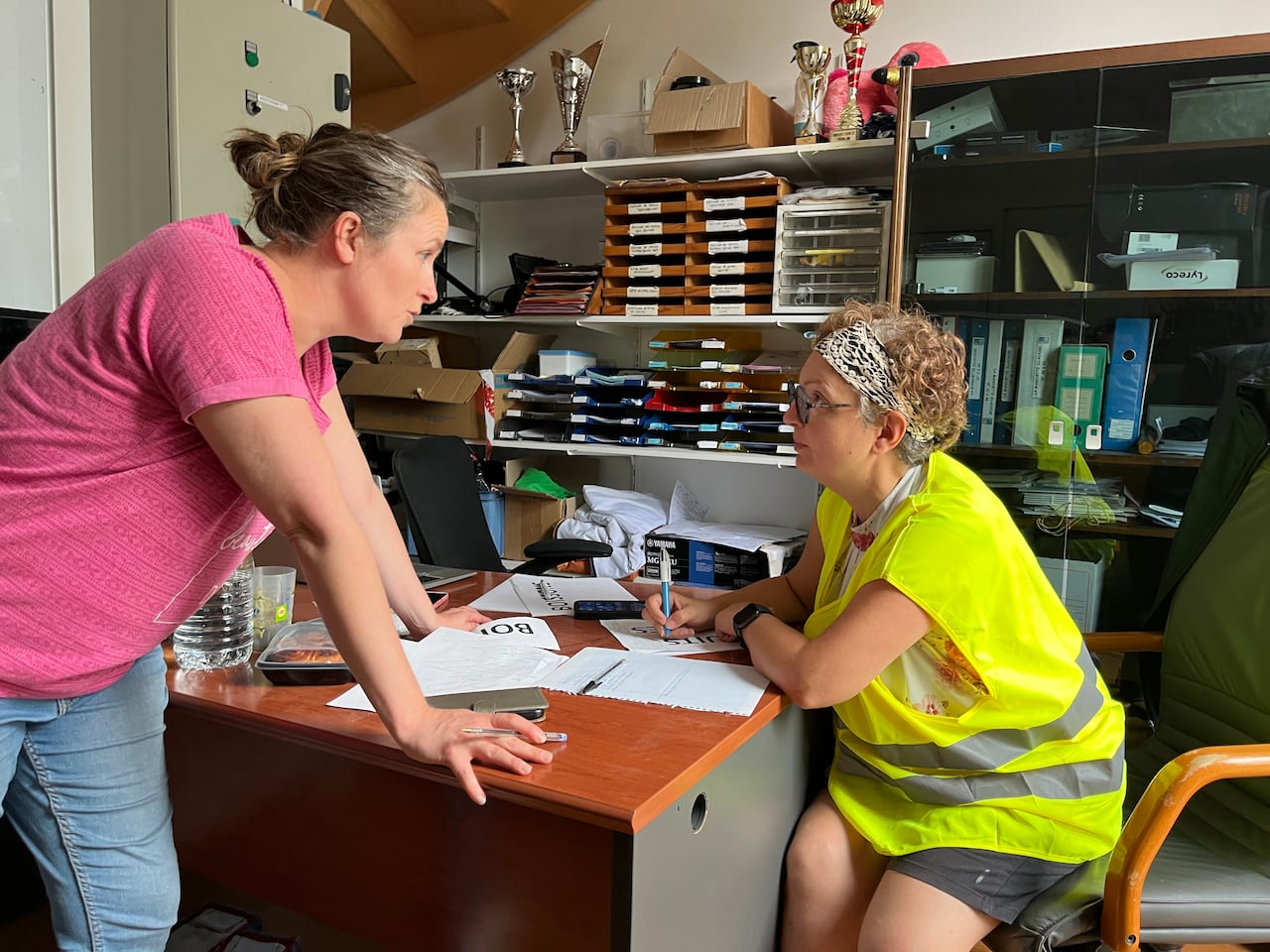 Charlène Bailleul, left, and Christelle Delbreil, two city officials in Saint-Jean-d’Illac near Bordeaux, France, discuss volunteer operations Friday. (Verity Stevenson/CBC)
Bailleul and her daughter were away from their home when the order to evacuate came late last week.
Her daughter would have to cope without her plushie — and Bailleul had to spring into action to help her community. She hasn’t stopped since.
On Monday, the local child-care centre will re-open, but the emergency hasn’t completely ended as the ground continues to smoulder.
The bustle of the volunteer hub in Saint-Jean-d’Illac on Friday captured the transition facing communities across southwestern France as they move from crisis response to regaining some semblance of normalcy while figuring out how to live with wildfires that threaten an entire way of life.
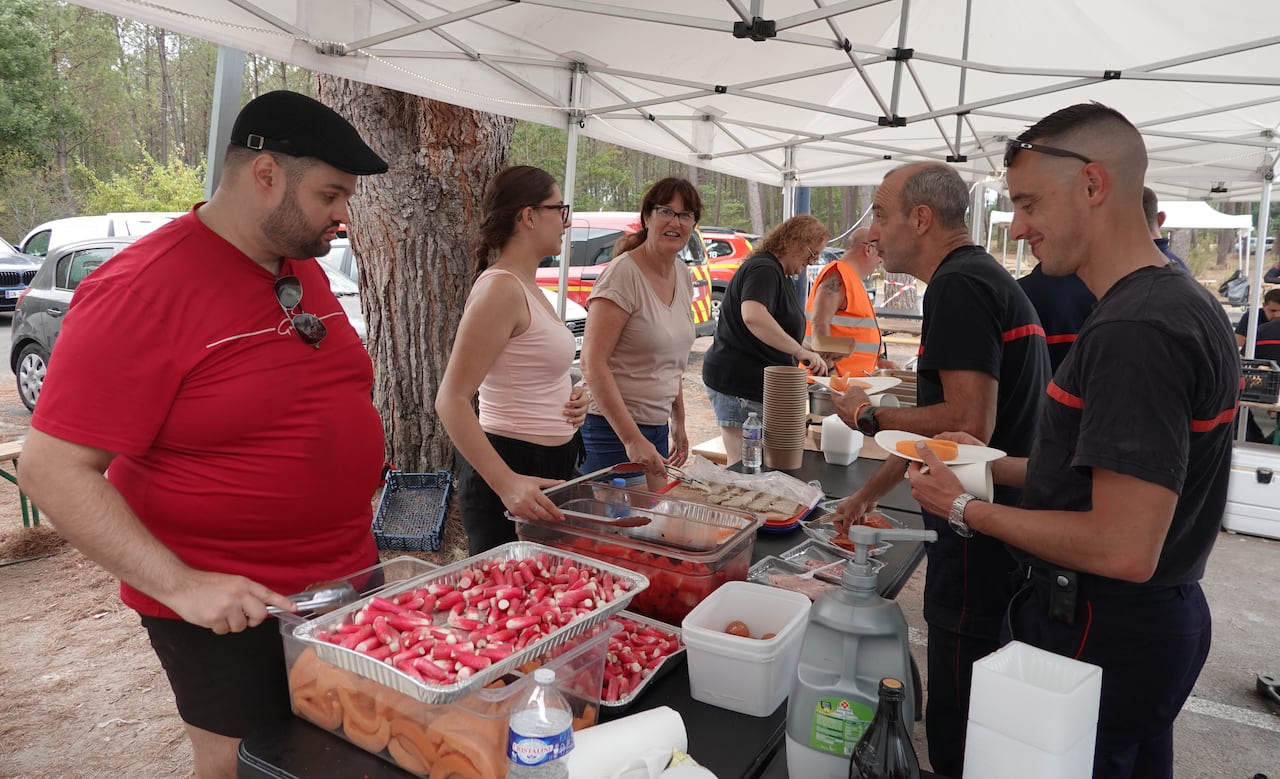 Volunteers serve meals to firefighters on Friday in Saint-Jean-d’Illac, France, near Bordeaux. (Verity Stevenson/CBC)Reviewing lessons from a week of fires
The pine forest plantations surrounding Bordeaux that stretch to the Atlantic Ocean were planted in the 19th century in an effort to turn the area’s wetlands into productive industries where growing cities could harvest the trees.
The topsoil is now dry and sandy — flooding when it rains and struggling to retain moisture in periods of drought.
Fires outside Bordeaux aren’t unusual, but they’re typically small and easily contained.
Last week, that changed as a wildfire in the Gironde region spread at an alarming rate that French authorities failed to predict. Bailleul says it was the first time a fire that began elsewhere travelled to their community.
“Naturally, we will need to review the lessons learned,” Bailleul said, noting Saint-Jean-d’Illac itself is well prepared, with a team dedicated to forest fire prevention working year-round.
But she wants better access to national services in the future, echoing complaints from across Gironde this week when communities had to step up because the French government did not.
People filled cubic water tanks from nearby lakes and ferried them back and forth to firefighters at the scene; fed firefighters; helped with evacuations and reintegration, as well as with health care and child care.
The work has been endless, and people in the region are starting to tire.
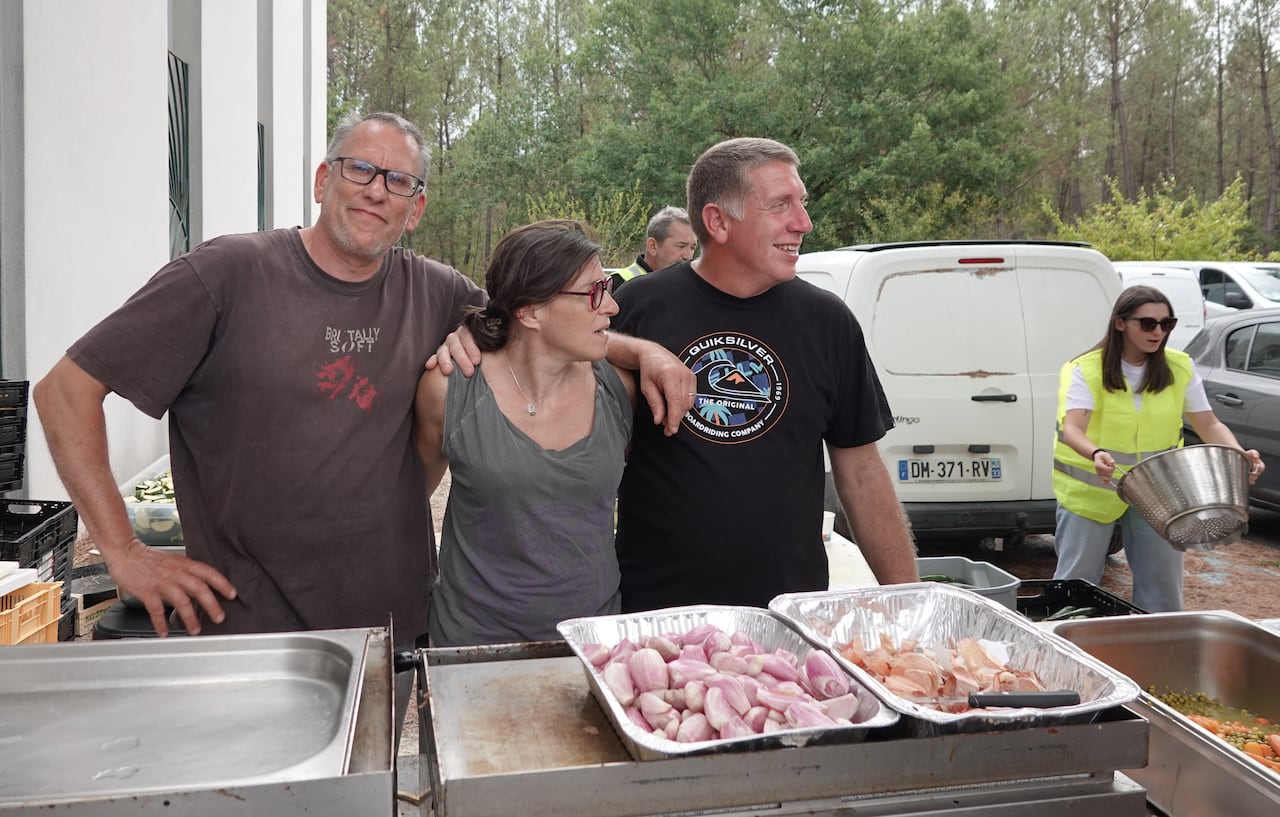 Bordeaux-area restaurant owners and workers, from left, Frédéric Delbreil, Pascale Sirieix and Maxime Frère, have been serving meals to firefighters. (Verity Stevenson/CBC)From preparedness to prevention
But rest is not an option right now for those returning to the region.
As Delbreil says, “It’s going to happen again.”
That’s why city councillor Caroline Esteve wants more than just preparedness, she wants prevention.
“We need to change our forestry practices, because pine trees burn extremely easily,” she said.
WATCH | Returning to survey wildfire destruction in Le Porge, France: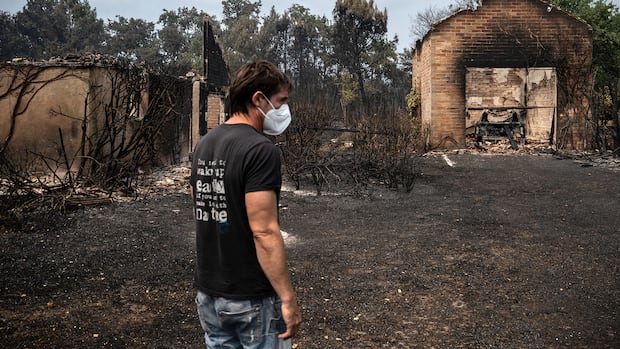
Bordeaux residents survey devastation after wildfire torches village
Residents of Le Porge in France’s historic Bordeaux region show CBC News what’s left of their community after a devastating wildfire tore through the village, destroying over 180 homes.
Already, the forest has been cut back several hundred metres along most roads in Gironde, in an effort to prevent flames from spreading.
Esteve says other species should be planted to alternate with pines, in addition to more market crops like carrots and potatoes — produce that can halt fire in its tracks due to high moisture content.
“It’s not part of foresters’ mindset yet,” she said. “Pines bring in money faster.”
In the parking lot by the volunteer hub, firefighters rested on patches of dry grass covered in the orange needles of the pines towering above. Many of the pines further in the Gironde area don’t rise higher than a storey or two and are packed in neat rows sweeping over kilometres, but in Saint-Jean-d’Illac they’re old and tall.
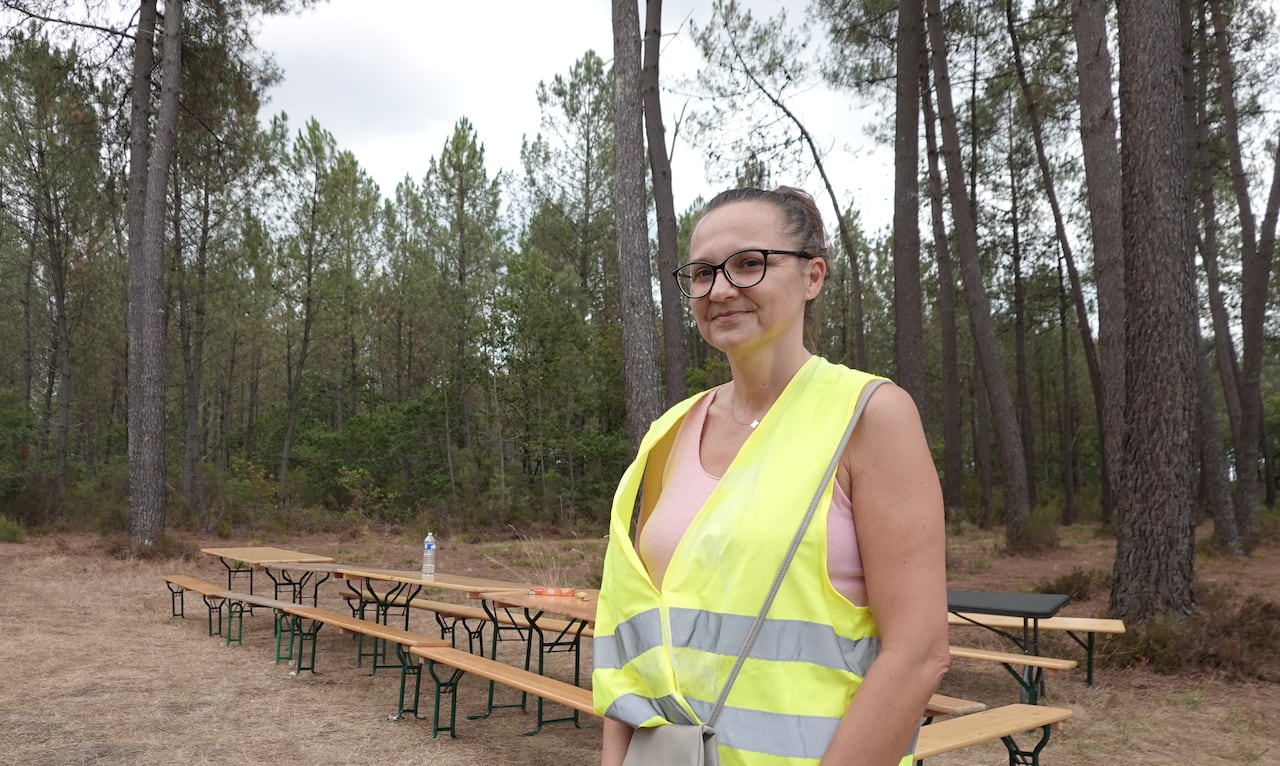 Katia Rigal returned to her home in Saint-Jean-d’Illac, France, near Bordeaux, after she and her family left under evacuation orders due to wildfires last week. (Verity Stevenson/CBC)Taking comfort in volunteering
At a picnic table under the conifer canopy, Katia Rigal takes a break from serving firefighters lunch with her fellow volunteers.
She, too, returned home the previous night, and like Delbreil, she says it felt weird.
Propane tanks lay underwater in their backyard pool. They were instructed to place them there by local officials after firefighters were injured by tanks that exploded in the blazes last week. Cabinets were flung open and emptied, photos were missing, taken by the family when they left in haste.
“It was a mess,” said Rigal, looking away as she described the disarray of the home she returned to.
What they’ve been through has been difficult, but being part of the volunteer effort, keeping busy, smiling and laughing with neighbours, “it helps,” she said.
“It’s a pleasure to feel useful.”