
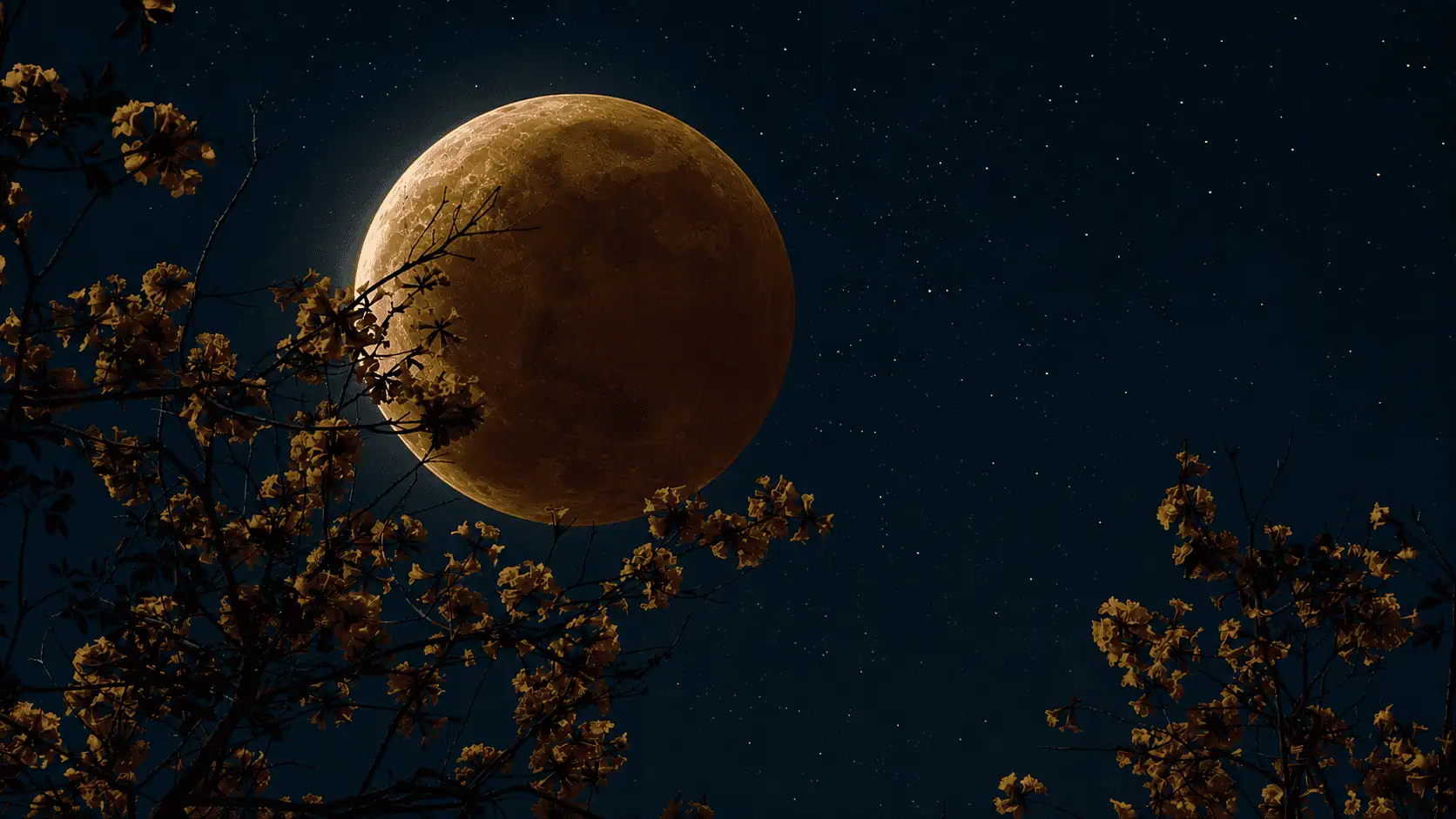
Skywatchers across Ontario will be treated to a rare late-summer spectacle this month as the Sturgeon Moon will appear alongside a partial lunar eclipse.
According to The Old Farmer’s Almanac, the Sturgeon Moon takes its name from the giant lake sturgeon once commonly found in the Great Lakes and Lake Champlain.
These freshwater fish were more easily caught in late summer, becoming an important food source for Indigenous communities in the region. The word “sturgeon” itself means “the stirrer,” describing how the fish moves along lakebeds in search of food.
Sturgeon are often called “living fossils,” with origins dating back about 136 million years. Female lake sturgeon can take around 20 years to begin reproducing and typically spawn only every four years, though the species can live up to 150 years. Today, lake sturgeon are considered rare because of overfishing, pollution and habitat loss.
Other traditional names for the August moon reflect midsummer abundance and seasonal change. The Cree call it the Flying Up Moon, marking the time when young birds are ready to leave the nest. Crop-based names like the Corn Moon (Algonquin, Ojibwe), Harvest Moon (Dakota), and Ricing Moon (Anishinaabe) refer to the gathering of ripening crops. The Assiniboine call it the Black Cherries Moon, while the Tlingit refer to it as the Mountain Shadows Moon.
The Sturgeon Moon will reach peak illumination at 12:18 a.m. Eastern Time on Friday, Aug. 28. The best opportunity to view it in Ontario will be on the evening of Thursday, Aug. 27, when the nearly full moon rises after sunset.
This year’s full moon will also coincide with a deep partial lunar eclipse. According to EarthSky, about 93 per cent of the moon will pass through Earth’s dark umbral shadow, making it appear similar to a total lunar eclipse. As the eclipse nears its maximum, much of the moon is expected to take on a reddish glow while a bright sliver remains illuminated.
The eclipse will be visible across most of North and South America, as well as parts of Europe, Africa, Greenland, Iceland, Antarctica and the eastern Pacific. Lunar eclipses are completely safe to view with the naked eye, although binoculars or a telescope can provide a closer look.
Here’s a look at August’s lunar schedule:
Last Quarter: Aug. 5 at 10:21 p.m.
New Moon: Aug. 12 at 1:37 p.m.
First Quarter: Aug. 19 at 10:46 p.m.
Full Moon: Aug. 28 at 12:18 a.m.
The Old Farmer’s Almanac also highlights optimal days for certain activities based on the Moon’s phases.
The best days to cut hay are Aug. 3, 4, 30 and 31. For setting eggs, Aug. 7, 24 and 25 are recommended. If you’re planning to fish, the most favourable dates are Aug. 12 to 28.
INsauga’s Editorial Standards and Policies
Last 30 Days: 49,958 Votes
All Time: 1,462,404 Votes
1058 VOTES
Which side do you support in the WestJet labour dispute?
WIN A $100 GIFT CARD
Subscribe to INsauga’s daily email newsletter for a chance to win a $100 Amazon gift card.