
By Lethbridge Herald on August 4, 2026.
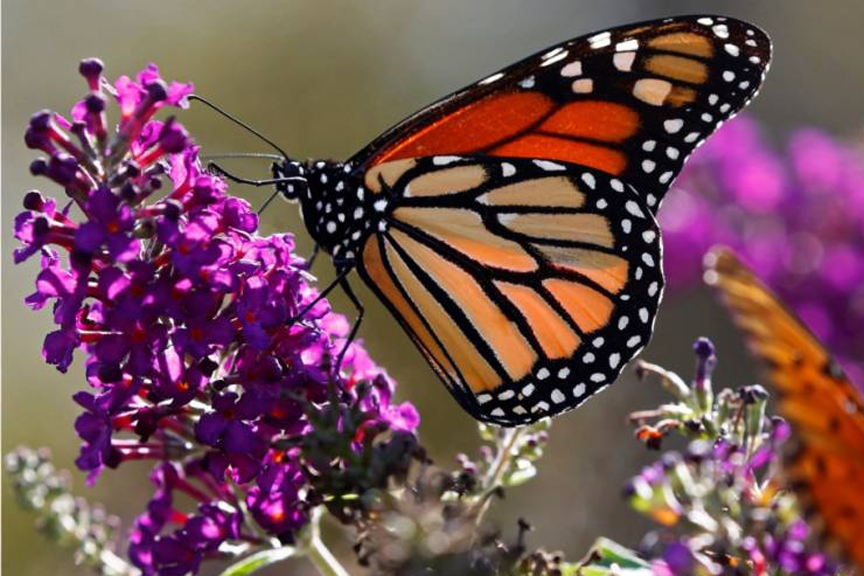
 A monarch butterfly feeds on nectar from a flower. Residents of Lethbridge and across Southern Alberta are encouraged to help track monarch butterflies and milkweed plants during the International Monarch Monitoring Blitz, running until Aug. 9. (CP PHOTO)
Alejandra Pulido-Guzman
LETHBRIDGE HERALD
From now until Aug. 9, people in Lethbridge and surrounding area are invited to step outside and help track monarch butterflies and milkweed plants, as part of the 10th anniversary of the International Monarch Monitoring Blitz, a community science initiative spanning Canada, the US and Mexico.
Species at Risk and Biodiversity Specialist with Canadian Wildlife Federation, James Pagé explains that monarch butterflies migrate thousands of kilometres across the continent, and they can only lay their eggs on milkweed because that is the only plant their caterpillars can eat.
“That means protecting the species takes all three countries working together — every milkweed patch and every butterfly sighting, wherever it’s spotted, feeds into one shared, continent-wide picture,” said Pagé.
He explains that the monarch butterfly is an endangered species in Canada, despite being one of the butterflies that most people recognize when they see it.
“What we’re looking to do is encourage everyday people to look out for and record the Monarch itself, as well as the milkweed plant that it relies on,” says Pagé. “To help us understand the distribution, where the monarchs are found, where the milkweed is found, and understand their habitat, and population of monarchs and milkweeds.”
Pagé says that because scientists can’t be everywhere in the country, but there are people pretty much everywhere where there are monarchs, they are engaging the community.
“People can contribute to the conservation of monarchs and make a meaningful difference, because otherwise this is information, we would never be able to gather just through science,” says Pagé.
For the past decade, volunteers across North America have joined forces each summer for the International Monarch Monitoring Blitz, a grassroots effort to track where monarchs and milkweed are thriving, and where they need help.
“This year marks the Monarch Blitz’s 10th anniversary, running from July 31 to Aug. 9, and regardless of the country, province or backyard someone starts in, the data collected feeds into one shared, continent-wide picture of where monarchs and milkweed are being found,” says Pagé.
Last year, more than 9,000 volunteers took part. This year, organizers are hoping to more than double participation, with a goal of 19,000 people getting involved across the continent.
Organizers have already lined up easy-to-use community science programs for volunteers to log what they find, so there’s no guesswork involved in getting started.
• Set up an account with iNaturalist Canada (Canadian Wildlife Federation) or Mission Monarch (Insectarium de Montréal. Signing up takes a few minutes.
• Head outside and look for milkweed, even just spotting the plant counts as a valid observation.
• See an egg, caterpillar, chrysalis or butterfly too? Report that as well.
• Log what you saw, and what you didn’t, right from your phone.
• Takes just a few minutes, no experience needed.
To mark this milestone year, observations from recent Monarch Blitz editions have been mapped into an interactive tool identifying “cold observation spots” — areas where milkweed has recently been observed but monarchs have not, or only in very low numbers.
By exploring a cold spot, confirming the presence of milkweed, and reporting what they see, participants can help fill critical data gaps. Those without a cold spot nearby can still contribute by documenting observations anywhere they explore.
“It’s a really valuable way to find areas where maybe you’ll see a monarch, but also locations where milkweed has been observed, but we don’t have mark observations of yet,” says Pagé. “That’d be a key location for people to go to and fill some of these knowledge gaps and data gaps, where monarchs could be, but nobody has recorded.”
The International Monarch Monitoring Blitz is a call to action for individuals, organizations and community scientists across North America to join efforts to conserve monarch butterflies and the habitat they depend upon.
To learn more, visit monarchblitz.org.
24
-23