
Stay up to speed with stories written by drivers, for drivers.
Get automotive news, DIY tips, market trends, in-depth car profiles, and more right in your email inbox.
The design of race car exhaust has been a fine science for decades, but few designs have been as notable—or have had the ear-splitting appeal—of the “boom tubes” of NASCAR stock cars in the early 2000s. The sound was actually a side effect, but when something hits the double-whammy of being both better and more appealing, it’s hard to ignore. That might explain why even a quarter century, later we are still talking about the sound. Of course, there is a lot more to the story than the sound.
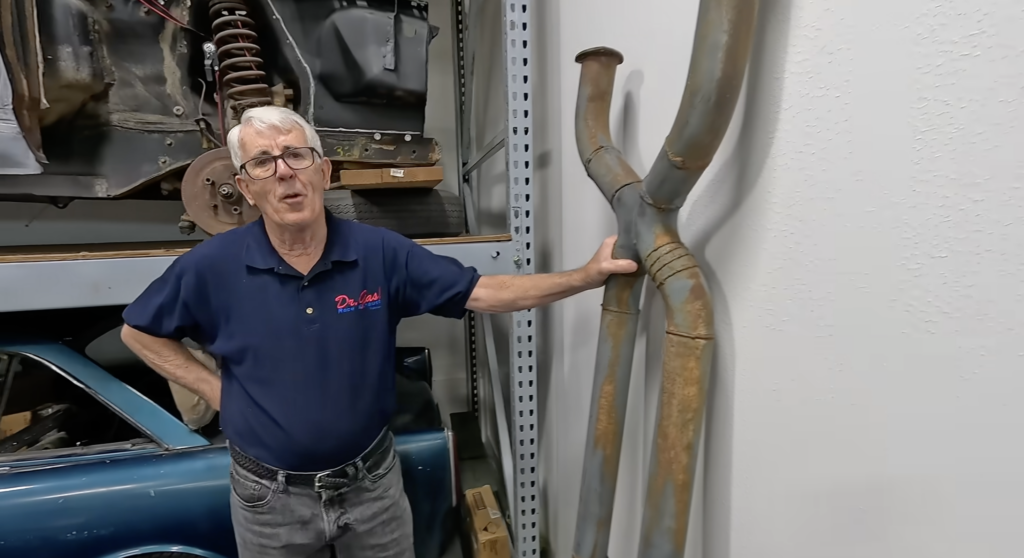
Engines are fancy air pumps, so the efficiency with which gasses flow into and out of each cylinder is critical to the amount of power a given engine can produce. So, of course, if you are going to talk to someone about designing a special exhaust for NASCAR stock cars, it only makes sense to talk to a rocket scientist with a company called Dr. Gas Exhaust. Boyd Butler is the man who started that company and ended up on a ride he could have never imagined. Now, the story of his infamous X-pipe exhaust has come to light, and boy is it an interesting adventure.
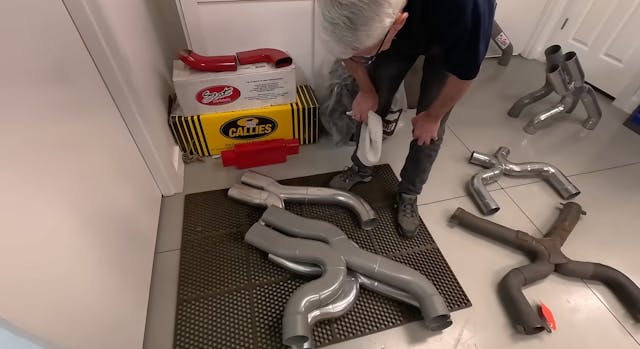
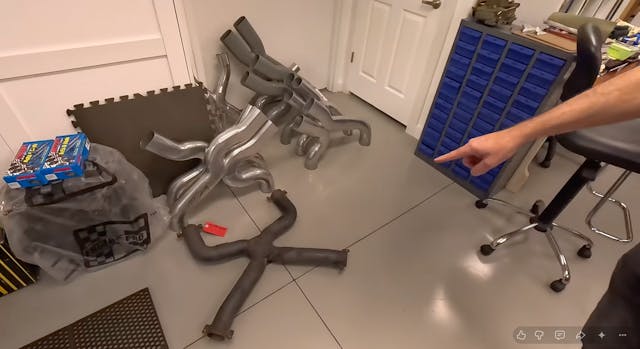
This story comes by way of Stapleton42 on YouTube, who has a knack for finding and interviewing the names and faces that have helped shape stock car racing over the years. In the video above, Butler talks through the history of making the first X-pipe for a NASCAR stock car, and how that development went on to change the entire arc of his career. From the original idea to shipping a bunch of tubing in checked luggage to building one of the first X-pipes in just a few days sounds like something out of a movie—including building a box around the actual crossover, which led to a lot of questions and even the team at Roush Racing trying to duplicate the system by building boxes into their exhaust pipes.
 Stapleton42
 Stapleton42
It wasn’t a box that made the magic, though. It was a combination of the ovalized tubing being stepped in size, as well as the length and shape of the bends. When the first X-pipe was put on a dynamometer and the crew watched as it made an additional 4.5 horsepower compared to the old H-pipe design, it was clear things in stock car racing were going to change. As Butler points out in the video, that 4.5 horsepower would be equal to about 1 mph at a superspeedway like Daytona, and 1 mph faster over 500 miles put you way out front of the competition.
It’s ideas like this that make racing so interesting, even if you are only a casual fan watching on race day. Knowing that the teams are searching for each and every little thing that might make a gain—including calling up rocket scientists multiple states away and flying them in to fabricate an exhaust on a few days’ notice—provides amazing context for the sport. Hearing the stories from the people who were there and experienced them is also great, so be sure to click on the video above and settle in for a good long story with lots of fun detours and tangents.