
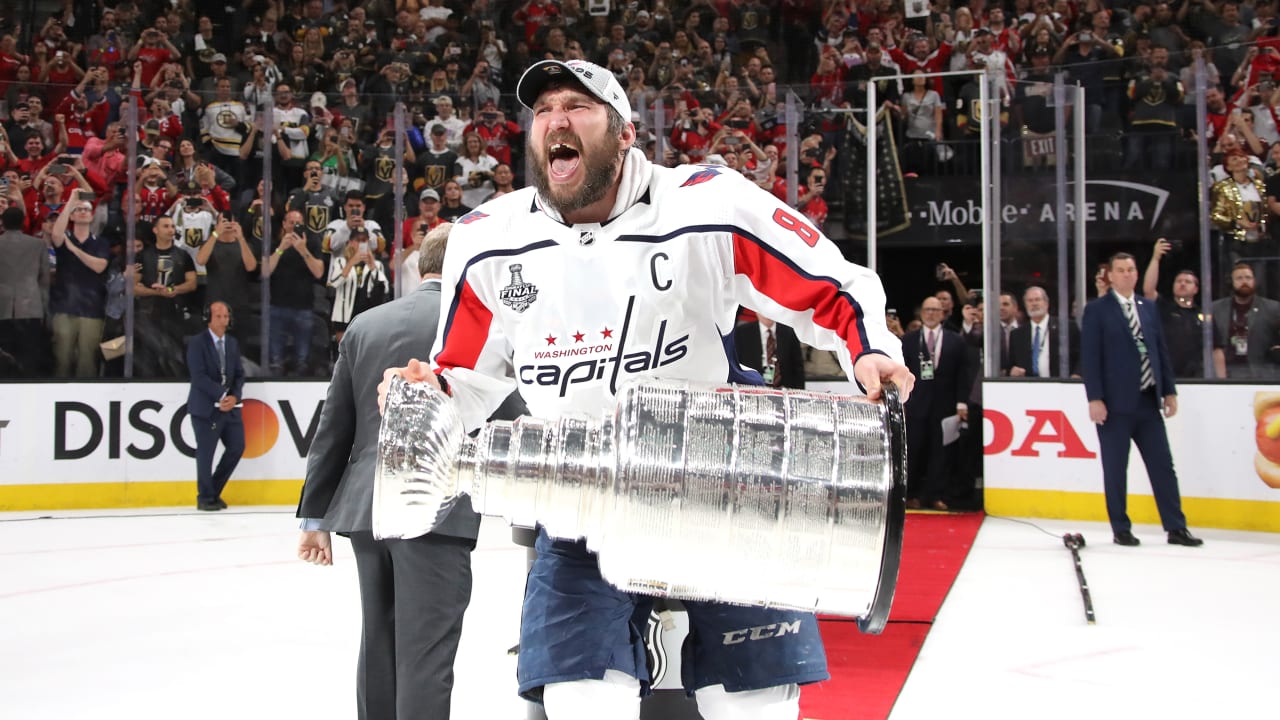
Those who know Ovechkin best, such as former teammate John Carlson, believe he’s not ready for retirement.
“He’s been an amazing player in this league for so long,” said the defenseman, who signed a two-year, $17 million contract with the Tampa Bay Lightning on July 1 and won the Cup with Ovechkin in 2018. “It’s incredible what he’s been able to accomplish.”
In addition to have played for a Stanley Cup winner, Ovechkin has won the Calder Trophy as the NHL’s top rookie (2006), the Art Ross Trophy as the League’s leading scorer (2008), the Maurice “Rocket” Richard Trophy as the leader in goals nine times (2008, 2009, 2013, 2014, 2015, 2016, 2018, 2019, 2020), the Hart Trophy as the NHL’s most valuable player three times (2008, 2009, 2013), the Ted Lindsay Award twice as the most outstanding player as voted by fellow members of the NHL Players’ Association (2009, 2010) and the Conn Smythe Trophy as playoff MVP (2018).
No other player can make that statement.
Seasoned NHL observers such as Winnipeg Jets general manager Kevin Cheveldayoff believe the sky’s still the limit for Ovechkin.
“Ovechkin defies Father Time when it comes to being an impact player,” Cheveldayoff said in an email. “He’s like Gordie Howe, Jaromir Jagr and Sidney Crosby.”
Washington (43-30-9) missed the playoffs last season, but Ovechkin led the team with 64 points (32 goals, 32 assists) and played each of its 82 games.
“What’s truly amazing,” Cheveldayoff said, “is that Ovie passionately loves the game so much that he’s able to physically push himself to those highest levels.”
Indeed, his magic touch not only has enveloped the hockey community over the years, but America’s capital city and its vast environs as well.
“Having the greatest goal-scorer in NHL history and the most important player in our club’s history return means so much to our organization, our fans and our city,” Capitals general manager Chris Patrick said.
Many years ago, motivation was also a factor for Frank Boucher, who retired as an NHL star during the 1937-38 season and became New York Rangers coach the following campaign. The Hockey Hall of Fame center returned to the ice for a 15-game comeback five years later during the 1943-44 season. He was 42, just slightly older than Ovechkin is today.
“I was motivated out of desperation,” Boucher wrote in his autobiography “When The Rangers Were Young.”