
how storefront canopies shape architecture and urban identity
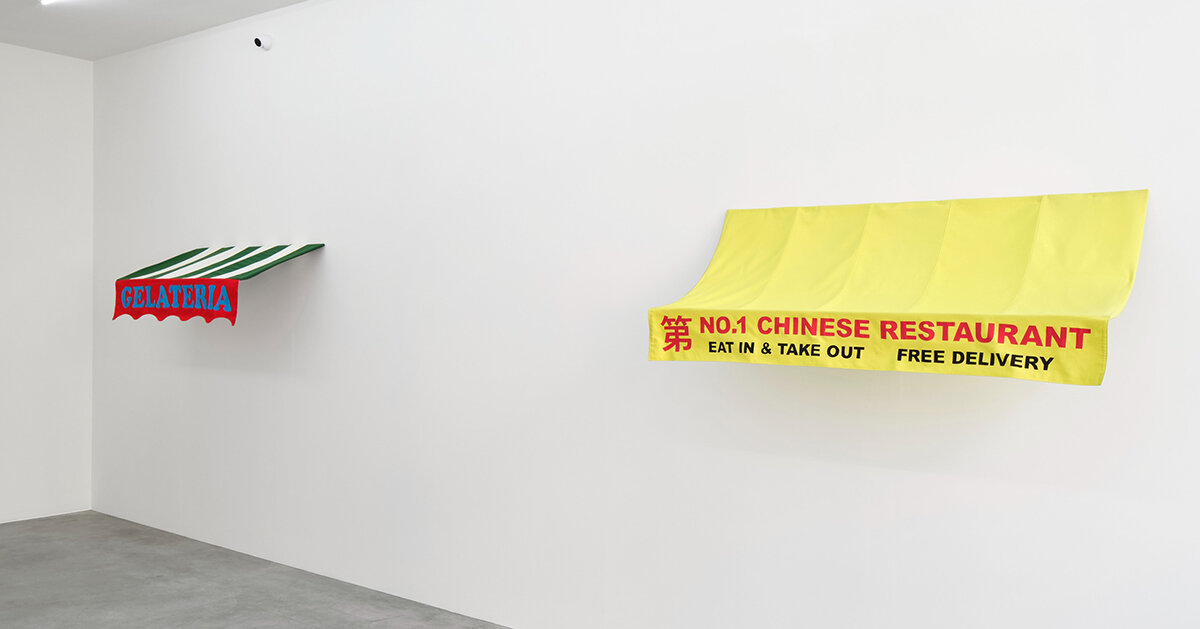
Egon Van Herreweghe transforms the storefront canopy, one of the most overlooked architectural elements of the city, into the subject of his latest solo exhibition. Presented at Footnote Gallery in Ghent, The Menu brings together four sculptural reproductions of storefront canopies that reference familiar urban typologies, from a French bistro and Italian gelateria to a Greek taverna and Chinese takeaway. Detached from their original buildings, the works investigate how architectural details communicate identity long before anyone steps inside.
Projecting from facades into public space, canopies occupy a position between architecture and graphic communication. While they provide shelter, they also announce what lies beyond using color and typography. In The Menu, Van Herreweghe isolates these familiar structures from their functional role, presenting them as sculptures whose primary purpose is no longer protection but signification.
all images by Thomas Min
egon van herreweghe turns storefront canopies into sculpture
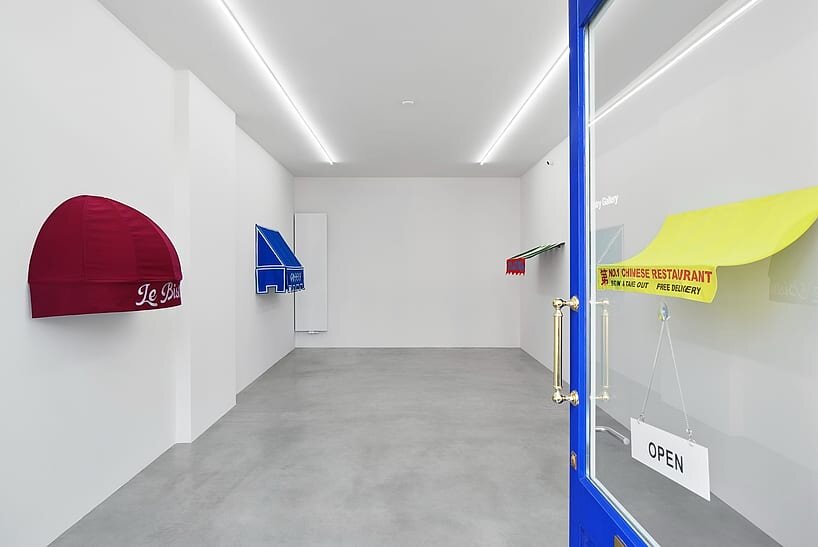
Egon Van Herreweghe’s exhibition takes its cue from the neighborhood surrounding the gallery, a street lined with Turkish restaurants and other independent businesses whose storefronts contribute to the visual character of the area. The Belgian artist reflects on the architectural language through which cities construct ideas of elsewhere. The four works, Le Bistrot, Gelateria, Greece, and Chinese Restaurant, draw on recognizable combinations of lettering, color, and form that evoke national or cultural associations, revealing how commercial architecture often compresses place into a set of instantly legible signs.
Installed against the gallery’s white walls, the canopies, viewed head-on, read almost like flattened storefront graphics; from an angle, their depth becomes apparent, recalling their original architectural function. Although slightly smaller than their real-world counterparts, they retain enough physical presence to evoke the familiar gesture of shelter without ever becoming usable architecture.
The installation reinforces this shift in meaning. Footnote Gallery was reconfigured with new partition walls, and the passage leading to the rear of the space was closed, preventing the canopies from framing an entrance. Removed from facades, businesses, and customers, they are presented on their own terms, inviting viewers to consider the visual systems that normally fade into the background of everyday urban experience.
Constructed from painted cotton stretched over metal frames, the sculptures deliberately retain the appearance of commercial objects while occupying the context of contemporary art. Van Herreweghe, who develops the works before commissioning their fabrication, continues his interest in questions of authorship, authenticity, and value by shifting everyday visual culture into the gallery.
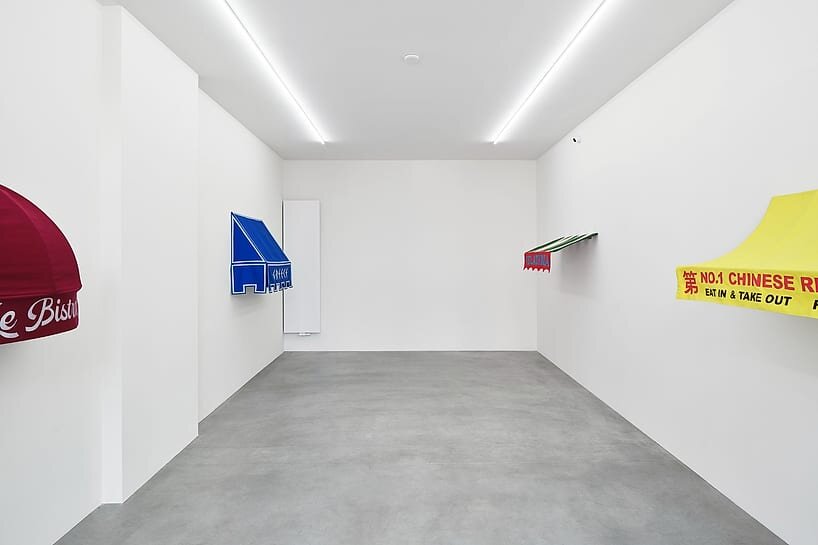
installation view of The Menu at Footnote Gallery
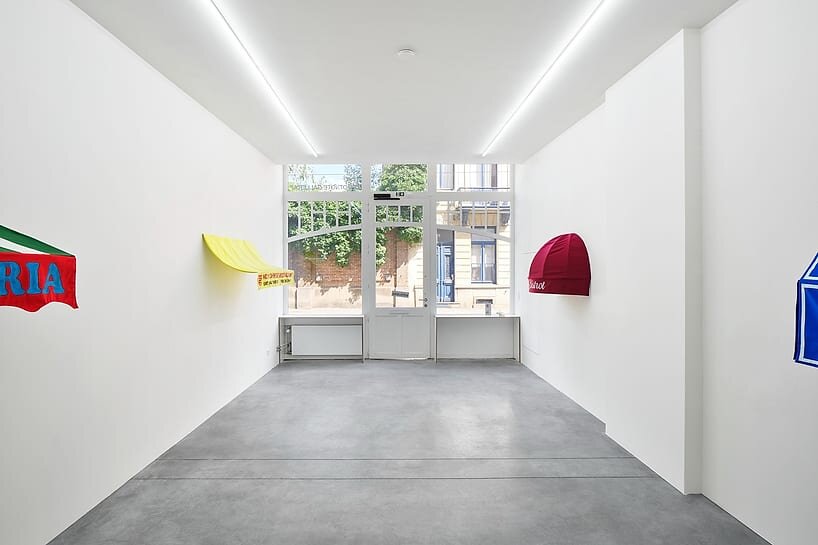
four storefront canopies are detached from their original architectural context
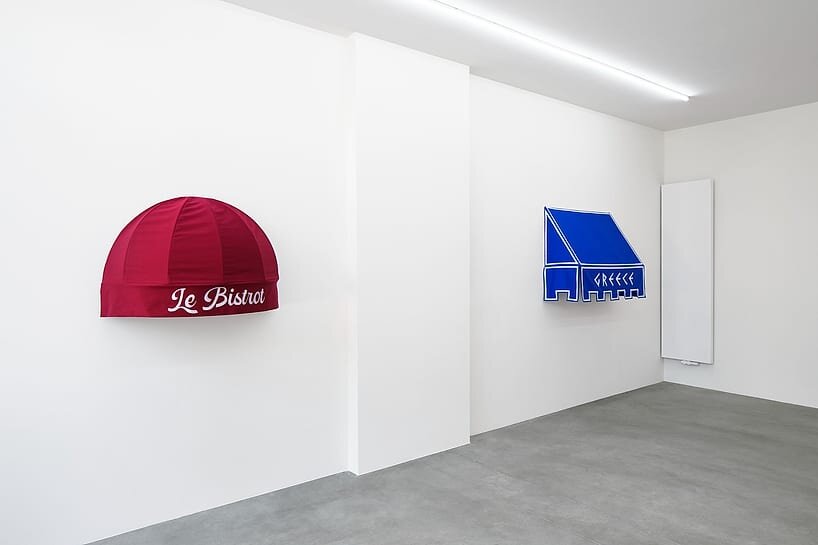
the gallery was reconfigured with new partition walls
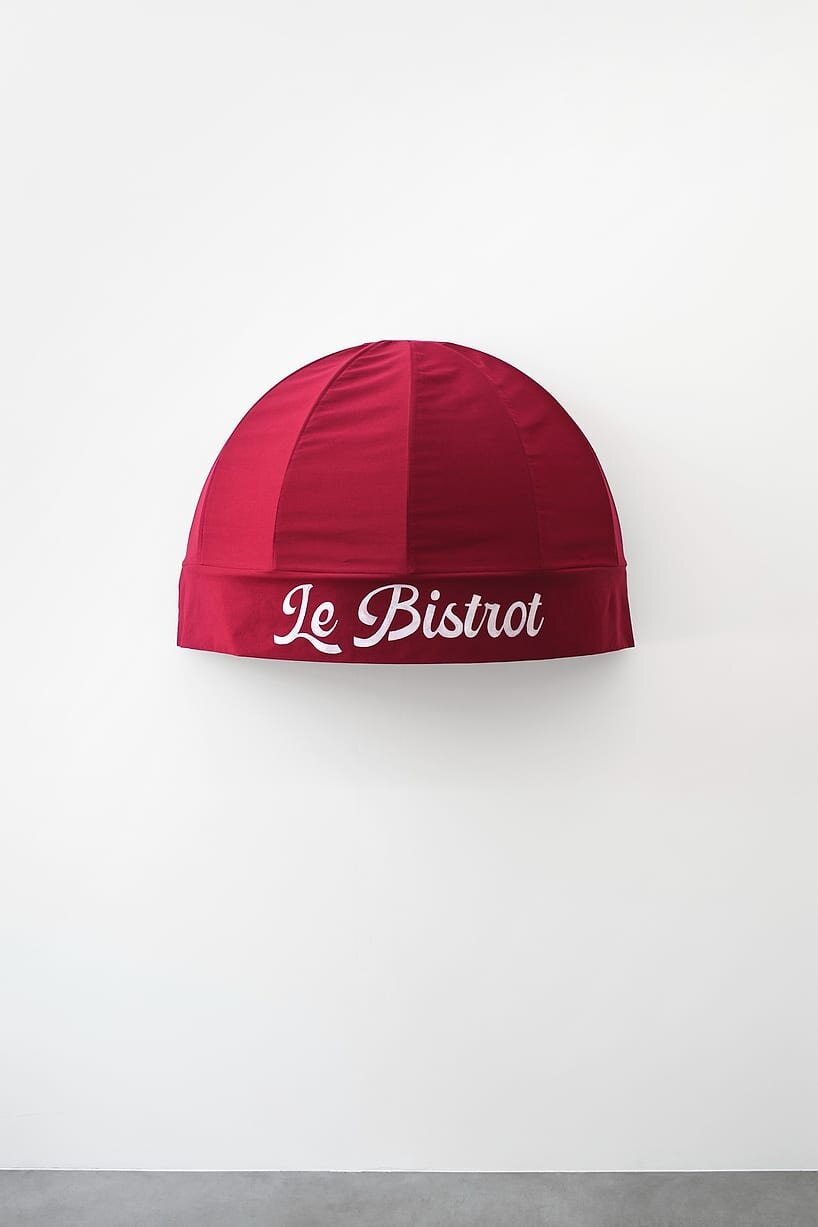
Le Bistrot (2026) reproduces the curved storefront canopy as a freestanding sculptural object
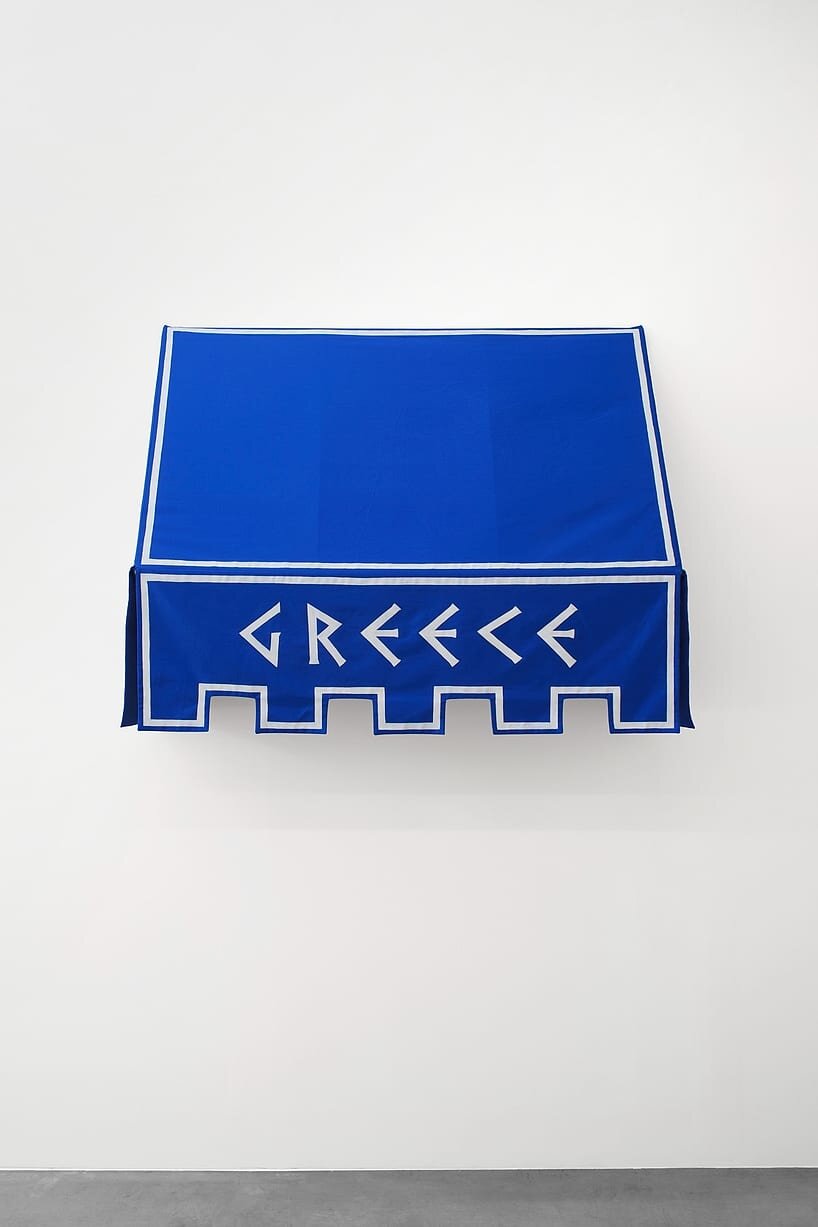
Greece (2026) isolates the storefront canopy from its functional role, emphasizing its symbolic qualities
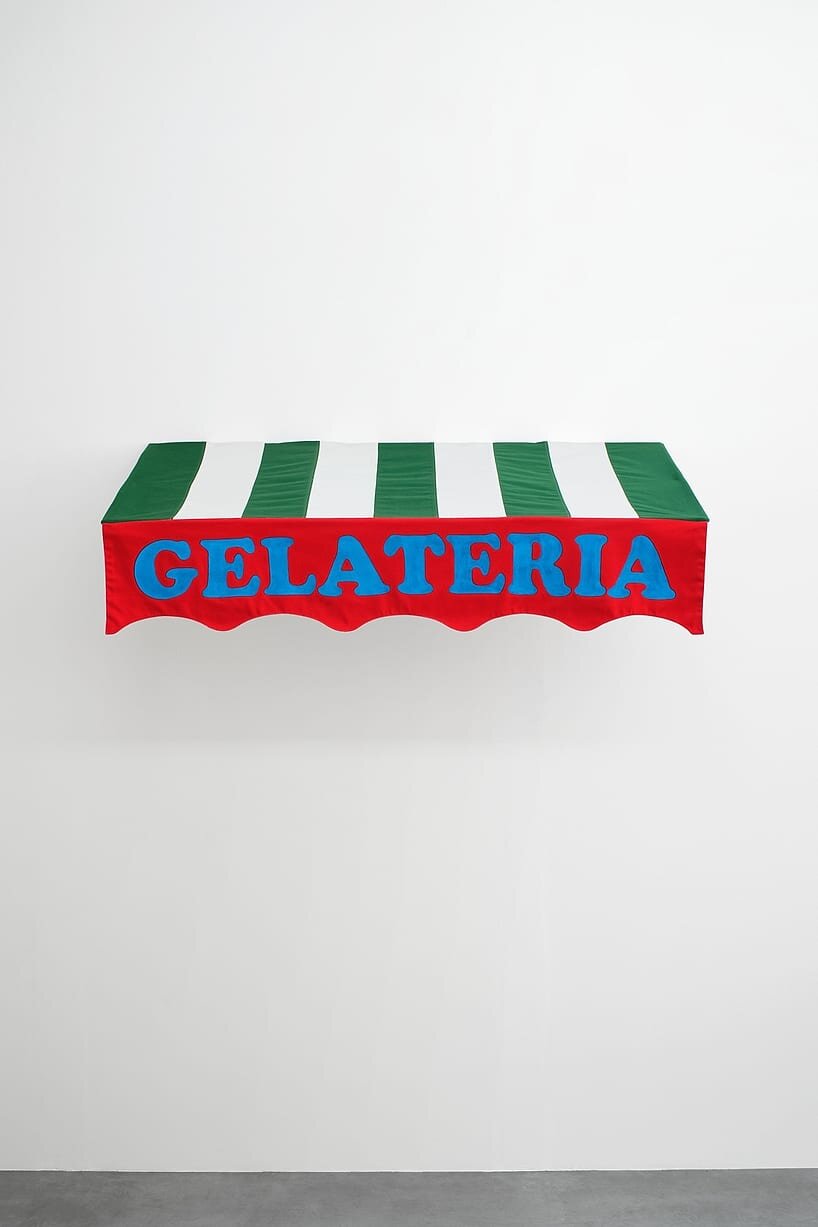
Gelateria (2026) retains the proportions of a commercial canopy while functioning as a wall-mounted sculpture
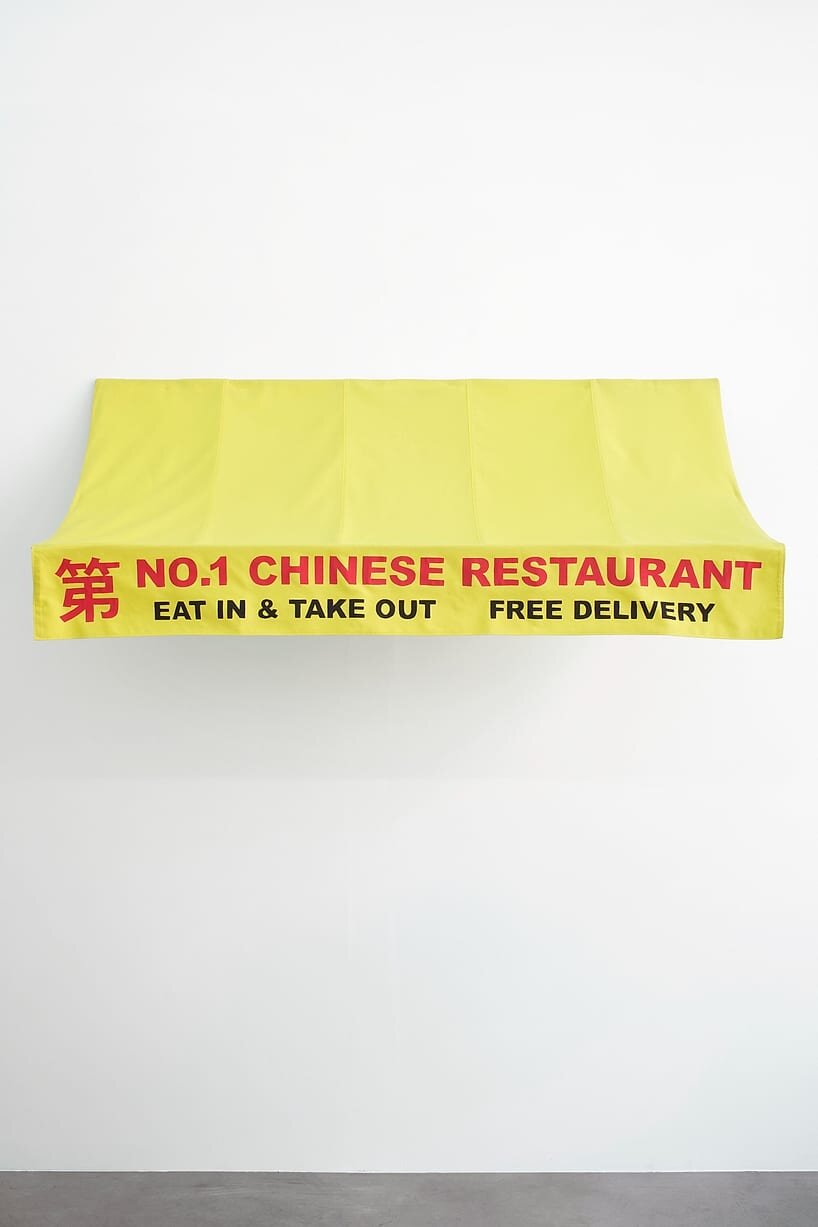
Chinese Restaurant (2026) isolates the familiar takeaway canopy from its storefront
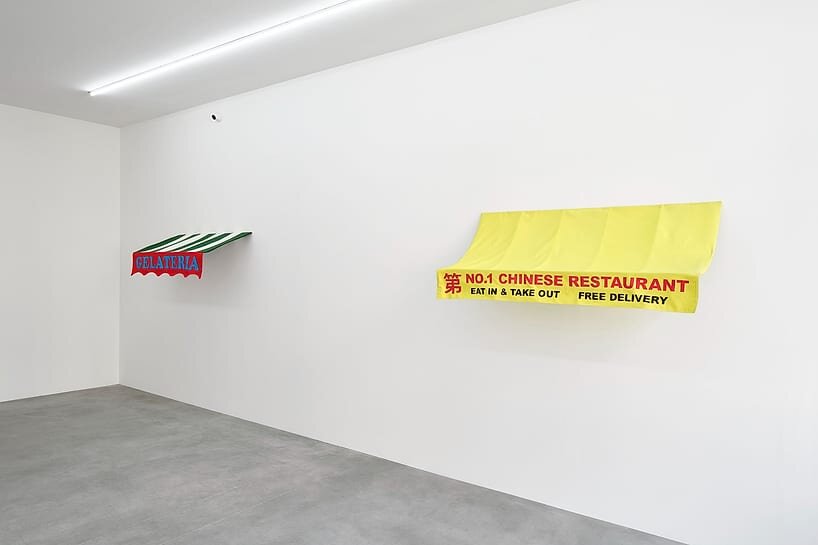
four sculptural canopies occupy the gallery without framing an entrance
project info:
exhibition: The Menu
artist: Egon Van Herreweghe | @egonvanherreweghe
venue: Footnote Gallery | @footnote.gallery
location: Sint-Salvatorstraat 123, Ghent, Belgium
dates: July 17th – August 29th, 2026
photographer: Thomas Min | @_thomas_min_