
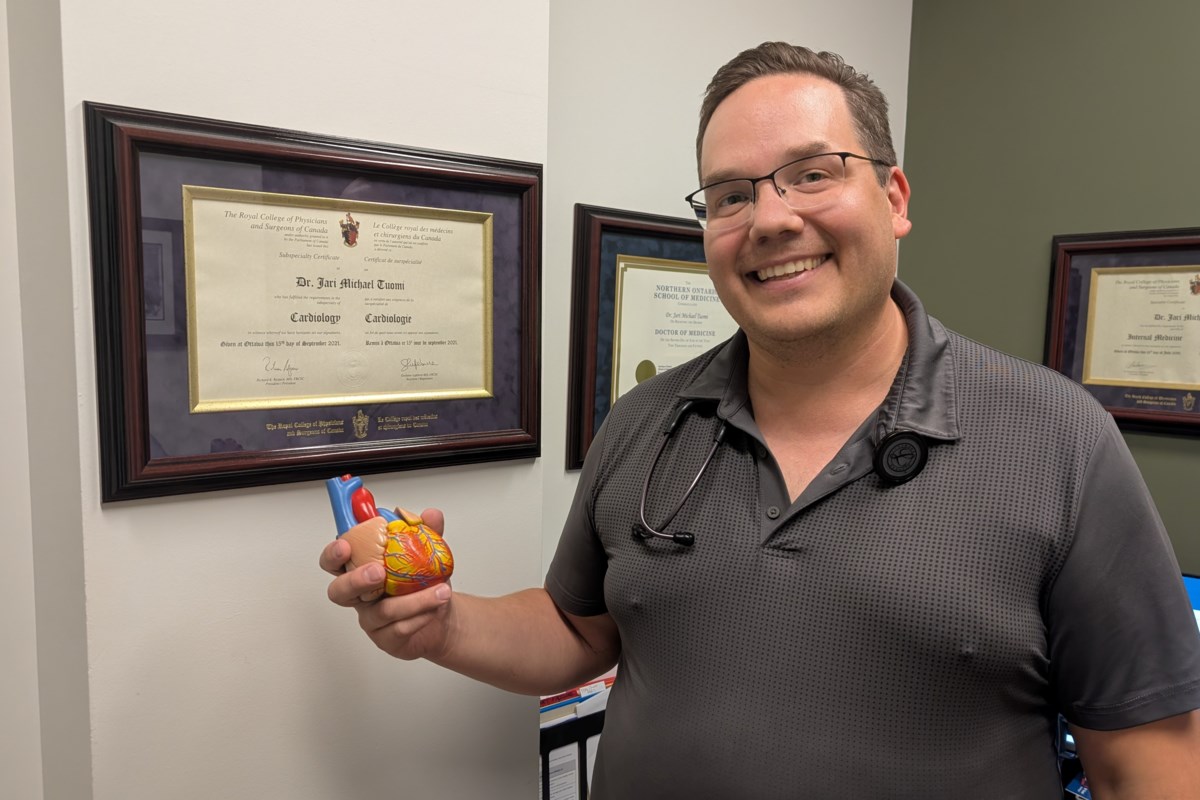
Foundation seeks long-term support after helping nearly 100 patients recover from heart disease in its first year
When Dr. Jari Tuomi arrived in North Bay, he expected to build a career helping patients with heart disease.
What he did not expect was to find a gap in the care available after those patients experienced a major heart event.
North Bay did not have a comprehensive cardiac rehabilitation program for patients recovering from heart attacks, cardiac surgery, heart failure and other cardiovascular conditions.
A year after helping establish the North Bay Cardiac Rehabilitation Program, Tuomi and community partners are working to ensure the service continues long-term.
The North Bay Cardiac Rehabilitation Foundation launched its first fundraising campaign last month after the program helped nearly 100 patients during its first year. The foundation says it hopes to eventually support 200 to 250 patients annually, but needs about $500,000 each year to sustain and expand the program.
“When I moved to North Bay, there was no funded comprehensive cardiac rehab program,” Tuomi explained in an interview with BayToday. “I was surprised by that. It’s something that I took for granted.”
The 16-week program supports patients recovering from heart disease through supervised exercise, education, nutrition counselling, cardiovascular risk management and medication support.
Cardiac rehabilitation is considered an important part of recovery for patients with heart disease, says Tuomi. The foundation notes these programs can reduce hospital readmissions, improve quality of life and lower the risk of future cardiac events.
Patients are referred by their health-care providers and complete assessments before beginning the program, including heart testing and individualized exercise plans.
Tuomi said cardiac rehabilitation is not simply an exercise program.
“The bringing together of all these components—medication, exercise, education, dietary change, social work for stress, depression, anxiety,” he said.
“That’s where the magic happens.”
The Sault Ste. Marie native said his connection to northern Ontario influenced his decision to build his medical career in the region.
After completing his undergraduate studies and PhD research in London, Ont., Tuomi attended the Northern Ontario School of Medicine University before completing cardiology training.
He said he had opportunities to work at larger medical centres, including an interview opportunity with the University of Ottawa Heart Institute, but ultimately decided North Bay was where he could have a greater impact.
Tuomi said he realized his priorities had shifted and that North Bay was where he could make a greater difference for patients. He added that coming to a smaller community allowed him to address a need he saw firsthand.
“If I’m not going to sort that out, no one will,” Tuomi said.
The program was developed through partnerships with organizations including the University Health Network, Canadore College, Nipissing University and the YMCA of Northeastern Ontario.
Inside the North Bay Cardiology clinic at The Village at Canadore College, patients complete exercise programs using treadmills, stationary bikes and specialized equipment tailored to their recovery.
Among the equipment is a cardiopulmonary exercise testing machine, which measures a patient’s heart and lung fitness to help clinicians develop a personalized exercise plan.
Tuomi said the program serves patients throughout the Nipissing district, including those who previously had to travel significant distances for care.
“I’m not just North Bay’s cardiologist; I see patients all over the Nipissing region that travel for hours to see me,” he said.
He recalled one patient who travelled from outside North Bay to attend the program. During the winter, the patient and his wife stayed overnight in a hotel before each rehabilitation session to make sure he could continue participating and receive care.
Tuomi said expanding access through virtual options could help reach more patients living farther away or in rural communities.
However, organizers say long-term funding remains the biggest challenge.
The foundation says there is no dedicated Ministry of Health funding stream for new community-based cardiac rehabilitation programs. While the North Bay program has received support from partners, organizers say long-term sustainability depends on community fundraising.
Existing programs are funded through hospital operating budgets, but Tuomi said those programs are also facing increased demand.
“If you’re not one of those programs and you’re a new program like ours, there’s no pathway for ministry-level support or healthcare funding,” he said.
The foundation was created to provide a long-term funding source for the program and is currently awaiting charitable status from the Canada Revenue Agency.
Tuomi said the annual funding goal would support clinical staffing, equipment, patient education and operations. The foundation estimates the cost of providing the program is about $2,000 per patient.
The organization held its first fundraising dinner on July 23, bringing together community members, health-care professionals and businesses. The event raised nearly $60,000 toward the foundation’s goal.
The program currently operates two days per week, with organizers hoping to expand capacity as funding becomes available.
Tuomi said the impact of the program is something he sees directly as patients move through the 16-week course.
Patients often arrive nervous or uncertain after a major health event, but Tuomi said he sees them regain confidence and independence as they complete rehabilitation.
“By the time they’re done the program, they’ve got their lives back,” Tuomi said. “People get their parents back, and it’s very impactful.”
For Tuomi, the goal is to ensure patients across northern Ontario can access rehabilitation without having to leave their communities.
“I can’t imagine having to go back to not having this to offer them,” he said. “I want to keep it going.”