
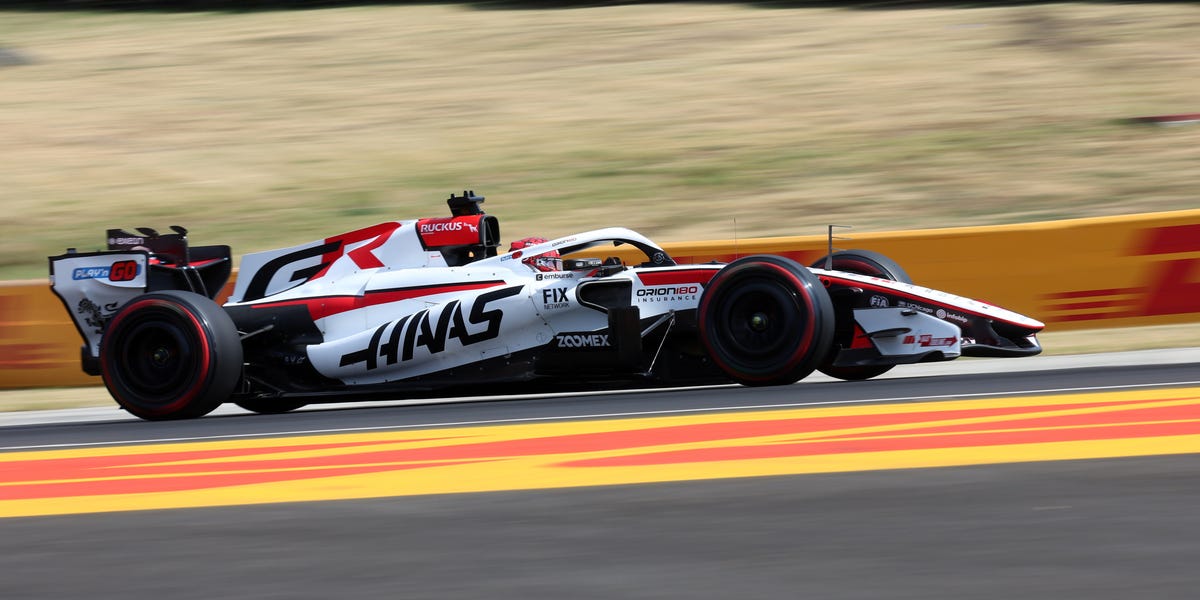
Championship position: 7th (21 points)
Haas scored 17 points across the opening three grands prix but has added just four since, a microcosm of a campaign that promised much but has yielded very little.
Haas started strongly out of the box with a tidy package, picking up a handful of big points finishes while rivals stuttered, but it has found top 10s harder to come by as better-resourced teams have better understood their packages. Haas has also been left behind in the development race, which this year has been heightened by the nascent nature of the regulations allowing teams to find bigger chunks of lap time in-season.
New components are on the way but it has left the last few rounds as something of a holding pattern, flitting somewhere between the seventh- and ninth-best package. Haas has also struggled with the consistency and quality of some components, affecting the performance across both cars, though Esteban Ocon has been a more dissenting voice about the problem.
“The start of the season was pretty impressive, I really didn’t expect that either—and in terms of team work, reliability, and getting the best out of the car, was much more than I expected considering we are the smallest team and these are the biggest regulation changes ever,” said Haas Team Principal Ayao Komatsu.
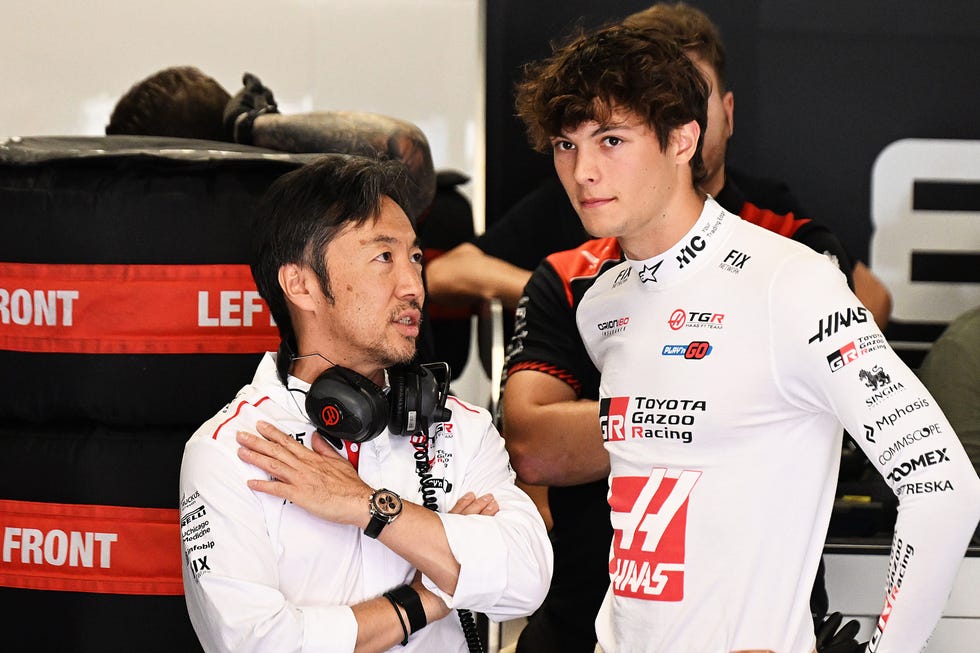 Mark Sutton – Formula 1//Getty Images
Haas Team Principal Ayao Komatsu talking with driver Ollie Bearman.
“But after the April break in terms of the development race, we got behind, because other people put so much performance on the car. We’ve improved the car, but not enough to keep up with them. But again, it’s not the fault of our guys, they’re doing an amazing job, if you simply look at the size of our teams and the constraints we’ve got, you can’t ask for more.”
Bearman has been Haas’ lead driver for the bulk of the campaign but has cut a more frustrated figure across the grands prix closer to the summer recess.
“We got behind, because other people put so much performance on the car. We’ve improved the car, but not enough to keep up with them.”
“We haven’t scored points as a team since Canada, which was where we introduced our last upgrade package, and it hasn’t quite brought the performance to the car that our competition has been able to bring,” he said. “Audi, Racing Bulls and Alpine we were on par/ahead of them at the start of the year, and now all of those teams have made a good step forward. It’s been a really long few months since Canada where, to be honest, I think in terms of execution we’ve been doing a good job. We’ve got the most out of the car, and I’ve got the most out of myself, but when the most is just P14, P13 or P12, it starts to get a bit old. We’re eagerly awaiting the next bit of performance that we have to add to the car, which hopefully will come soon, and hopefully that can make the second half a bit more fruitful.”
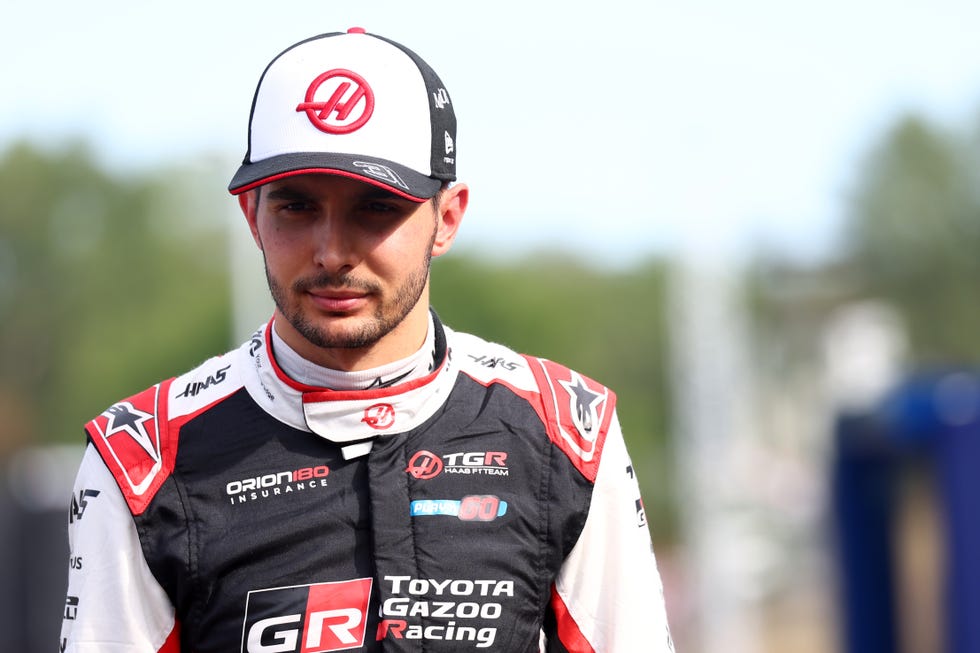 Marco Canoniero//Getty Images
Haas F1 driver Esteban Ocon.
Ocon described his first half-season as “probably the most difficult first half of the season that I’ve ever had” in terms of “how consistent the car was from one race to another,” with that unpredictability and parts inconsistency—which Komatsu stressed has impacted and afflicted both drivers—unseating Ocon’s confidence. The Frenchman’s paltry points total has also been influenced by too often being on the wrong side of 50:50 calls regarding safety car timings and yellow flags, occasionally costing him a stronger result. His future remains uncertain as Haas gives serious credence to a couple of youngsters, most prominently Leonardo Fornaroli and Rafael Camara.
It has still fundamentally been a solid enough season for a team that has the fewest number of personnel and, it is believed, the smallest budget. If anything, the manner in which Haas hit the ground running in such a complex era warranted greater acclaim. But it has been an all-too-similar story in the months that followed.

U.K.-based Phillip Horton started covering Grands Prix while still at university and swiftly deemed that writing about Formula 1 and the behind-the-scenes machinations was much more engaging than reading centuries-old novels. Degree gained, he went on to cover the sport full-time from 2014 and is as intrigued and excited by the destinations Formula 1 visits during its lengthy annual world tour as the racing itself. Phillip joined Autoweek in 2021 and while he has just about learned to spell in American English he has yet to find anywhere in America that makes a proper cup of tea.