
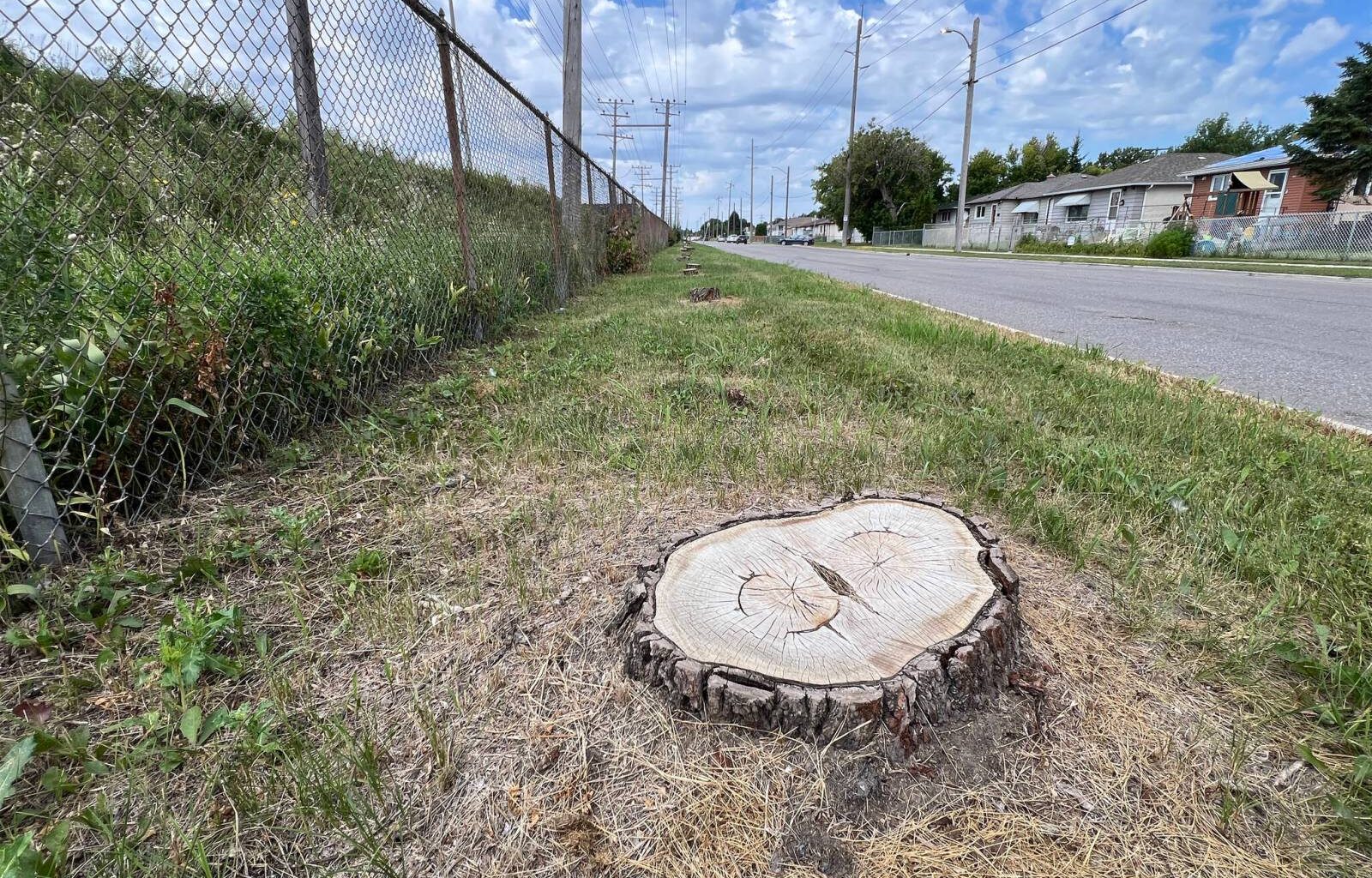
Selkirk Avenue resident Gail Allard sits on her front steps, looking at a row of tree stumps.
Until last fall, Allard would have opened her front door to a lush canopy of mature trees. Now, she has an unobstructed view of a freight terminal — the Canadian Pacific Kansas City Ltd. intermodal yard.
Although the residential street is quiet on this August afternoon, the steady beeping of machinery moving shipping containers carries throughout the neighbourhood.
ZOE PIERCE / FREE PRESS
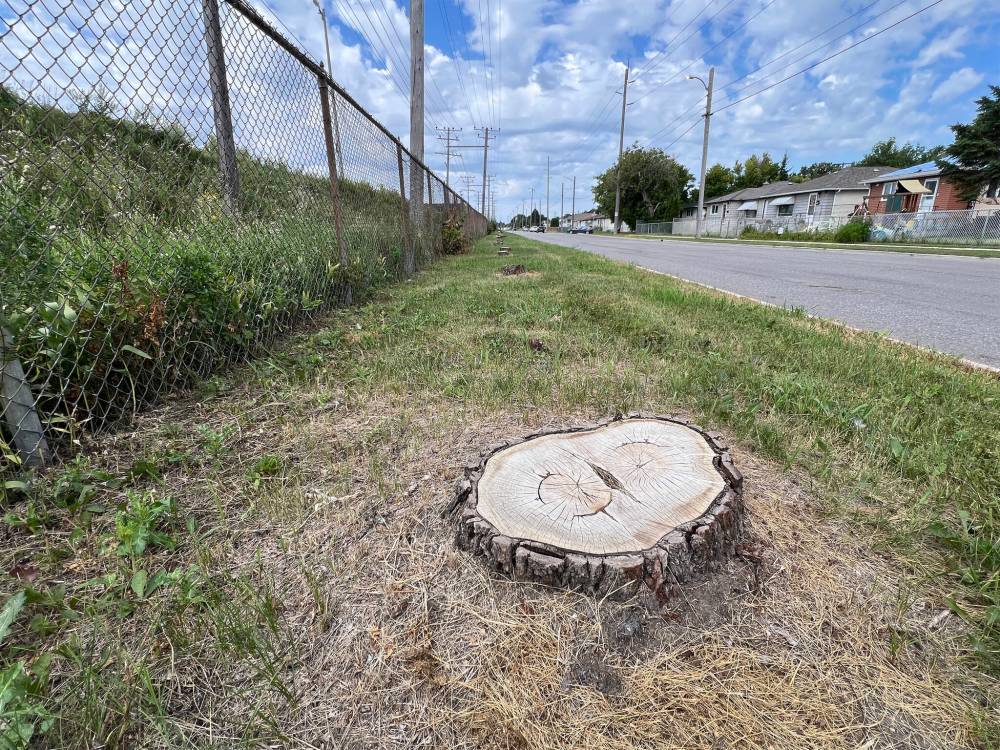
Where once there were mature trees along Selkirk Avenue, only stumps remain after Manitoba Hydro cut them down last fall as a safety precaution.
It’s the first summer since Manitoba Hydro cut down 262 mature trees — most of them Siberian elms — along Selkirk Avenue between Keewatin and Railway streets.
The trees provided more than just a pleasant view for Allard. They acted as a barrier between her home and the industrial activity across the street, helping to reduce noise and keep dust from drifting toward the neighbourhood.
“The noise is ridiculous,” Allard said. “The containers beep, beep, beep, beep. Because every time they back up, they have to have a beeper on.”
She said the difference is most noticeable when she’s outside.
“You still heard it,” she said of the rail yard before the trees were removed, “but it was a buffer.”
Allard said she used to spend much more time outdoors, particularly in her backyard, but the noise has made her less inclined to do so.
“It’s just a reminder of what I used to have,” she said of the remaining stumps. “Plant more trees, shrubs — it’s heartbreaking.”
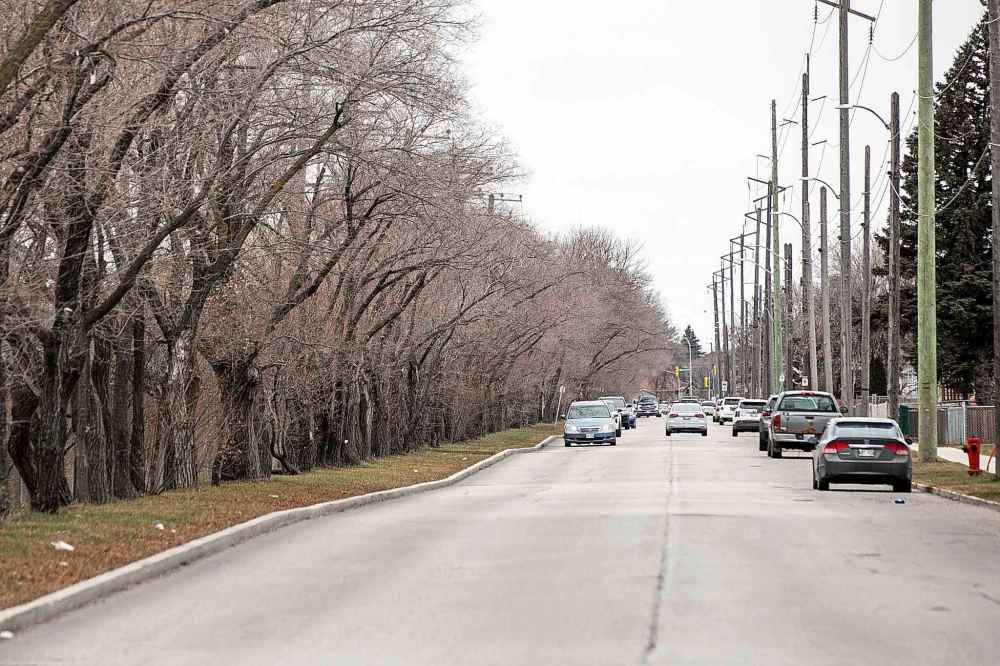
The trees were removed in November after Manitoba Hydro determined they were interfering with nearby power lines.
MIKAELA MACKENZIE / FREE PRESS FILES
The trees, mostly Siberian elms, were removed last fall on Selkirk Avenue, between Keewatin and Railway streets.
Hydro told the Free Press at the time that the trees were encroaching on 22 spans of 24,000-volt power lines that provide electricity to thousands of homes and businesses.
The utility said removing the trees would eliminate safety hazards for workers who conduct maintenance or repairs, as trees that become energized can start fires or bring down wires.
Hydro ruled out trimming as a long-term solution, saying Siberian elms grow quickly and would continue to interfere with the power lines.
Before the trees were cut down, the City of Winnipeg said it had tried to work with Hydro on alternatives, including pruning or developing a replanting plan. The city said those efforts were unsuccessful and it plans to continue discussions with Hydro regarding compensation to help fund replacement trees.
Months later, City of Winnipeg spokeswoman Julie Dooley said they have not been compensated by Manitoba Hydro.
“Plans for stump removal and replanting are not yet determined,” she said in an email.
Christian Cassidy, executive director of Trees Winnipeg, said because the trees were on city-owned land, the responsibility for dealing with the stumps likely falls to the city’s urban forestry branch, and removing hundreds of them will not be a small undertaking.
Winnipeg Free Press | Newsletter

“It would be a hugely expensive undertaking to stump grind 262 stumps,” Cassidy said, adding that even at a bulk contractor rate of about $100 per stump, the cost could exceed $25,000. He said city crews are already dealing with the aftermath of two major storms this year, which could affect the timeline for other forestry work.
ZOE PIERCE / FREE PRESS
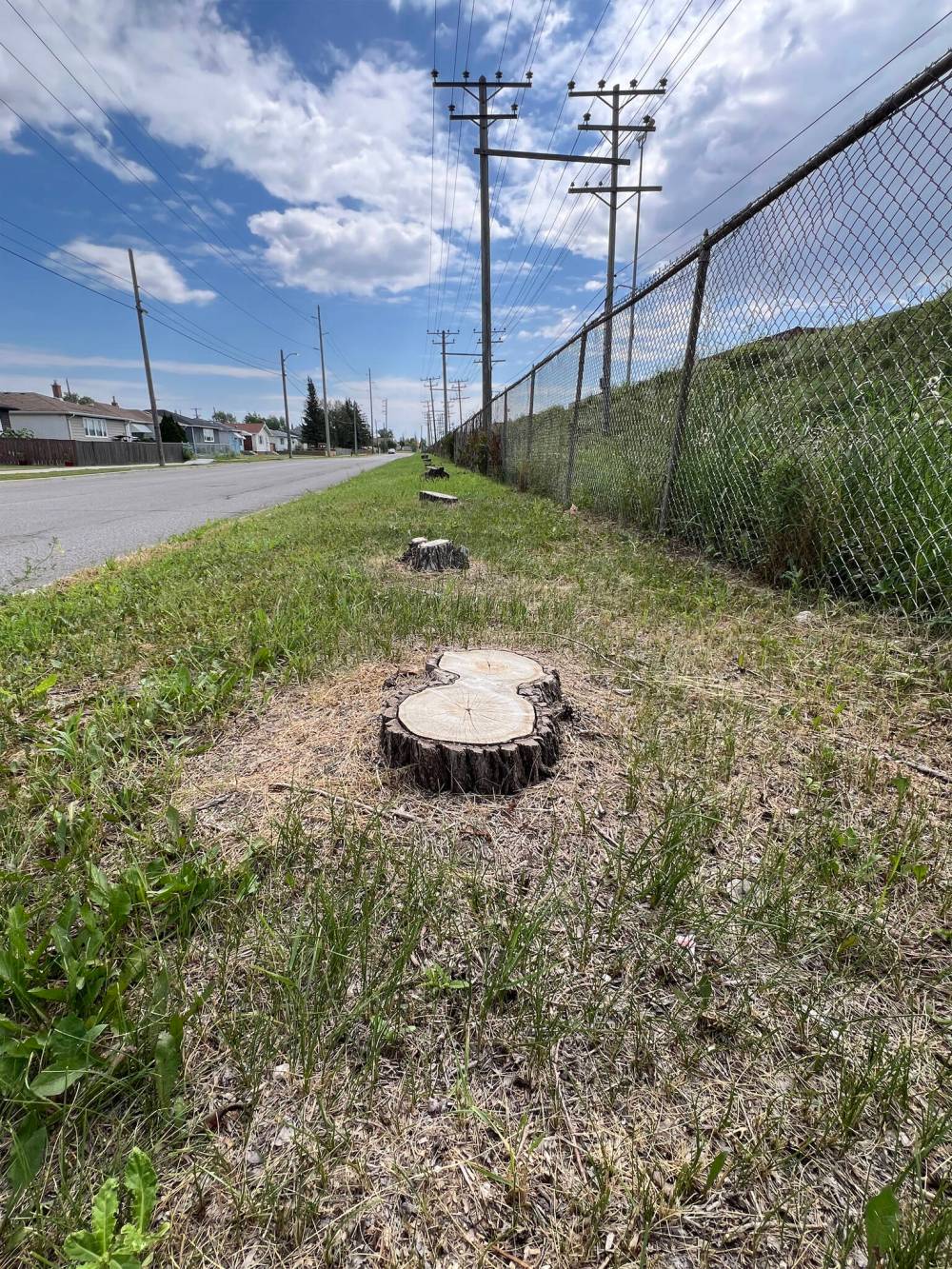
Allard says the trees acted as a sound barrier between her home and the industrial activity across the street.
In other words, the stumps could be there for a long time unless the city decides to replant the area with trees or shrubs.
Allard said she hopes some type of greenery will eventually replace what was removed.
“It’ll take less time to trim than it did to pull all of this out and cut this down and everything,” she said.
zoe.pierce@freepress.mb.ca