
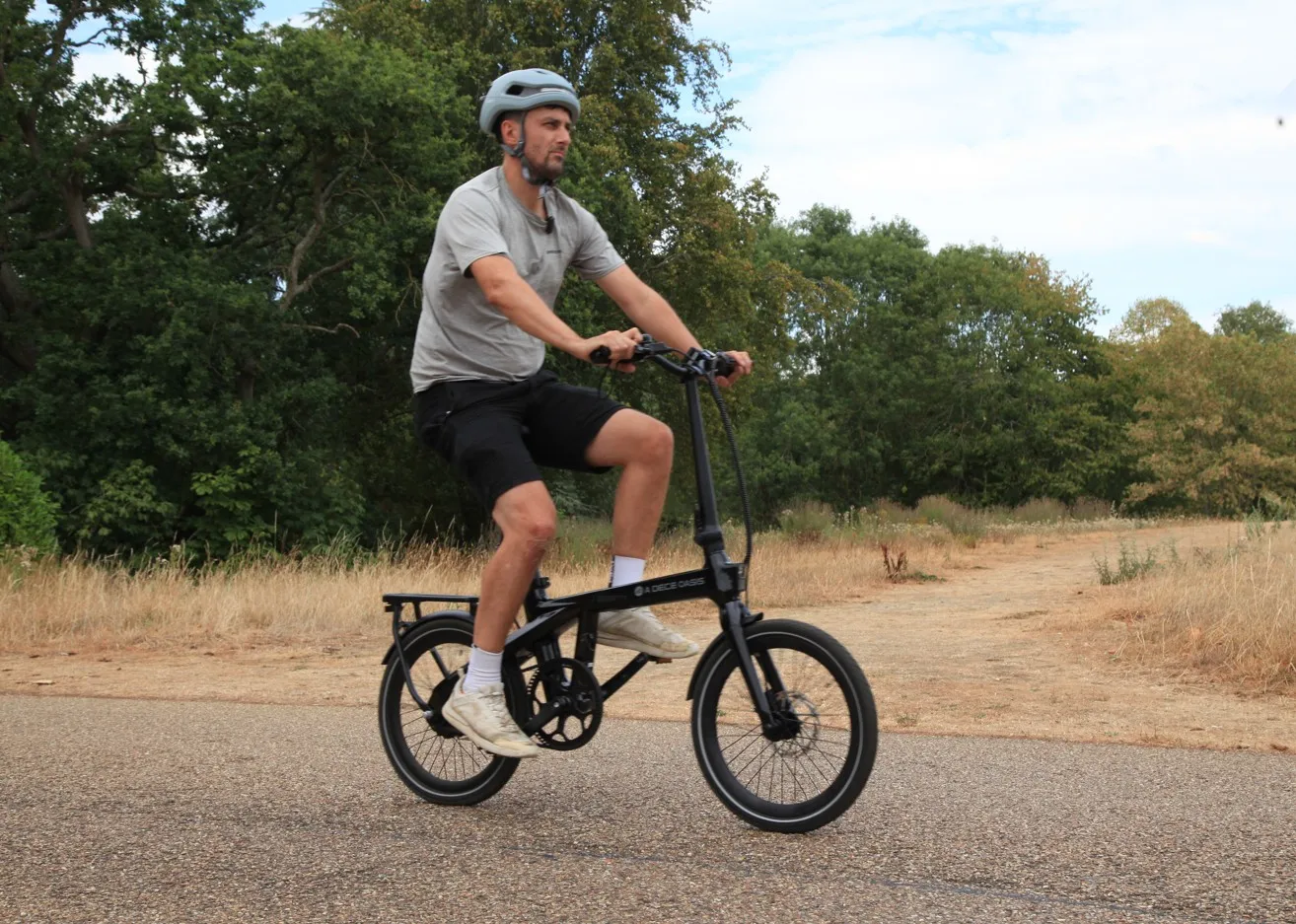
A folding bike is the perfect partner for those regularly making dashes in and out of the city, as we frequently do here at Cycling Electric. For that reason, we always like to keep a folder in our review stocks, so having a second shot at testing part of the ADO range, specifically the Air Carbon Pro, was a welcome opportunity.
ADO is a brand that has previously impressed us with its high-value approach to bike making. Spec sheets generally punch above our expectations when we see the price, which in this case is a penny under £2,000. For that, you’re getting a carbon fibre frame, a highly rated two-speed, dual torque sensor automatic-shifting hub motor from Bafang, some tidy software features and the convenience a bike like this affords to lifestyles ranging from multi-modal commuter to motorhome explorer.
As a direct-sale label, ADO will ship the bike to your door, which does mean some assembly from about 90% finished. It’s nothing too complicated in the case of the ADO Air Carbon Pro, and of course you can ask your local bike shop if you can pay them to safety check the build if you are unsure.
If you’re shopping in the electric folding bike space, our guide to the best electric folding bikes is perhaps the most comprehensive series of in-person tests you’ll find anywhere online.
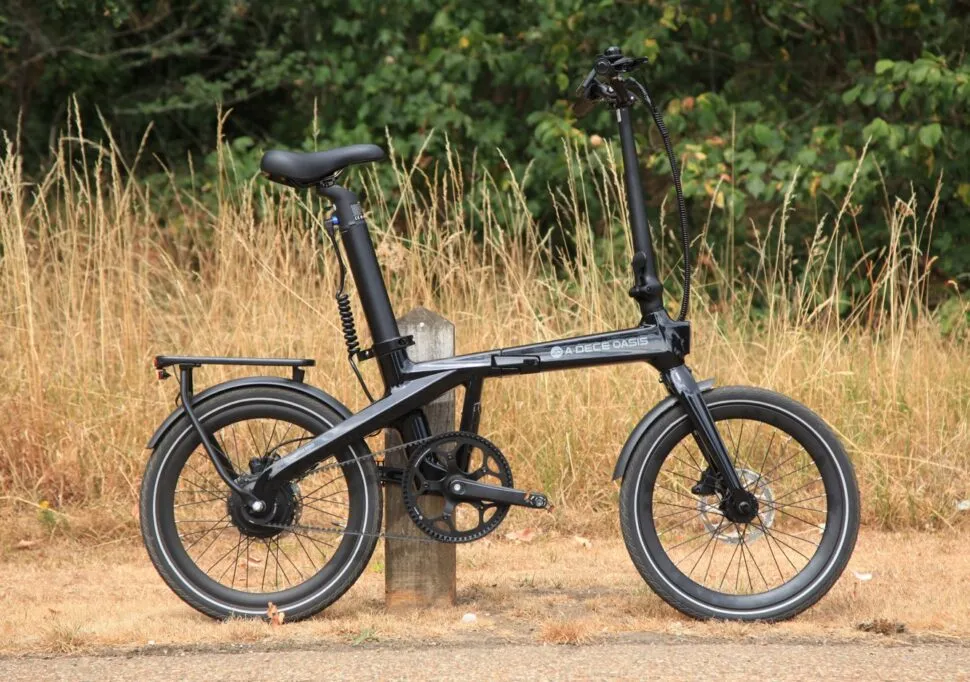
£1,999 | View offer
Pros
Clean and silent drivetrain
Great hub motor and auto shift
Excellent for A to B city journeys
NFC key power off/on
Lightweight
Anti-theft features, plus battery lock
Rack system (MIK 15kg)
Cons
A little flex in the steerer tube
No kickstand
App pairing email went to junk mail
Handlebar slippage sometimes possible
Some assembly required
Specifications
Stated weight: 16.2kg
Stated range: Up to km
Frame material: carbon fibre
Motor: Bafang 2-speed automatic hub motor, 50Nm
Battery: 370Wh seat tube battery
Drivetrain: Belt drive (two-speed)
Brakes: Tektro hydraulic discs
Saddle: Velo comfort
Tyres: 20 x 1.75 puncture-resistant tyres
Suspension: None
Included accessories: Wired-in lights, metal mudguards, NFC unlock (key or phone), clamp for basket accessory, MIK 15kg rack
Who is this bike for?
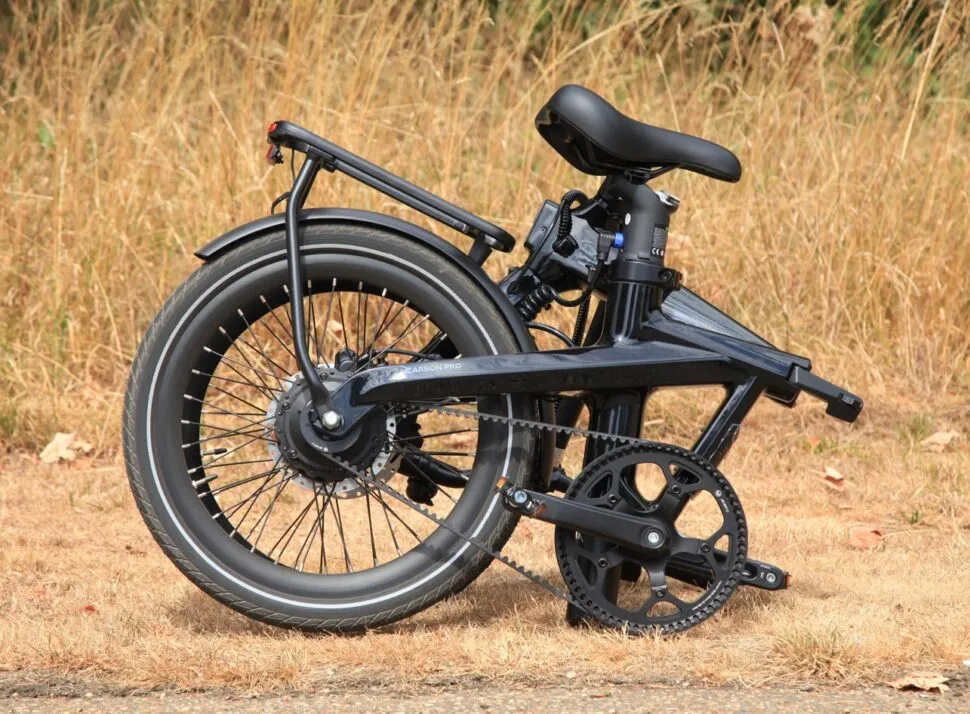
Convenience is the name of the game and ADO sticks with the tried and tested two-hinge and a dropped seatpost method to pack its bike down to half its full size. I found the frame hinge a bit stiff at times, but that’s nothing a drop of oil won’t fix, and I’d much prefer it to be stiff than have any play, as some others we have tested have experienced. There’s small safety catches on the hinge to prevent accidental unlocks and the frame hinge sits flush within the frame, so that’s an aesthetic plus point.
When it comes to folding bikes, a low weight is a significant advantage and even better if that weight is balanced. With the 370Wh battery found inside the seat tube the weight is central, so the fold doesn’t swing with disproportionate weight at either end. That’s a plus point and that dropped seat tube somewhat stabilises the folded package so you can let go between wheeling the package around on its wheels when folded. The folded unit stays together very well thanks to a strong magnet that meets a circular rimmed dish at the rear of the bike so that it doesn’t accidentally come unclasped. All in all, the folding experience is very good.
The ADO Air Carbon Pro electrics
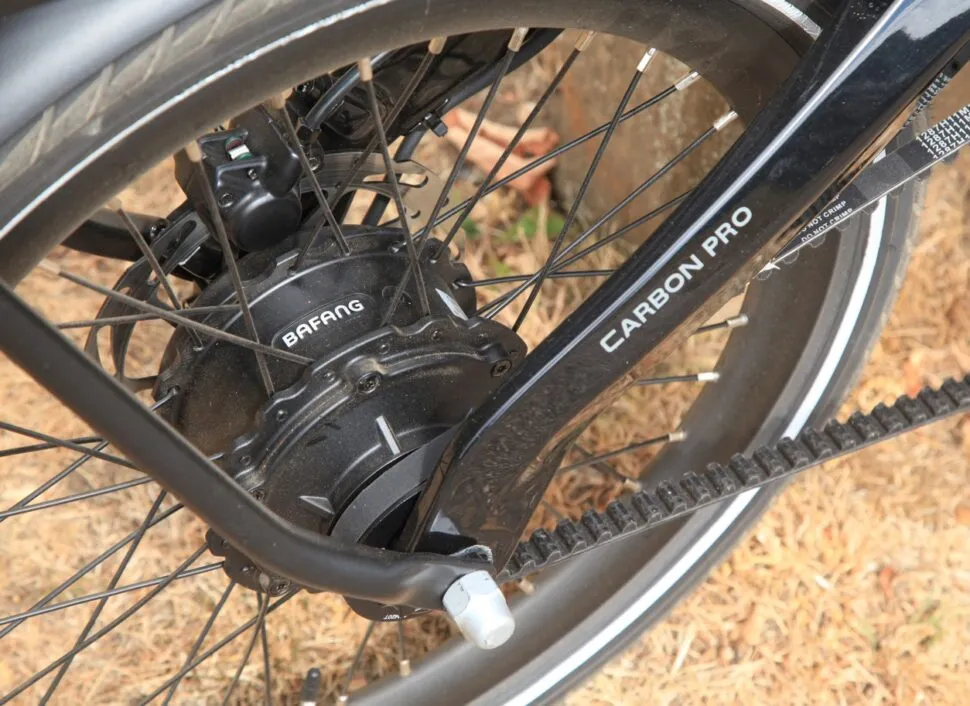
I’ve been a fan of the Bafang autoshifting gearhubs since I first tried them. They’re strong enough to be deployed even on some longtail cargo bikes, with the 50Nm torque coping very well with driving up hills of up to 10%, albeit you do have to increase your efforts as you near that double-digit gradient. On a lightweight folding bike, that motor isn’t having to work quite so hard, so for the most part I coasted up hills, sat comfortably in the saddle.
The momentum that carries you is all the more enhanced by the automatic shifting that takes place inside the hub and in tune with your pedal cadence, shifting up as you hit 19km/h and back down if you drop under. This happens smoothly and doesn’t leave you grabbing at air when it shifts, the motor somehow managing to catch the momentum at the right level as you decelerate back into a slowed cruising pace.
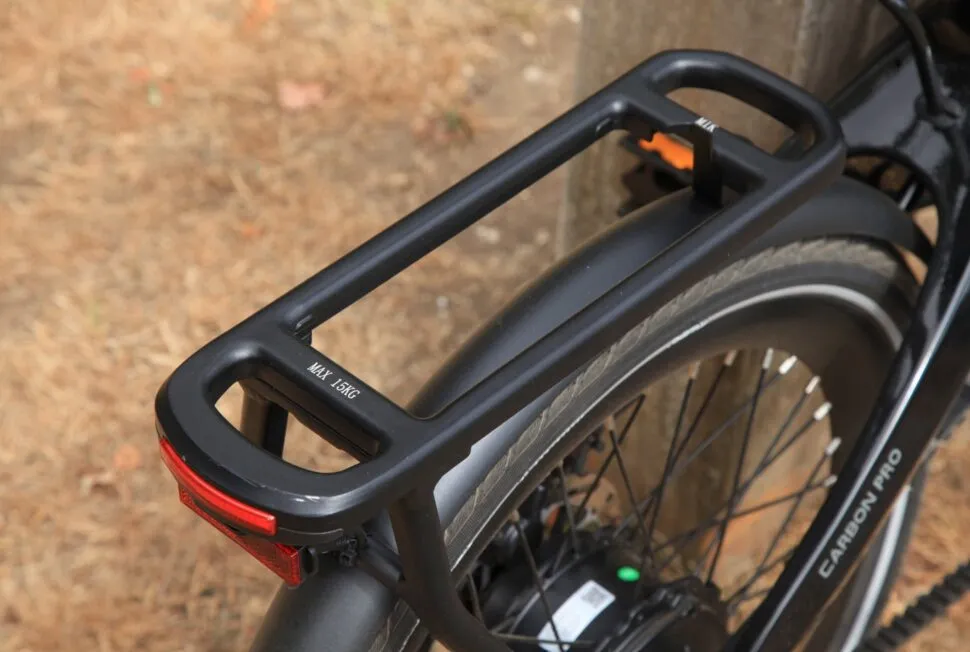
A 64-tooth front sprocket is noticeably large, but feels very progressive when it comes to delivering fast A-to-B momentum. I covered ground in London in very good time on this bike and ended up using it for many more short local trips as a result of how efficiently it moves. Better still, the accessory supply on this bike means you can do so after dark, thanks to wired-in lights, one of which is inside a rear smart 15kg cargo-capable MIK rack system.
On a folding bike, a 370Wh battery is about as large as they come outside of a few exceptions that are not trying to keep weight down and perhaps have mid motors and far larger downtube batteries. It’s a fair-sized battery for a bike like this and on no occasion did I wear through more than 60% in a day’s riding – then again I was doing very typical last-mile trips where my journeys were to the station, then on to my nearby destination once the train had landed. If this is your routine, this size of battery will cut it just fine. If you have to cross a city at the other end, then you’ll get a lot closer to the limit of the range, especially if your journey involves a few decent climbs.
However, this is assuming fair use, which for me meant riding mostly in mode two or three, depending on the terrain. Ride in eco mode (one) and you’ll surely go for longer. I’m confident you can do this and remain happy too, because the low rolling resistance, 1.75″ tyres are a big reason why this bike glides through the city. They’re slick and narrow, but just wide enough to provide stability and with a tread that grips very well, plus inside the rubber is a basic level of puncture protection.
By the way, don’t forget to turn the battery on via the small button on top of the seat tube. Without that extra step, the motor won’t turn on.
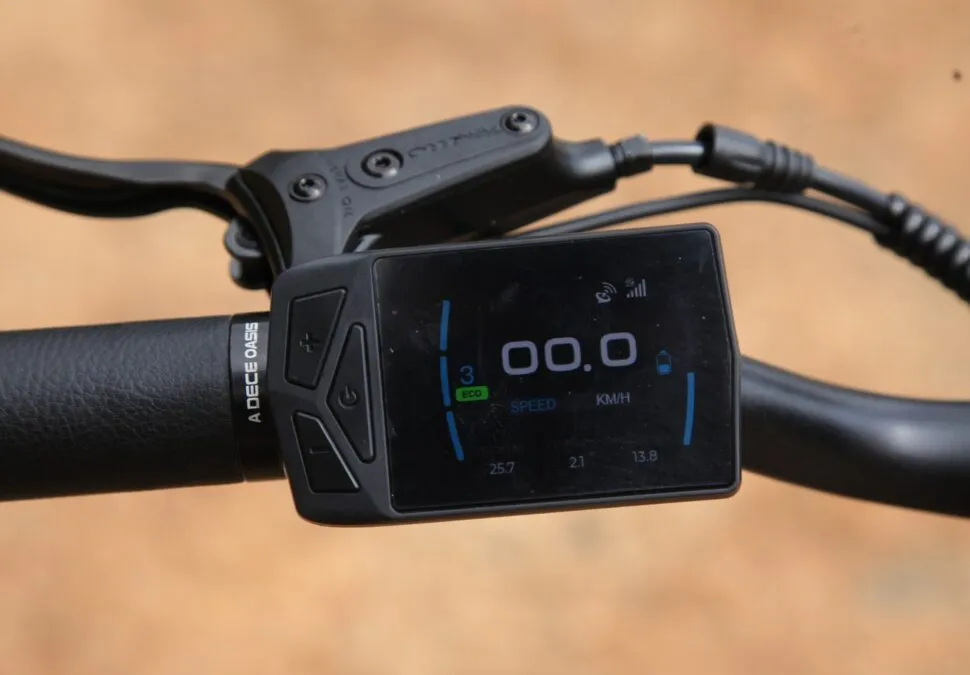
Turning the bike on is an interesting experience, in that ADO has NFC unlocking built into its controller. Hover either the supplied key card, or your mobile phone with the NFC key embedded over the controller and then you unlock the motor assist. The one slight glitch here is that it took me a while to access these features on account of the verification email initially going to my junk emails (and you only have a short time per code).
The components and the ride
Overall, the ADO Air Carbon Pro is well-equipped. As above, I love that it has a MIK 15kg rear rack, which, while not able to host a week’s shop, will take a pannier bag with a laptop and essentials comfortably. A trade-off where there is a missing link is that there’s no kickstand, which inevitably means that the lovely metal bar ends will suffer scrapes as you lean the bike against things. The grips just inside are soft to the touch and comfortable, though not just round, not ergonomic, so the shock absorption that you get is mostly through the carbon fibre weave, which, in fairness, does iron out lighter road noise. Being fully rigid, you will feel the potholes, mind, so avoid those if you can.
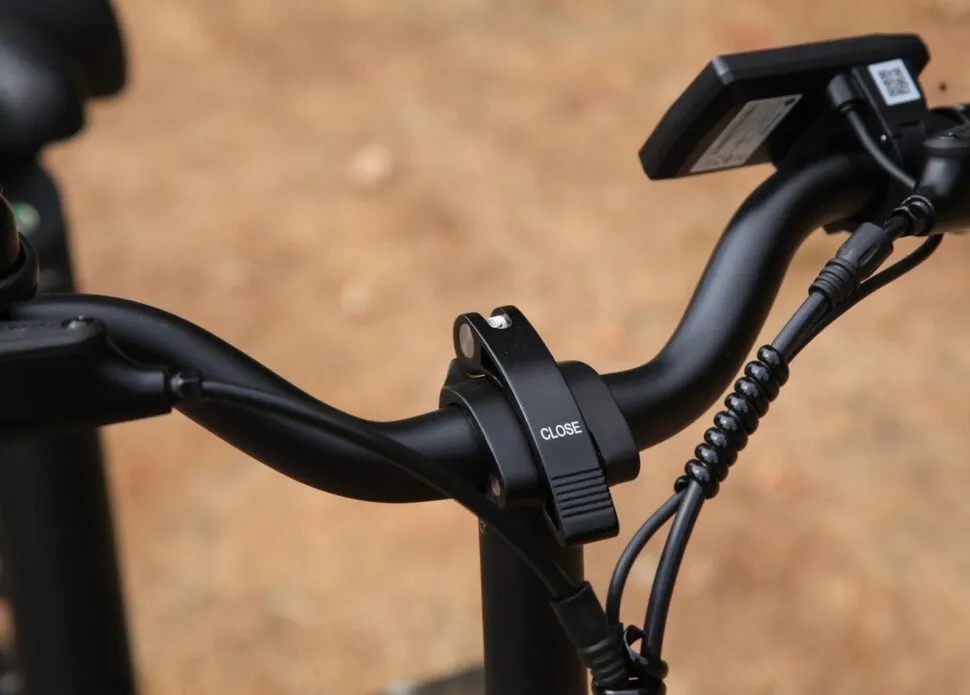
Where there is some home assembly required, you have to be extra careful to make sure some things are tightened, especially the handlebar clamp, which instead of bolts utilises a quick-release system, presumably out of convenience for quick adjustments if you are sharing the bike. I think I would prefer a fixed bolt here, however, as I experienced some slippage on the bar while riding, despite believing I had tightened the clamp enough in the beginning. This slippage was gradual, but I expect it could have been more sudden had I hit a pothole unexpectedly. Something to be aware of in the assembly stage, and indeed the same applies to the key-lockable seatpost clamp to ensure you stay at the intended height. That key security is essential to keep your battery inside your frame when you depart.
If I were to pick a downside in what is otherwise a well put together bike, I was a little unnerved by what felt like flex in the steerer column. Not the kind of flex that creaks and is obviously a problem, but certainly a few millimetres of movement if pressed, which thankfully isn’t something the riding position forces unless you brake heavily. I was comfortable with it regardless, but with hinged products engineering precision matters and I couldn’t be certain here whether the flex was natural or not.
Conclusions
All in all, the ADO Air Carbon Pro slots into a sweet spot of high spec but good value amongst the best of the rest in our best folding bikes guide. I am aware that there’s an August sale coming soon, and in the past I have noted pricing fluctuating on the ADO website, so perhaps this bike will be even better value at some stage, but that’s not something I can predict.
I have really enjoyed having this bike to hand and there was a time when this was an exact wish list spec for me – that is to say, a carbon frame, belt-driven folder ticked all the boxes of multi-modal commute convenience. It still does, but now you have the added bonus of a dual-gear automatic hub motor, so in terms of spec this is really compelling. Of course, now you may find some gearhub motors with three-speed options, such is the pace of innovation.
Still, this bike is light, it climbs well, it covers ground very efficiently, has a pannier rack, and the fold is good. Aside from just a few fixable engineering imperfections, this represents good value compared to the competition at present.