
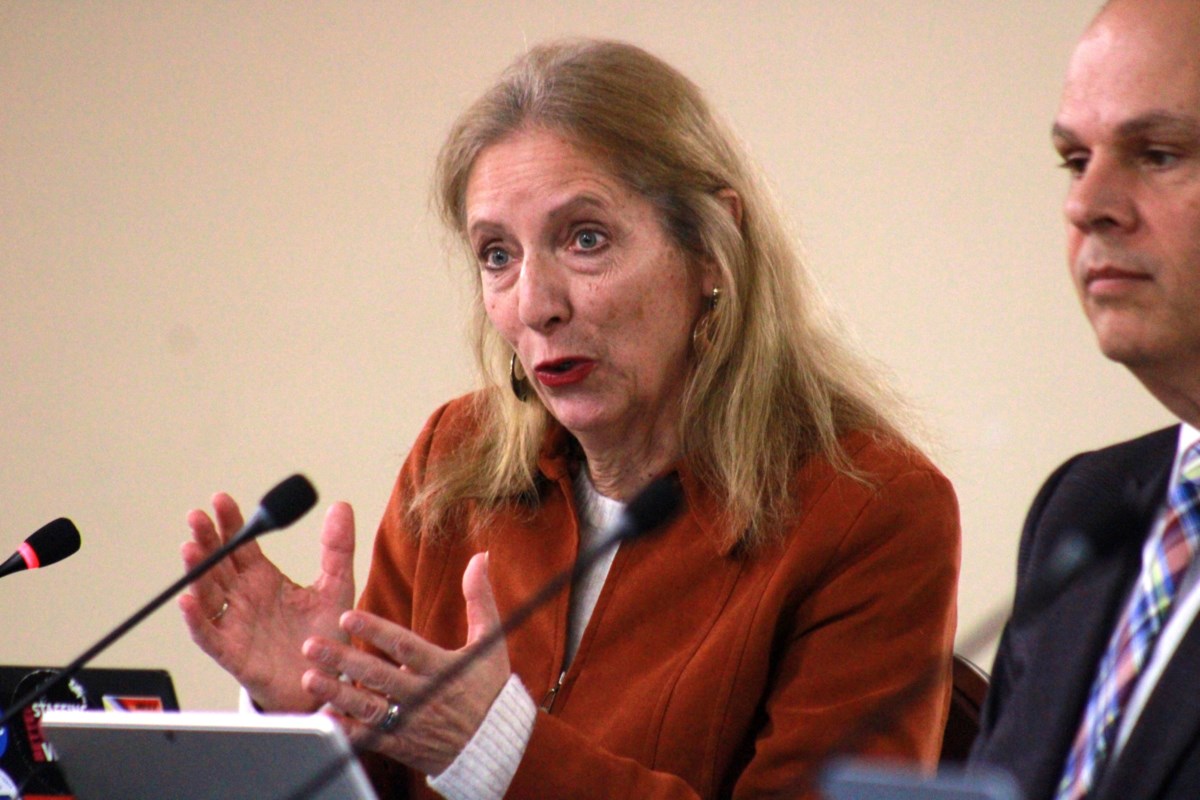
Citing a new report from the Ontario Council of Hospital Unions, Nickel Belt MPP France Gélinas says Premier Doug Ford’s Conservative government is ‘crumbling’ the health-care system
Pointing to a report released last week by the Ontario Council of Hospital Unions (OCHU), Nickel Belt MPP France Gélinas is calling on the provincial government to stop nickel-and-diming Ontario’s health-care system.
Released July 31, Pushed over the brink: The escalating assault on Ontario’s hospitals uses the latest provincial data, OCHU said, to highlight “the dire conditions that hospitals are facing in the wake of Ford’s austerity agenda.”
OCHU said evidence of that agenda can be seen in the “massive drop” in working capital hospitals use to cover daily expenses, like medical supplies and payroll.
“This figure has plummeted from $2 billion in 2020, to negative $280 million at the end of last year,” OCHU said. “As a result, many hospitals have been forced to borrow cash to make ends meet.”
In the report, OCHU accuses the Conservative government of deliberately underfunding and understaffing hospitals to further the privatization of hospital services, something the unions says has led to emergency room closures, higher wait-times and reduced quality of care.
“Doug Ford’s choices have pushed Ontario’s hospitals to the breaking point,” said Gélinas in a Aug. 4 news release. “For years, frontline health-care workers, patients and hospital leaders have warned that chronic underfunding would lead to longer wait times, overcrowded emergency rooms and devastating staff shortages. And now, that is exactly what we are seeing.”
In the report, OCHU states that health care costs are rising at six per cent annually, but the Ford government will only increase funding by 3.3 per cent this fiscal year.
Even as the province is limiting funding increases below actual cost increases, OCHU highlights that cost pressures and demand will only grow, regardless of how much funding there is.
“Hospitalizations have increased significantly over the last decade, amounting to two million extra hospital inpatient days,” OCHU said. “The average length of stay per patient has also risen 15 per cent.”
Canadian Institute for Health Information (CIHI) data shows Ontario hospitals receive the least provincial funding in the country, the hospital unions say.
“Hospitals need six-per-cent annual increases simply to maintain services,” said OCHU president Michael Hurley in a news release. “The Ford government has cut hospital budgets in real terms, year after year, resulting in a loss of beds and staff in the face of significant utilization pressures from an aging population.”
Hallway health care or hallway medicine, the term for patients being treated in unconventional hospital spaces like hallways and bathrooms because of a lack of available rooms, has doubled since Ford became premier, OCHU said, climbing from fewer than 1,000 average daily hallway patients in 2018 to nearly 2,000 in 2024.
A hospital bed occupancy rate of 80 per cent is considered safe, OCHU said, but Ontario hospitals are routinely at more than 90 per cent, and, in the case of Health Sciences North, often above 100 per cent.
“Instead of investing in the public hospitals people rely on, this government continues to starve the public system while expanding the costly private for-profit system,” Gélinas said in the Aug. 4 statement.
While hospital beds are full, hospital operating deficits continue to climb, the hospital unions said in the report, hitting more than $400 million in 2025. While Ontario already has the lowest staffing levels in Canada, hospital budget shortfalls have resulted in the loss of more than 1,300 jobs in the past year alone, OCHU said.
“Funding cuts are driving the staffing crisis facing Ontario hospitals,” says Hurley. “We’ve seen emergency rooms across the province regularly forced to close, and wait times everywhere are continuing to rise. Patients are suffering. It’s unacceptable.”
Meanwhile, OCHU said the Ford government has increased private health services. While the province says high wait times are forcing more privatization, OCHU says data shows the opposite to be true. In the example of cataract surgeries in Ontario, patients saw an increase of 12 percent in wait times with the introduction of private clinics.
“Privatization is not the solution. The research is clear, when we privatize services not only does the level of care suffer, but we’re paying much more for longer wait-times, further delays to treatment and reduced access for everyone but the most wealthy,” Hurley said.
OCHU/CUPE (Canadian Union of Public Employees) wants to see a $5-billion funding increase for hospitals to bring back capacity, lower wait times and halt the push for privatization.
“Ontarians deserve timely, high-quality care close to home,” Gélinas said. “Doug Ford and his Government need to stop crumbling our health care system, and start making public investments needed to rebuild capacity, retain staff, and strengthen our public hospitals. Tommy Douglas brought us Medicare, where care is based on needs not on ability to pay, all this is at risk under this government.”