
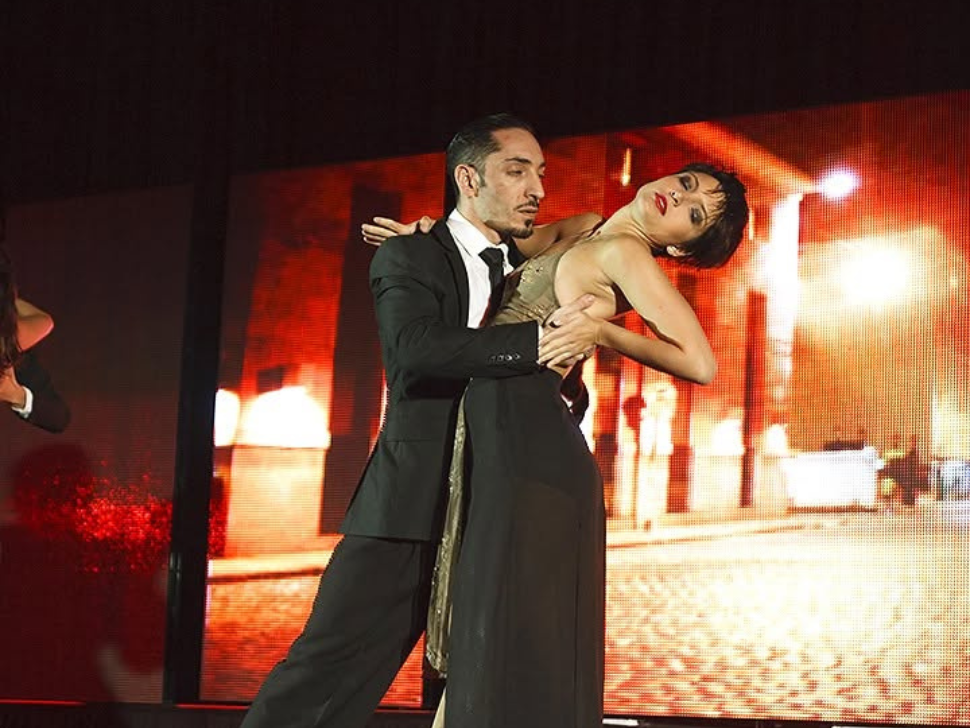
When the Argentina “Tango” Pavilion opens its doors during the second week of Folklorama, visitors will experience much more than passionate tango performances and delicious empanadas. From August 9 to 15 at the Pembina Curling Club, the pavilion offers an authentic look at a country renowned not only for tango, fine wine and world-famous beef, but also for its extraordinary landscapes, vibrant traditions and rich multicultural heritage.
Through live entertainment, authentic cuisine, cultural displays and conversations with community members, organizers hope visitors will discover an Argentina that extends far beyond familiar stereotypes. For many of the volunteers, the pavilion is equally an opportunity to celebrate the community they have built in Manitoba while sharing the traditions that continue to define their identity.
From Argentina to Manitoba
For Adult Ambassador Max Eilberg, Winnipeg has been home for more than a decade, although his first experience of the city was unforgettable.
“Back in 2013 in December, it was minus 40. My family and I came to Winnipeg. I was seven years old at the time,” he recalled with a laugh. Joking that his family “were a bit tired of the heat in Argentina, so we came over here for the winter,” Eilberg said the humour quickly turned into genuine appreciation for their new home.
“We’ve been immersed in the community and the multicultural society that Winnipeg has to offer and we absolutely love it.”
Pavilion Coordinator Monica Schor followed a similar path. Economic uncertainty in Argentina prompted her family to consider moving abroad, eventually leading them to Canada.
“We were thinking of leaving Argentina due to economic situations,” she explained. “And we found that Canada was open arms and it was a country that wasn’t too much talked about.”
Like many newcomers, their first visit came in the depths of winter.
“So we began to inquire and we came here in 96, January, 30 below.”
Despite the cold, Schor quickly recognized the opportunities Winnipeg offered.
“We did sort of a, 15 day recognition of the city and we decided to stay,” she said. “There’s a lot that Winnipeg had to offer and still offers to the immigrants here.”
Today, those stories reflect the experiences of many members of Manitoba’s growing Argentinian community.
Building Community Through Culture
Helping new immigrants settle in Manitoba became one of the driving forces behind the creation of the Argentina Manitoban Association, which Schor helped establish nearly three decades ago.
“I’ve been here for 28 years and we were part of the founders of the Argentina Manitoban Association,” she said, explaining that “first and foremost, the mission was to congregate the community and support the community in all their immigration kind of situations.”
As more Argentinians arrived, the organization partnered with the Manitoba government on an initiative called Manitoba Home.
“We presented a project called Manitoba Home where we support all those people that want to come and immigrate to Canada,” Schor explained.
The association also introduced Argentine culture to the broader community through fundraising dinners and public events.
“Then we began doing dinners, fundraising dinners, and presenting ourselves to the community as a whole, to make them understand that we are Argentinians and we have a lot to offer.”
Although no official population count exists, Schor estimates there are now thousands of Argentinians living throughout Manitoba, with significant growth occurring during the economic challenges of the late 1990s and early 2000s.
Music, Dance and the Spirit of Argentina
Entertainment remains the centrepiece of the Argentina “Tango” Pavilion, combining internationally celebrated tango with the country’s rich folk traditions.
Schor said visitors will enjoy “4 dancers coming directly from Argentina,” while live music will be performed by “a group that is from Argentina but living in Toronto, that actually does all the music related to tango and folklore, both.”
For Eilberg, serving as Adult Ambassador is an honour he has long hoped to receive.
“It feels amazing,” he said. “I’ve signed up a couple times before, but there were better people always postulated… And it was finally my turn.”
During Folklorama he will visit other pavilions while also welcoming guests to Argentina’s own celebration.
“I’m doing three shows a night to go visit different pavilions,” he said. “And then while we have our pavilion on, we’ll be greeting guests, talking with people, showing the cultural display and having a great time.”
For him, the ambassador program is about creating meaningful connections while sharing Argentina’s culture with thousands of visitors.
A Culinary Journey to Argentina
Food and drink provide another window into Argentine culture. This year’s menu features traditional favourites including empanadas and milanesa sandwiches.
Eilberg said visitors will find “empanadas and I believe milanesa sandwiches as well offered,” together with “some Malbec, and selection of beers.”
Bringing authentic Argentine beer to Canada can be challenging, so organizers partnered with Winnipeg’s Sookram’s Brewing Company to develop a local alternative inspired by the country’s most popular styles.
“We’ve partnered with Sookram here because it’s very difficult to get beer from Argentina,” Schor explained. “You know, there are rules and regulations and sometimes things don’t come in time and manner.”
Instead, the brewery recreated the flavour profile organizers were looking for.
“We gave them the idea of this is the Argentine beer we love. Can you make something similar?” she said. “And lo and behold, they did. And the beer is called Argenta.”
The collaboration even produced a memorable exchange.
“When I was talking to Andrew Sookram at one point in time, I said, you know, these are the characteristics. It’s crispy, it’s light, it’s this, it’s that. And it’s got the waters of the Patagonia. So he said, ‘I can give you all that except for the waters of the Patagonia.'”
Wine enthusiasts will also have the opportunity to sample Argentina’s famous Malbec along with a lesser-known varietal.
“The Malbec wine is something that is very special to us and very well known around the world,” Schor said, describing it as “not as… pungent as the Cabernet Sauvignon. It’s got a lot of fruit in it.”
She is especially excited to introduce visitors to Torrontés.
“This year we’re bringing a white wine that you guys don’t have here and most of the world don’t know about,” she said. “And that’s called Torontes. And that is a very light and crispy kind of wine. So I hope that people really love it.”
Discovering Argentina Beyond Tango
While performances highlight tango and folklore, the pavilion’s cultural displays explore regions of Argentina that many visitors know little about.
“Our main show will focus on the tango and the folklore of Argentina,” Eilberg explained, “but our displays will mainly focus on the north of Argentina. That’s where all the salt lakes and the desert is.”
The exhibits also feature traditional instruments and introduce guests to Mate, the herbal tea deeply rooted in South American culture.
“We’ve got instruments as well from that area,” Schor said, “and we’ve got a lot to offer in that particular area together with… the mate.”
She explained that mate represents much more than a drink.
“Mate is something very dear to us, not only to us, but to Uruguay and Brazil,” she said. “So this is the kind of tea we drink all the time. And it’s sort of a community kind of outing whenever you drink mate. You’re always around people, around friends.”
Visitors can also browse handcrafted souvenirs, including decorated mate gourds, bracelets in Argentina’s sky blue and white colours, and soccer-themed keepsakes.
Sharing the Real Argentina
For everyone involved, the Argentina “Tango” Pavilion is about inviting people to discover a country whose identity extends far beyond the images most often associated with it.
“Argentina is a country that has so much to offer,” Eilberg said. “It’s so diverse. And I think that many people just know one or two things, like they know steak, they know wine, but there’s so much more to the country.”
“I hope that this pavilion will be able to open the doors to our country and let them show what it’s about.”
Schor believes Argentina’s greatest strength lies in the many cultures that have shaped the nation.
“Our country is as long as Canada is wide,” she said. “And it’s got a diverse quantity of people from different parts of the world that created this kind of mosaic that we are.”
That heritage is reflected in the country’s languages, traditions and cuisine.
“When you come to Argentina, you will hear Italian, Spanish. You will see and taste a lot of foods that may be similar to Europe and unique to the place.”
That, she says, is exactly what the pavilion hopes every visitor will experience.
“In our pavilion, we’re gonna try and show you how important that is for us.”
For one unforgettable week at Folklorama, the Argentina “Tango” Pavilion invites visitors to step beyond the familiar and experience the true spirit of Argentina. From the passion and elegance of tango, to the flavours of authentic cuisine, the warmth of Argentine hospitality and the stories of a community that has made Manitoba home, the pavilion offers a journey through a country of incredible diversity and tradition. Whether you are discovering mate for the first time, enjoying live music and dance, sampling Argentine flavours, or simply connecting with the people who bring this celebration to life, the Argentina “Tango” Pavilion promises an experience that will inspire, entertain and leave you with a deeper appreciation for the heart and soul of Argentina.