
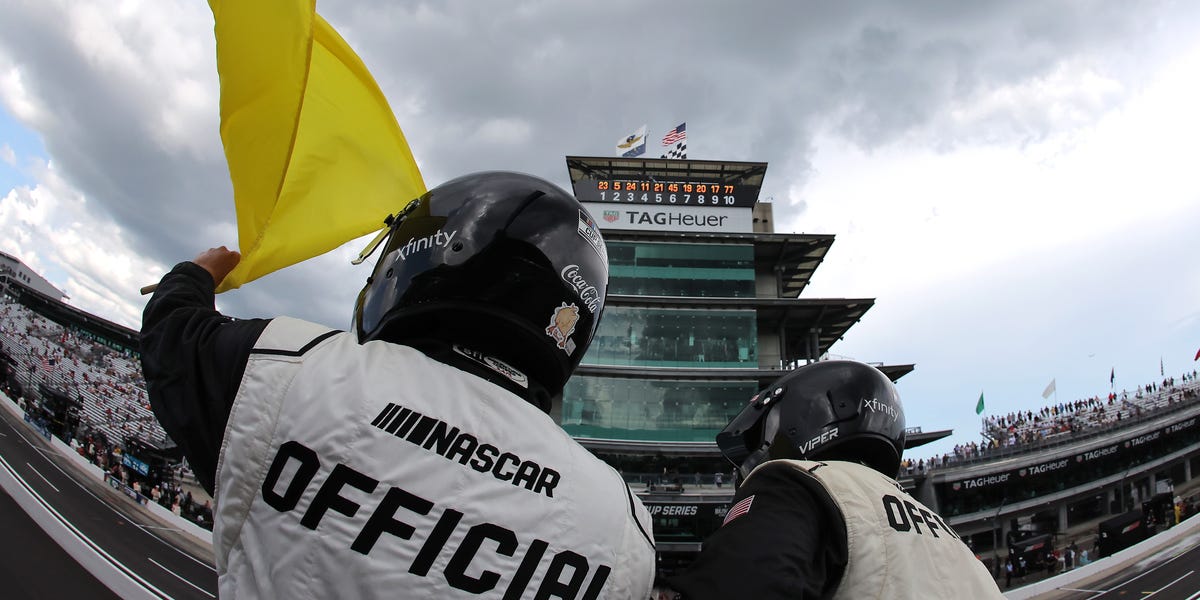
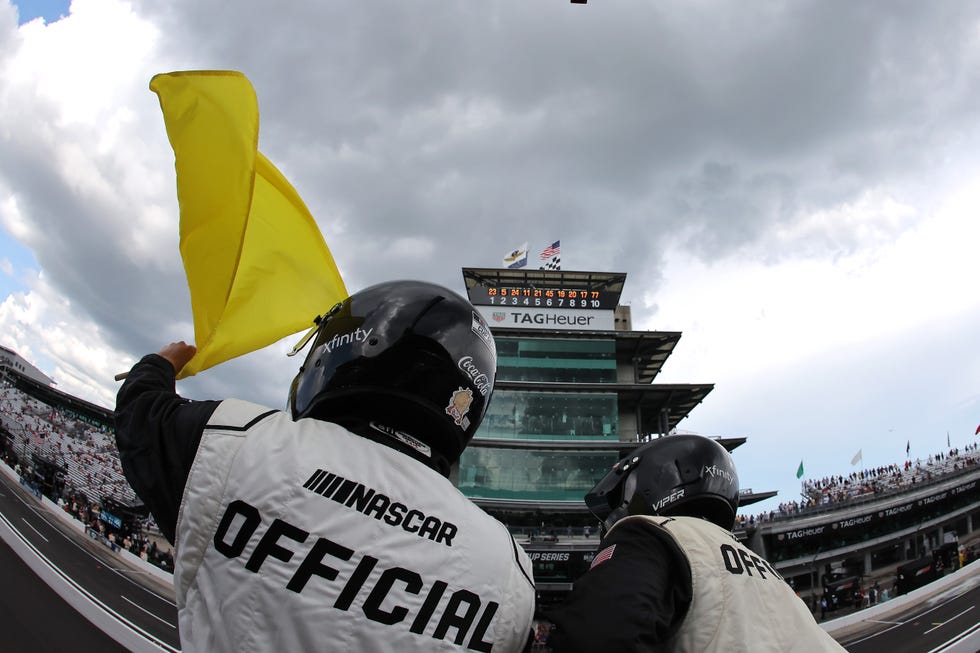
Recent discussions regarding the length of NASCAR caution periods have resulted in the sanctioning body making a change that could shorten the number of yellow flag laps across its three national touring series.
Starting this weekend at Iowa Speedway, if a caution period is needed with 10 or fewer laps remaining in the advertised distance for Stage 1 and Stage 2, that Stage will be official at the time of the yellow flag. When the caution period begins, the leader will return to the start/finish line to receive the green-and-white checkered flag and the yellow simultaneously. This caution period will be the Stage break.
This eliminates caution periods that end with one lap remaining in a Stage. No more mad dashes back to the green-and-white checkered flag with the pushing, shoving, and gouging that’s often prevalent on a Stage’s final lap, especially at Daytona and Talladega. That’s good for driver safety.
The change leaves little doubt that it was made to appease those who want fewer yellow flag laps in a race. Listening to people complain about the length of caution periods, I can’t help but wonder if they have forgotten why they exist. It’s to make the track and pit road safer. Racing is not a video game where you hit reset without possible ramifications.
Jonathan Bachman//Getty Images
Prior to the current pit road rules during caution periods, crew members were severely injured, and a few were killed. They didn’t wear protective gear, and a pit road speed limit didn’t exist. There was no order as to when lead-lap and lap-down cars pitted. NASCAR tried several different pit road procedures before settling on the current one, and sometimes it requires the extension of a caution period.
It’s true that prior to the current NASCAR Cup car, track sweepers weren’t used on the track every time there was a single-car spin. However, for more than four decades, except on the short tracks, those cars used tires with inner liners. The tires on today’s Cup cars don’t have inner liners. If you were running at speeds exceeding 170 mph, wouldn’t you want to make sure there was nothing on that track that could puncture your tire?
Yellow flag laps are often added to make sure the track is safe and the field is in the correct order before a restart.
With the rule change announced Thursday, how it affects Stage-ending strategy has yet to be determined. However, there’s no doubt that a driver desiring a specific number of Stage points had better be in position once a Stage hits the 10 laps to go mark.

A North Carolina native, Deb Williams is an award-winning motorsports journalist who is in her fourth decade covering auto racing. In addition to covering the sport for United Press International, she has written motorsports articles for several newspapers, magazines and websites including espnW.com, USA Today, and The Charlotte Observer. Her awards include the American Motorsports Media Award of Excellence, two-time National Motorsports Press Association writer of the year, and two-time recipient of the Russ Catlin award. She also has won an award in the North Carolina Press Association’s sports feature category. During her career, Deb has been managing editor of GT Motorsports magazine and was with Winston Cup Scene and NASCAR Winston Cup Scene for 18 years, serving as the publication’s editor for 10 years. In 2024 she was inducted into the NMPA Hall of Fame.