
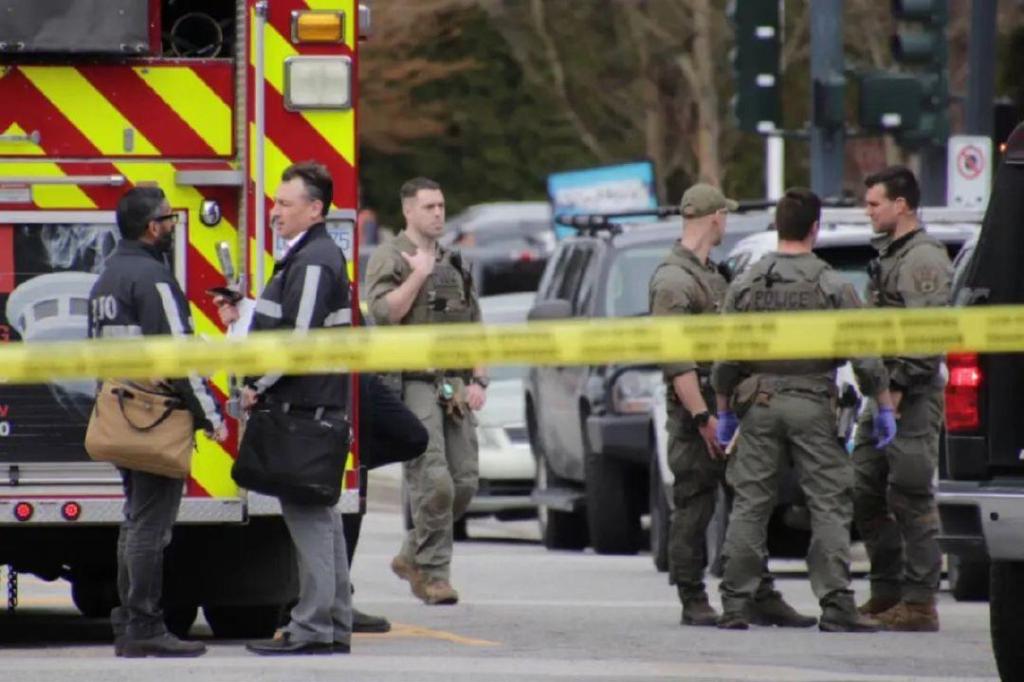
A coroner’s inquest jury has recommended seven reforms to policing practices in British Columbia, specifically regarding wellness checks, following the death of Haida Elder Jimmie Johannesson during a police wellness check in Surrey in April 2022.
The jury delivered its verdict Wednesday (Aug. 5) after the seven-day inquest, held July 27-Aug. 5 at the Burnaby Coroner’s Court before the presiding coroner, Kristen Everett.
A coroner’s inquest is a formal court proceeding conducted by a presiding coroner before a jury that is publicly held to review the circumstances of how someone died.
The jury will then make recommendations aimed at preventing deaths under similar circumstances. However, the jury must not make any finding of legal responsibility or express any conclusion of law.
The presiding coroner and jury heard evidence from witnesses surrounding the death of Elder Jimmie Johannesson, 61.
Just after 10 a.m. on April 8, 2022, police were called to a residence in the 13200-block of 108 Avenue “to check the well-being of a man in crisis, who had threatened self-harm with a weapon in a public place,” according to a release from BC RCMP at the time.
Frontline officers and the Police Mental Health Outreach Team were “immediately” called in to help. Although the two people from the Police Mental Health Outreach Team (PMHOT) arrived on scene after the initial responding officers, they were not involved in, or able to contribute to, or influence “the plan already in place,” despite their “critical mental health” training.
In a July news release, the BC Civil Liberties Association states that an RCMP officer and a civilian entered Elder Johannesson’s home.
“They were in the front entrance, bunched together at the bottom of the stairs. Elder Jimmie was located in a room at the end of the hall.”
Testimony heard during the inquest described this front entrance as the “fatal tunnel,” as it likely “impacted their ability to use non-lethal force.”
“After a brief exchange, Elder Jimmie ran at the RCMP officers with a knife, forcing them and the civilian to flee the residence. An RCMP officer fired five shots, killing Elder Jimmie,” reads the release.
He was transported to Royal Columbian Hospital in New Westminster, where he died of his injuries at 10:59 a.m., less than an hour after police were called to his home.
The Independent Investigations Office of BC, the province’s police watchdog, was notified and investigated, and police were eventually cleared of any wrongdoing in Elder Johannesson’s death.
A news release from BC Civil Liberties on Thursday (Aug. 6) stated that the evidence and testimony heard during the inquiry show that police “did not adequately use the tools and resources at their disposal” when they did the wellness check. “Leaving questions as to whether a change in any one of these actions could have led to a different outcome and preserved Jimmie’s life.”
The inquest revealed that in the 13 minutes between being dispatched and arriving at Johannesson’s home, police had not contacted his probation officer, who had made the 9-1-1 call.
Johannesson’s sister, Elder Ruby Eldy Marks, said Thursday (Aug. 6) that, “I wish the police officers involved would have taken the time to get more background information about Jimmie’s mental health before entering his home. I wish they would have taken the time to call his cell phone first. I keep thinking if the Mental Health Outreach Team had been more involved in developing the response plan, maybe my brother would still be here. Overall, I am happy with the jury recommendations. There needs to be more collaboration with First Nations when it comes to police reform. I hope the government implements these recommendations in a meaningful way to prevent future harms.”
On Wednesday (Aug. 5), the jury gave seven recommendations to the director of policing and law enforcement services at the Ministry of Public Safety and Solicitor General, which included:
1. Review the Provincial Policing Standards to ensure standards and training require police to conduct ongoing risk assessments throughout mental health wellness checks, including where there are threats to public safety such as firearms.
2. Review the Provincial Policing Standards to ensure standards and training require police officers to be aware of the circumstances in which lethal overwatch is required when conducted energy weapons are used.
3. Review the Provincial Policing Standards to ensure standards and training consider the presence of civilians during wellness checks where there are elements of risk.
4. Review the Provincial Policing Standards to ensure standards and training for mental health outreach officers integrate standardized mental health training.
5. Review the Provincial Policing Standards to ensure officers involved in a matter investigated by the Independent Investigations Office (IIO) are aware of recommendations provided in the IIO’s public report.
6. Review the Provincial Policing Standards to include the facilitation of meetings between law enforcement agency leadership and involved officers in order to discuss IIO recommendations and determine if further internal policies need to be developed and/or revised.
7. Identify supports for Indigenous individuals with intersectional barriers while navigating applications for housing.
In Sept. 2022, the BC Civil Liberties Association (BCLA) and other organizations joined Johannesson’s sister, Elder Ruby Marks, to demand that police departments across the country have mental health emergency response teams that are trained in de-escalation and staffed with mental health professionals who are not police.
— with files from Tracey Holmes and Lauren Collins