

Mattia Binotto summed up the first half of Audi’s debut Formula 1 season with a measured verdict: “Satisfied, but not yet happy.”
Audi entered F1 as a full factory team in 2026 following years of preparation, investment and expectation. However, Binotto has repeatedly stressed that the project’s real target is to win races and challenge for championships around 2030.
That made podiums and victories unrealistic benchmarks for the opening campaign. Audi instead needed to establish a credible technical platform and prove its new works operation was moving in the right direction.
The early evidence has been mixed. The R26 has earned praise for being balanced and fundamentally sound, but Audi’s power unit has lacked performance and suffered reliability problems.
Operational mistakes have also cost the team opportunities. Yet Binotto believes the underlying car gives Audi something valuable to build upon during the second half of the season.
Speaking to RacingNews365, Binotto explained why Audi’s inconsistent results have not damaged his belief in the project: “I am satisfied, because the car is fundamentally just a good car, without fundamental problems. That is exactly the basis you want for further development. It is a healthy car, without major shortcomings.”Important to know the basis of the car is good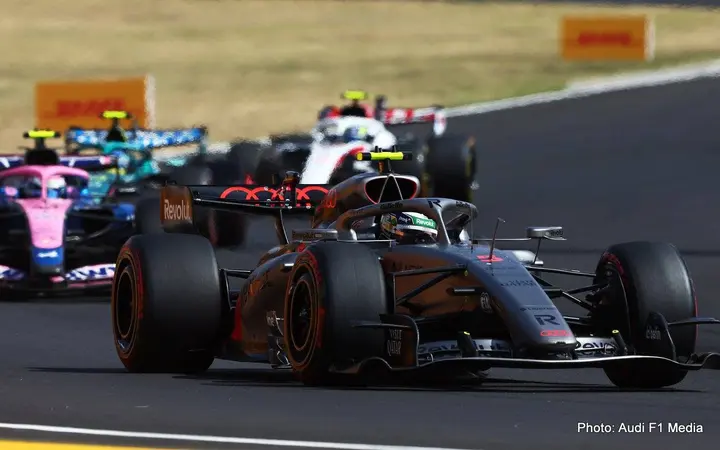
“As Audi, that is what you mainly hope for in your first season. From now on, it is all about building on this. It is not about solving problems or making up for lost ground, but about taking the next step. That is why I am very positive about our start. It is important to know that the basis of the car is good,” added Binotto.
That distinction is significant. Audi can concentrate on extracting performance rather than correcting a major aerodynamic or mechanical weakness built into the original concept.
Binotto, who assumed the team principal and CEO roles following Jonathan Wheatley’s unexpected departure, has consistently prioritised sustainable progress over attention-grabbing short-term results.
Audi opened its campaign with Gabriel Bortoleto finishing P9 at the Australian Grand Prix. Nico Hülkenberg did not start the race in the second R26. The momentum quickly disappeared as reliability failures and operational errors repeatedly interrupted Audi’s development. Its potential was visible, but rarely converted into points.
The team is working excellently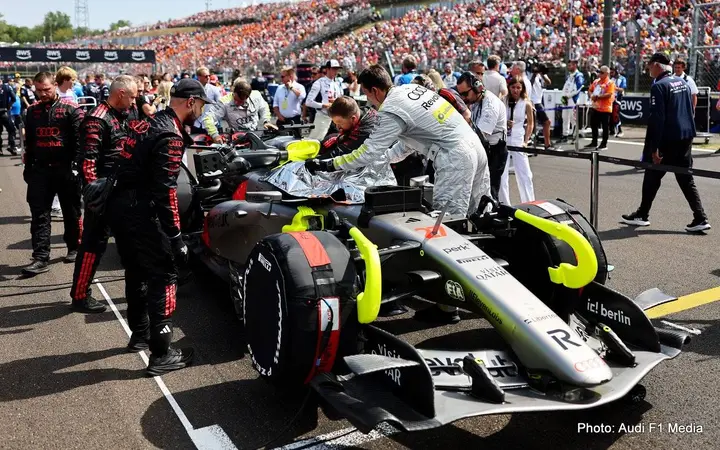
That pattern has changed in recent rounds. Audi reached the summer break with three consecutive points finishes, ending a drought stretching back to Melbourne and suggesting the team is becoming more effective with its existing package.
Binotto continued: “When I look at the results and the number of points, you see peaks and valleys. We scored points immediately in Australia, but after that we faced a lot of problems. That is to be expected to a certain extent, but Formula 1 is an enormously competitive environment. The other teams obviously don’t wait for us.
“That is why it is important that we keep growing and keep pushing. I think the team is working excellently: focused and fully dedicated. The results of the last races show that we are heading in the right direction. As I said: I am not happy yet, but certainly satisfied.”
Audi’s debut has not produced spectacular results, but Binotto’s assessment reflects a team judging itself against a longer timeline.
The R26 appears healthy. The execution is improving. Audi’s next challenge is turning that foundation into consistent performance rather than occasional promise, according to their boss.