
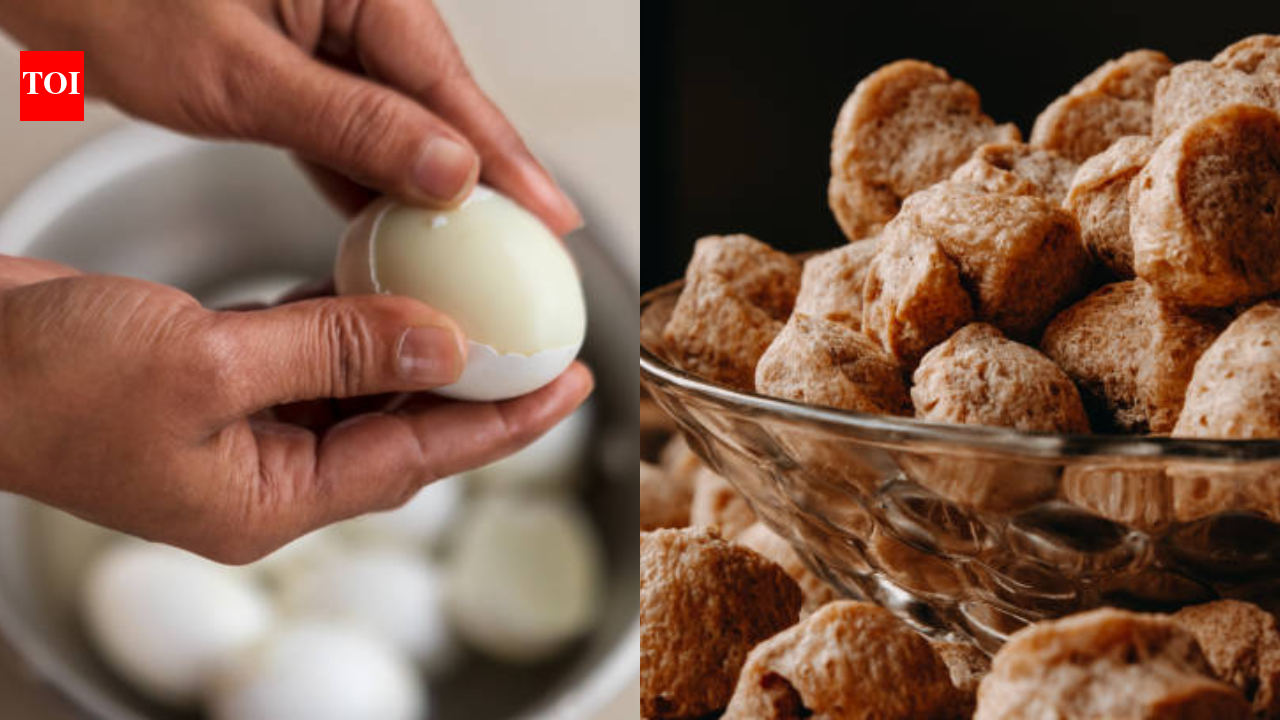
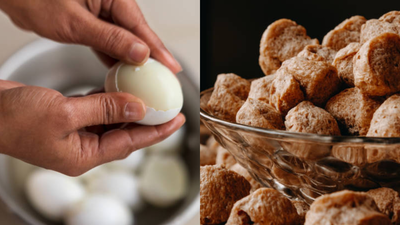
 For many Indian households, the protein debate is becoming a familiar one. Eggs have long been the easy answer, boil them for breakfast, add them to a curry or make a quick omelette when there’s little time to cook. But soya has steadily moved from being a niche vegetarian food to a regular part of many Indian diets, whether it’s tofu, soybeans, soy milk or the much-loved soya chunks.So, if the goal is simply to get more protein on your plate, which one wins: egg or soya?The answer isn’t quite as straightforward as looking at a nutrition label. And that’s because how much protein a food contains and how well the body can use that protein are two different things.
One egg gives around 6 grams of protein, but soya varies widely
A large egg typically provides around 6 grams of protein. That means two eggs give you roughly 12 grams, making them a fairly compact source of protein.Soya is harder to compare because “soya” can mean very different foods. Tofu, whole soybeans, soy milk and dry soya chunks don’t have the same protein concentration. A serving of tofu may provide around 10–20 grams of protein per 100 grams, depending on the product, while dry soya chunks can have a much higher protein concentration before they’re soaked and cooked.So if you’re comparing everyday portions, the better question is: how much protein are you actually eating in the meal?
Egg has an edge when protein quality comes into the picture
This is where eggs become interesting.Protein quality isn’t simply about grams. Proteins are made up of amino acids, including nine essential amino acids that our bodies can’t make on their own and therefore need from food.Egg protein is considered a high-quality protein because it provides these essential amino acids in a pattern that’s highly usable by the body. A 2024 study published in the Journal of Nutritional Science compared cooked eggs with foods such as bread and potatoes using a measure called the Digestible Indispensable Amino Acid Score, or DIAAS. The researchers found that cooked eggs had an “excellent” protein quality score for people over six months of age.That doesn’t mean soy is a poor protein. In fact, soy is one of the strongest plant-based protein sources available.A 2022 quantitative review in Frontiers in Nutrition looked at protein quality across different soy products and found an average DIAAS of about 84.5. The researchers also found that the score varied considerably depending on the type of soy product and how it had been processed.
But here’s where Indian diets make the comparison more interesting
For an Indian vegetarian, soy can be extremely useful because it offers a relatively concentrated source of protein without relying on dairy or meat.And you don’t necessarily have to choose between “egg diet” and “soya diet”. A typical Indian meal already combines several plant proteins, dal with rice, roti with dal, rajma with rice, or chana with roti. These foods provide different amino-acid profiles, and eating a varied diet can help improve the overall protein picture.A 2026 review in Comprehensive Reviews in Food Science and Food Safety argued that judging protein quality food by food can underestimate what happens in a real diet, because proteins from different foods can complement one another across meals.So the fact that egg protein scores higher on a protein-quality measure doesn’t mean someone eating soy, dal, beans and grains is automatically getting inferior nutrition.
What about muscle building?
If you’re trying to build or maintain muscle, getting enough total protein throughout the day matters. Egg makes that relatively easy because a couple of eggs provide a useful amount of high-quality protein in a small serving.Soy can work too, particularly when you choose a protein-rich form such as tofu, whole soy foods or soya chunks and eat enough of it.For older adults, people recovering from illness or anyone deliberately trying to increase protein intake, portion size becomes particularly important. A food may be nutritious, but if the serving is too small to provide much protein, it won’t contribute as much toward the day’s total.
So, egg or soya?
If you’re asking which has the higher-quality protein, egg has the advantage.If you’re asking which can help you get more protein into an Indian diet, both can do the job, but the actual amount depends heavily on the form of soy and the portion you eat.And there’s another practical difference. Eggs are naturally rich in nutrients such as vitamin B12 and choline, while soy foods offer plant compounds such as isoflavones and can be particularly useful for people following vegetarian or predominantly plant-based diets.So there isn’t really a need to declare one the universal winner.For an egg-eating household, two eggs can be an easy protein addition to breakfast. For a vegetarian household, tofu or soya chunks can provide a useful protein boost alongside dal, beans, curd and other foods.The bigger mistake is obsessing over one “best” protein source while the rest of the diet remains low in protein.