

Listen to this article
Estimated 3 minutes
The audio version of this article is generated by AI-based technology. Mispronunciations can occur. We are working with our partners to continually review and improve the results.
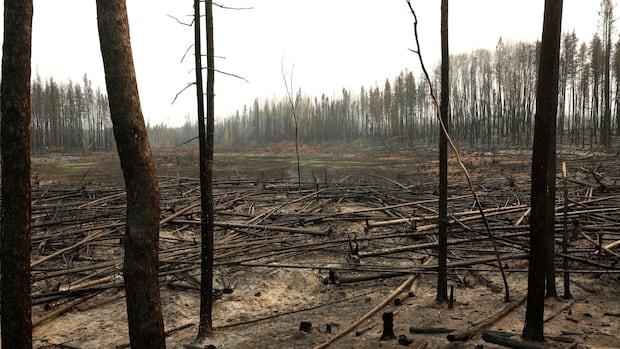
Wildfires raging in the Northwest Territories this season have been made about two times as likely to occur thanks to human-driven climate change.
That’s the finding of research published this week by World Weather Attribution. The research also found a similar situation in Ontario.
Jonathan Boucher, a co-author of the study and research scientist with the Canadian Forest Service, explained why researchers chose to look at the territory. “Boreal forests are really prone to extreme wildfires under extreme fire weather conditions. And you guys happen to be in extreme fire weather conditions right now.”
As of August 7, 274 fires have burned across the N.W.T. in 2026, with 219 still active.
When it comes to total area burned in the territory, this year is on track with 2023 as the worst year on record.
 Total area burned per year in the Northwest Territories since 2023. The data for the current year shown in this graph ends in mid-July, 2026. (World Weather Attribution)
Wildfires forced the weeks-long evacuations of hundreds of residents from the communities of Fort Simpson and Wrigley.
On a national scale, thousands across Canada have been forced to flee their homes in the face of rapidly encroaching fires.
Dr. Courtney Howard, an emergency physician in Yellowknife and the chair of the Global Climate and Health Alliance, welcomed the World Weather Attribution report.
 Dr. Courtney Howard is a physician in Yellowknife and chair of the Global Climate and Health Alliance. She welcomed the World Weather Attribution report, and said it highlights an urgent need to reduce fossil fuel usage. (CBC)
She said it is a timely look at the influence of human-induced climate change on wildfires and that there is an urgent need to take action on multiple fronts in response to the findings.
“Yes, we need to adapt to the effects we’ve already got. We need to improve our indoor air quality by monitoring it, improving our ventilation, etc.,” Howard noted. “But we urgently need to decrease our fossil fuel use if we don’t want this to get worse year on year.”
Howard has previously explained the importance of masking and clean indoor air to combat the health effects of wildfire smoke. This week, she explained the health impacts go beyond that with evacuations having far reaching impacts as well.
“Studies showed long lasting increases in anxiety, depression, post traumatic stress disorder, trouble sleeping. And so we need to be understanding that these repeated evacuations in the North, every single one of them has an impact. And there is a cumulative impact if you’re having to evacuate year after year after year.”
She says Indigenous communities have shown remarkable resiliency, despite being disproportionately impacted by wildfires, but warned: “Even if our northern communities are rich in relationship resources, rich in the skills required to care for one another, there’s still really going to be an impact of these repeated evacuations.”
In her view, the experience with intensifying fires over the last decade has put the North ahead of southern communities in understanding how to respond and to cope with the new reality of climate change driven wildfires.
“I actually think that we can lead the national conversation because many of us have done our grieving and are very clear on what the action plan is.”