
Medically reviewed by Roxana Ehsani, RD
You can drink more water to decrease the frequency and severity of headaches.
Staying hydrated may improve your exercise endurance and comfort.
Drinking enough water helps prevent you from waking up at night for hydration.
You’ve heard it before: Drinking enough water is a key pillar to feeling your best. Staying hydrated is often touted as essential for healthy skin, weight loss, and energy.
While plain water isn’t necessarily a cure-all, it is vital for bodily functions like temperature regulation, joint lubrication, and waste removal. Plus, a lack of proper hydration could cause everyday problems like fatigue, dizziness, and dry skin.
Some research has found drinking recommended amounts of water regularly can offer further benefits like improved concentration and mood, headache relief, healthier aging, weight management, and enhanced athletic performance.
But for someone who already drinks a standard amount of water, would adding an extra 20 to 30 ounces daily make a difference? Like most people, I keep a reusable water bottle nearby at all times and try to sip throughout the day. However, this plan doesn’t always work out. I usually find myself realizing I’ve been at my desk for a few hours without drinking anything.
I also experience the occasional headache or feel a dip in energy midday, which I always considered somewhat normal. It turns out those regular occurrences could actually be symptoms of mild dehydration. So, I set out to test if a higher water intake could clear up these potential symptoms and offer me any other benefit.
How Much Water Do You Need to Drink?
How much water you need varies depending on your age, the climate you live in, and how much physical activity you get, among other factors.
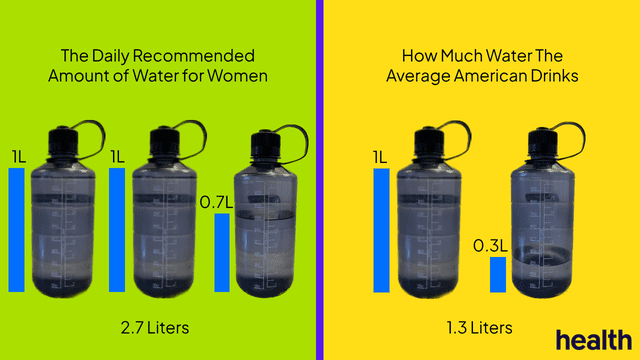
Suggested amounts range from 2 to 2.7 liters (68 to 91 ounces) of fluid per day for women and 2.5 to 3.7 liters (85 to 125 ounces) a day for men. At the upper ranges, that’s the equivalent of over 11 cups of water for women and over 15 cups for men.
However, the average American adult only consumes about 1.3 liters (44 ounces) of water per day. That’s about 5.5 cups.
The majority of your total daily water intake comes from drinking water and other beverages. You can also get some hydration from eating certain water-rich foods, like fruits and vegetables.
 My Experience: Increasing Water Intake by 30%
With such a wide range of potential benefits for drinking water, I chose to focus on a few specific goals that might show short-term results: reducing headaches, increasing midday energy, and improving athletic performance.
Hoping to maximize my results, I opted for the higher end of the recommended water intake for women, which is 2.7 liters per day; about 90 ounces or 11 cups.
Before the experiment, I would drink about 50-65 ounces of water per day. Drinking 90 ounces would be about a 30% increase in my total daily water intake.
To do this, I aimed to fill and finish a 24-ounce water bottle at least three times per day, and I swapped out other beverages like coffee or juice for water as much as possible. I included seltzer water in my daily counts as a “fun” beverage, and I made sure to always have cold water in the fridge.
Over the 30 days, I tracked my daily water intake, the frequency and severity of my headaches, my afternoon energy levels, and how I felt during workouts. I also tried to be aware of how I was generally feeling and if I saw any consistent improvements.
Can You Drink Too Much Water?
Although rare, drinking excessive amounts of water can lead to water intoxication. When you drink large quantities of water over a short period, your kidneys can’t remove the liquid quickly enough. The amount of water in your blood can dilute your sodium levels, causing them to drop below normal—a condition called hyponatremia.
This may cause symptoms like nausea, vomiting, disorientation, and confusion. When left untreated, it can be fatal.
Results: Did Drinking More Water Improve My Health?
I didn’t experience any major changes in my health after 30 days of drinking more water. However, I did see subtle results across my goals as well as a few general benefits from drinking more consistently throughout the day.
First, by forming the habit of sipping on water throughout the day, I kept my body consistently hydrated. Before, I would wait to get a glass of water until I felt thirsty, essentially slipping in and out of dehydration.
One thing that did seem to improve was exercise. I specifically noticed how hydrated I felt during workouts. On days when I was drinking water throughout the day, I didn’t get thirsty as quickly during my evening workouts. I felt like this improved my endurance and comfort while exercising. Even during a hot yoga class, I could get through the hour and only need to drink about half my water bottle. Typically, I’d finish the bottle during class and feel thirsty — and wiped—afterward.
I really noticed how different I felt on days when I didn’t get as much water before exercising. It was difficult to loosen up and start exercising, and it was harder to keep up with my hydration during the workout.
One of my other goals was reducing headaches. I did see an improvement in both the frequency and severity of headaches on days I drank more water, especially when I had a higher water intake multiple days in a row.
Surprisingly, drinking water throughout the day also improved my sleep. Previously, I had formed a habit of waking up briefly throughout the night to grab sips of water. Once I started drinking more water during the day, I found I would sleep through the night without needing to grab the water on my nightstand.
However, there was zero benefit when it came to my energy levels. Sipping cold water could help me feel more alert in the moment, but drinking more water, in general, did not seem to improve my overall energy levels.
Dehydration Symptoms To Know
Milder, more common dehydration symptoms can include:
Moderate to severe symptoms of dehydration may include:
Muscle cramps or weakness
Severe symptoms of dehydration warrant immediate medical attention, as severe dehydration can lead to shock and, in some cases, loss of consciousness.
My Takeaways
Being more conscientious about my water intake made me realize I hadn’t been drinking as much water as I needed, or as regularly as I needed. I plan to keep up with a higher fluid intake, even if I don’t always get 90 ounces. I found I felt generally better—and more consistently hydrated—when I drank a steady amount of liquids throughout the day.
Based on my experience, drinking enough water is more about staving off the negatives of dehydration rather than getting an added health boost. Staying consistently hydrated might help your body function more optimally, which could lead to “benefits” like having more stamina during exercise or feeling more focused.
If you find drinking only water difficult, you can get hydration in other ways. Many non-water beverages like juices, seltzers, and coffee can count toward your daily fluids. Eating a balanced diet with fruits and vegetables will also contribute to your water intake.
Read the original article on Health