
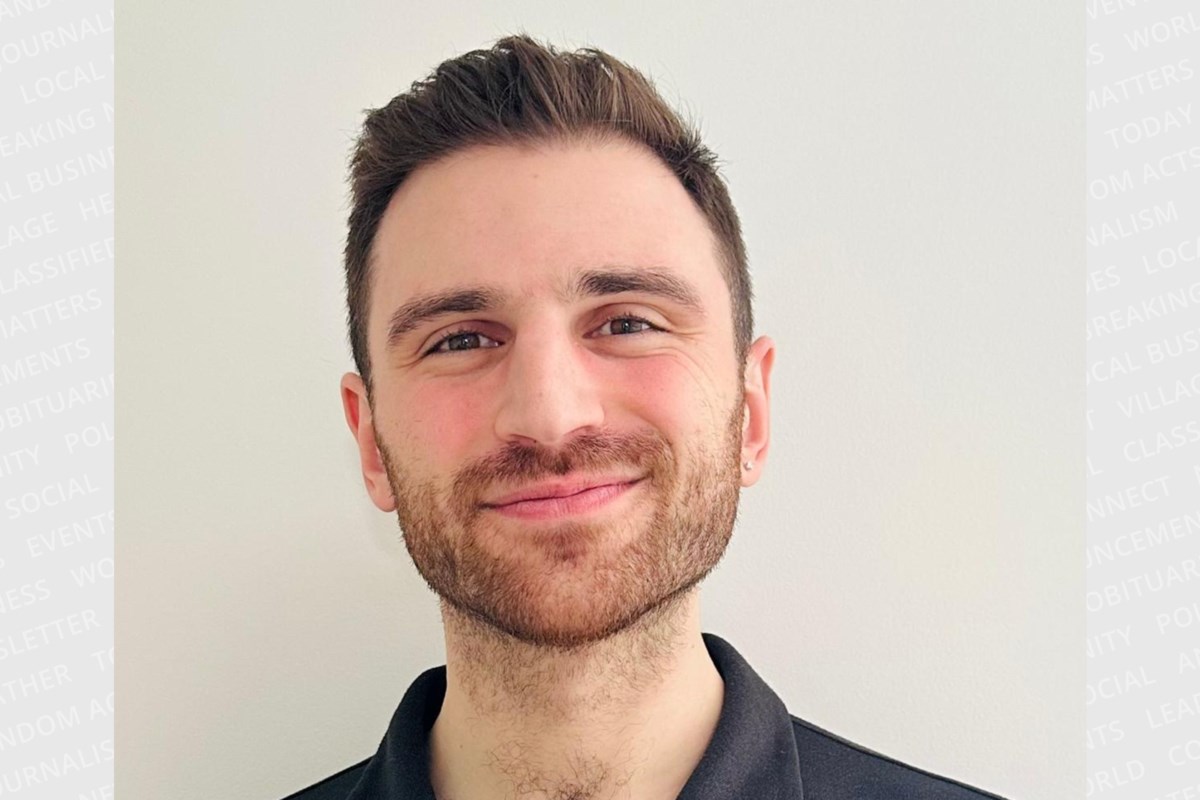
‘We all have family members, friends, somebody who it touches and it’s unfortunate that there’s so much stigma that’s still surrounding it,’ doctor says of addiction
For Dr. Adam Fletcher, the hardest part of addiction medicine isn’t the withdrawal symptoms or the toxic drug supply — it’s the weight of stigma his patients carry before they ever walk through his clinic’s door.
Many arrive convinced they’re “bad people,” a message they’ve absorbed from family, friends, online comment sections and even parts of the health-care system, says Fletcher, who has spent the past five years running the two Arrow Medical clinics in downtown Barrie, a walk‑in addiction medicine facility that provides low‑barrier, physician‑led care for people who use opioids and other substances.
The clinic’s model, he says, is built around meeting people where they’re at, reducing prejudice and helping individuals stabilize their health, while trying to rebuild trust in the health-care system and work toward their own goals at their own pace.

Pharmasave Arrow Medical is located at 79 Dunlop St. W., in downtown Barrie. | Raymond Bowe/BarrieToday files
Inside the clinics
Within the two Barrie clinics, one located on Dunlop Street West and the second on Essa Road, Fletcher says the focus is primarily on opioid‑use disorder, though the team treats “full‑spectrum addictions,” including alcohol use and stimulants such as cocaine, crystal meth and cannabis.
The clinics are entirely walk-in, with no appointments required.
“We have nursing staff who will take their time and do an initial assessment with the patient, go through their whole history, utilize the patient’s previous records and hospital visits and blood work and all that’s been done in the past to get a more holistic picture of the person,” Fletcher says.
From there, staff sit down with patients to talk through next steps. He says that conversation can include harm‑reduction supports, psychosocial options such as counselling or group involvement, and, for most people, medication which could include methadone or suboxone.
Because many patients are high-risk for infectious diseases, staff screen for hepatitis C and other conditions and coordinate whatever follow‑up care is needed, says Fletcher. He notes this kind of care is especially important because many patients have had difficult or traumatic experiences with the health-care system in the past.
“There could be a lot of mistrust that’s built up over years of the health-care system,” he says. “There (can) be a lot of generational trauma for certain patients, especially a lot of my Indigenous patients over generations of residential schooling in the 60s Scoop and of how the government and the health-care system has treated them.”
The team works hard to engage people who may have avoided care for years, Fletcher adds.
“It’s amazing when we can get them involved with the health-care system and try to build some of that trust over appointments after appointments,” he said, noting that the clinics often act as a first point of contact for people who haven’t been connected to the healthcare system in years.

A second Arrow Medical clinic is located at 21 Essa Rd., in Barrie. | Nikki Cole/BarrieToday
How treatment begins
Treatment options are always individualized, shaped by what each person wants in that moment, says Fletcher, who explained that medications fall under opioid agonist therapy (OAT) — a medical treatment for opioid addiction using long‑acting, prescribed medications like methadone, buprenorphine/naloxone or slow‑release oral morphine.
The physiology of opioid use helps explain why these medications are effective, he adds.
“In broad strokes, what we find is when you first start using, it often leads to euphoria,” Fletcher says.
Over time, substance use shifts from ‘chasing’ that feeling to avoiding the crash, he says.
“It very quickly changes from chasing euphoria to … fending off dysphoria. How do I make myself not feel terrible anymore?”
That shift happens because the body develops dependence, and when a person attempts to stop, they will experience severe withdrawal symptoms.
“It’s like the worst flu of your life … your nose is running, your eyes are watering, vomiting, diarrhea, nausea, muscle aches, goosebumps. You can’t stop yawning. You feel like you’re crawling out of your skin … you’re perspiring like crazy. You just feel awful.”
OAT medications address that directly, he says.
“What our medications do, one part of it is to take away all those withdrawal symptoms,” Fletcher says.
And, because they’re long‑acting, they also help take away the desire and the craving to use opiates, as well as reduce overdose risk and lower the likelihood of criminal‑justice involvement — a major concern for many patients, he adds.
“You feel that awfulness within 30 minutes. People will do whatever they can to not feel that way and sometimes that means turning to illegal means to get that, and these medications can take that away and therefore decrease involvement in the criminal justice system,” Fletcher says.
He says the evidence behind OAT is clear.
“Very simply put, we have very good evidence for many years … that this decreases the risk of dying,” Fletcher says. “And there aren’t many medicines … that we can say decrease the risk of dying.”
Meeting people where they’re at
When asked why “meeting people where they’re at” is so central to the work they do, Fletcher says the idea is at the heart of harm reduction.
“If you distill what harm reduction is … simply put it’s exactly that: meeting people where they’re at,” he says. “What is that person’s goal? And what can we do to help them achieve that goal?”
Fletcher says that approach guides how he and his staff interact with patients, assists in shaping conversations around what individuals want, what they’re ready for, and what supports can help them move toward those goals, all without imposing expectations or judgment.
Meeting people where they’re at also means understanding the realities that currently shape their lives, he says, whether they’re unhoused, have never engaged with the health-care system or are carrying significant trauma.
“There might be all this trauma, whatever that might be, so how can we help identify what those goals are and work towards that even if that goal was not abstinence,” he says.
Abstinence is often treated as the “only acceptable outcome,” adds Fletcher, even though many people aren’t ready for it.
“I feel like often we kind of have this connotation that abstinence is the way forward and has to be the way that we have to go,” he says. “When we meet people where they’re at, we see where they are at this point in time and give them the autonomy to make these decisions for themselves and prioritize that self‑determination and operate within that framework.”
Meaningful progress doesn’t always look like stopping use, the doctor notes.
“There are a lot of ways that people can make fantastic changes that doesn’t necessarily mean they have to be abstinent,” he says, pointing to patients who stabilize on higher doses of methadone while continuing to use fentanyl because they’re not ready to stop.
“Even though they’re not abstinent, it’s not a treatment failure,” Fletcher says. “They’re not ready to make that last jump, but we’re able to do all these other things at the same time.”
Misconceptions around addiction
Fletcher says one of the biggest misconceptions about addiction is also the simplest: “Just because you have an addiction doesn’t mean you’re a bad person,” he says.
Society often treats substance use as a moral failing, he adds, and that belief is simply not accurate.
That discrimination, he says, is often absorbed by the people who are struggling.
“The patient often internalizes it and it’s heartbreaking,” says Fletcher. “For example, with alcohol we see changes in the brain that happen, but you don’t realize it. And you think, ‘why am I not strong enough? Why can’t I just stop? I know I want to, but I can’t. There’s something wrong with me?'”
The people Fletcher and his team treat defy those stereotypes, he says, calling his patients “amazing people.”
“They’ve accomplished amazing things in their lives and they’ve continued to do so,” Fletcher says. “And to us that might be such a little thing that they’re accomplishing, but to them whatever that might be is monumental and it has nothing to do with them being a bad person.”
Fletcher says it’s also crucial to understand that treatment doesn’t follow a straight line.
“This is not linear: you don’t go from step A to step B to step C,” he says. “Everyone’s different. Everyone’s goals are different. Everyone’s previous experiences are different. Some treatments work for some people, some don’t.”
He says substance‑use disorders are, by definition, chronic, long‑term and can involve relapse, and that is something he reminds patients about often.
“It’s not often you start in treatment once and it’s it and you’re good,” Fletcher says. “There can be multiple attempts that need to happen.”
Progress doesn’t always look like stopping use, he notes.
“Just because someone’s still using substances, just because someone’s not at the place that they want to be yet, doesn’t mean treatment isn’t working,” Fletcher says.
Addiction also affects people across every demographic.
“Addiction doesn’t discriminate. It doesn’t only target those with lower socioeconomic status. It’s a risk factor, but it doesn’t only target that,” he says.
That reality is something he and his medical team see every day at the local clinics.
“I have patients who make millions of dollars and they, more than anybody, internalize what I talked about before, compared to those who have no money who can have the exact same issue,” Fletcher says. “There’s no discrimination based on income.”
Although having money may give people access to supports others can’t afford, it doesn’t change the underlying condition, he says.
“It doesn’t mean that you don’t also have the same severity of an opioid use disorder, alcohol use disorder, or whatever it might be.”
Collaboration is key to finding a solution
Ultimately, Fletcher hopes that through the work he and his team do, along with working with other local organizations, meaningful change can be made, but he says that will require collaboration across a wide variety of sectors, even when perspectives differ.
“I’m not naive. I know that my opinions and my experience in this area as a physician are very different from the opinions of some politicians or police members, and for others it’s very much aligned,” he says. “I don’t think that means we can’t work together.”
Despite different opinions on how to solve the issue, as well as what amount of tolerance there is, collaboration is key to try to solve some of these issues, he says. Partnerships could also help make treatment and supports easier to access.
“We’re all working towards the same goal, maybe just in different ways,” he says. “We all bring very interesting perspectives and there’s a way for us to collaborate without saying, ‘No, I’m right, you’re wrong.’”
The stakes are also too high for infighting, Fletcher adds.
“The ones who are affected are the most marginalized people in our population and in our community so the more we have infighting as policy makers, as politicians, as physicians, as nurse practitioners, as media, the more negatively affected our community is,” he says.
As for what that looks like, Fletcher doesn’t pretend to have all the answers.
“I don’t know all the nuances. I don’t know from a city council perspective what can and can’t happen. I don’t know from a police perspective what’s feasible and what’s not feasible, just as much as they don’t know from a medical perspective what the fentanyl supply looks like and how much tranquilizer is in it and how difficult it is for people to stop,” he says.
Ultimately, it is important for the community to come together and work to attempt to solve some of these issues, says Fletcher.
“We all have family members, friends, somebody who it touches and it’s unfortunate that there’s so much stigma that’s still surrounding it.”