
Fire departments across Vancouver Island are sending crews to help fight wildfires in the B.C. Interior, where thousands of people have been forced to leaves their homes.
The deployments are part of an inter-agency agreement between the B.C. Wildfire Service and the Fire Chiefs Association of B.C., which many fire chiefs say is a win-win situation for everyone involved.
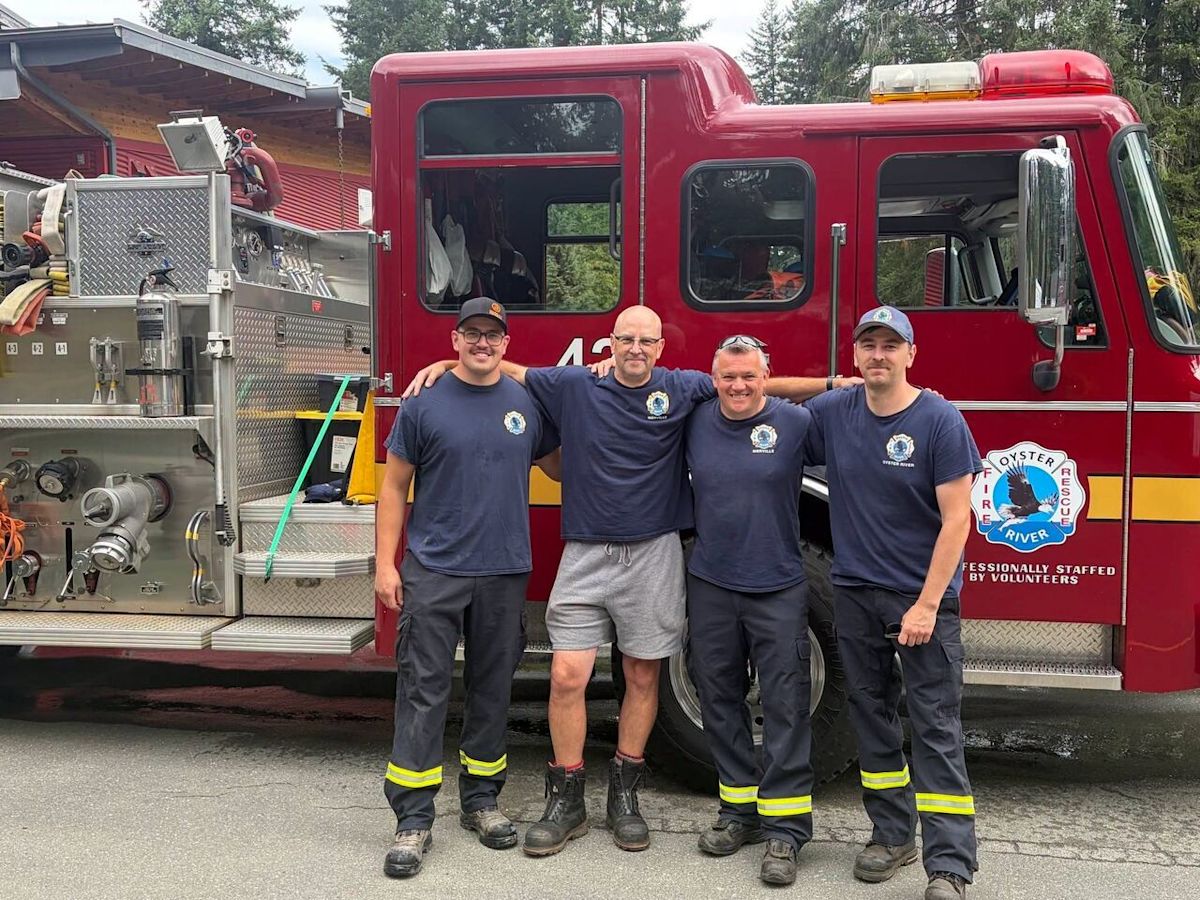
Oyster River Fire Chief Bruce Green says it’s been “long, hard days” for his crew in the Clinton area, where the Pear Lake wildfire complex has damaged structures on over 120 properties. But so far, he says the team has been enjoying it.
“Training is one thing, but boots on the ground — real life practical experiences — you learn little tips and tools and tricks how to do things more effectively,” Green said.
“And for us, that’s invaluable. All that stuff, that learning, that they bring back to share with our firefighters to keep our community safer.”
‘A feeling of belonging’
The crews from these departments head out on one- or two-week deployments.
While they’re there, fire chiefs say they perform tasks that vary from actively protecting structures to putting out spot fires or creating a “wet line” to ensure that flames that arise when firefighters burn off fuels don’t go in the wrong direction.
Green, like other fire chiefs CBC News spoke with, said the practical training is a bonus. But the real incentive for the crews who are in the Interior is knowing their contributing to a bigger cause.

Kurt MacDonald, fire chief for the City of Courtenay, says his crews have also been deployed to the Clinton area. He agreed that the experience has been helpful for them to gain hands-on knowledge.
More importantly, MacDonald says, being deployed has given the crews who are deployed a bigger sense of purpose — a sentiment that was echoed by several fire chiefs.
“Just a feeling of belonging and working on something that’s bigger than themselves,” he said.
‘Really switched on’
Geoff Spriggs, fire chief for the City of Duncan, says his small crew has been spending long days in smoky, dirty conditions in the Cache Creek area — but are happy to serve the communities they’re in.
“They’ve been really switched on,” Spriggs said.
“There’s communities that need help, and if we have something that can be provided to help them, we want to be able to do that.”
Like many fire chiefs, especially those in more rural areas, Spriggs emphasized that favourable wildfire conditions so far on Vancouver Island could change at a moment’s notice, and residents need to remain vigilant.
Green, the Oyster River Fire Chief, says residents need to do their part in protecting their homes.
That means looking up and adhering to B.C. FireSmart guidelines and asking a local fire department for help if necessary.
“When these big fires come in, we don’t have the resources. So that’s where we need the residents to help us help them,” Green said.