
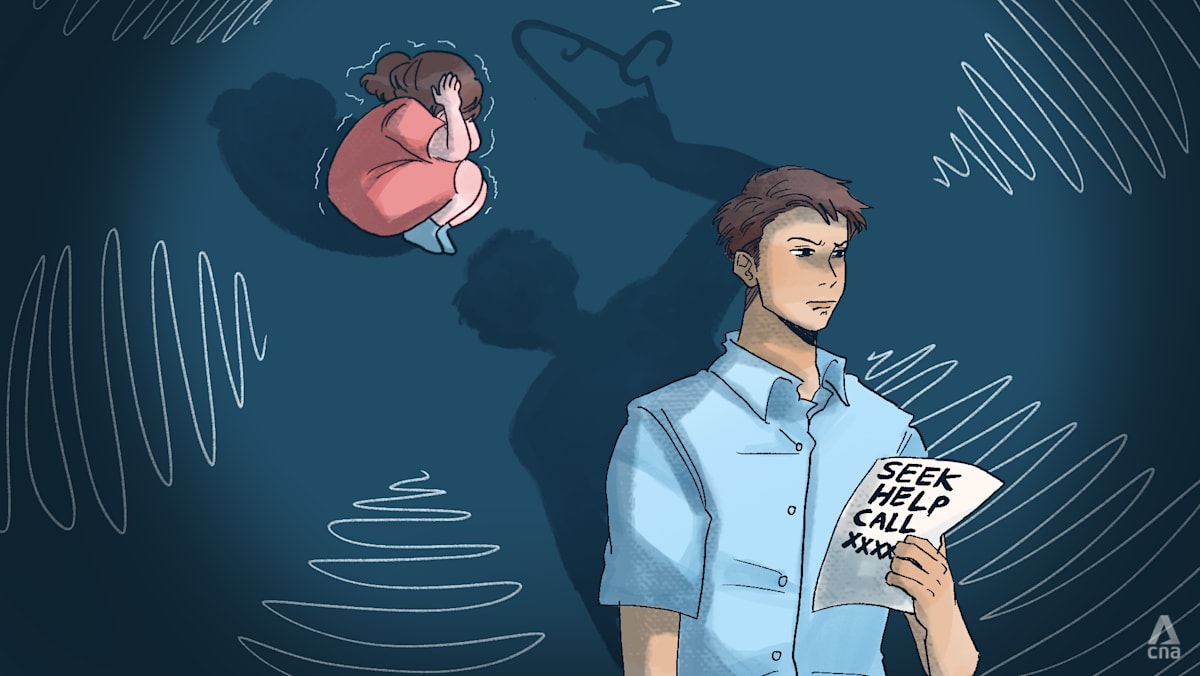
Dr Annabelle Chow, clinical psychologist at Annabelle Psychology, said another warning sign is when someone’s anger is disproportionate to what has happened.
“Because of all your compounded stresses, you might respond in a very intense way. That’s a warning sign that your behaviour is … not for punishing or not educating, but it’s dysregulation,” she added.
“If you have a lot of insults or threats or like physical force, especially when there’s a power imbalance between the size of a man and a woman, or a parent and a child, that’s also another sign.”
Abuse does not always leave physical marks, and emotional and psychological abuse can also change how safe someone feels at home, Dr Chow added.
“The emotional climate is very intangible, and there’s a lot of power imbalance.
“When a child or a spouse starts to feel like they are walking on eggshells, where they have to constantly read the room and monitor the other person’s mood, or like if they are starting to hide or be extremely avoidant … That actually tells you that this is not a safe climate.”
RESPONDING TO CONFLICT
Once social workers have identified some of the factors driving abusive behaviour, they help parents and spouses respond differently when pressures and conflicts arise.
This often means moving away from physical punishment and learning disciplinary approaches appropriate for their child’s age.
Social workers and psychologists who spoke to CNA said they take a “zero-tolerance” approach towards physical punishment and encourage parents to use alternative strategies.
One important step is recognising that the way a parent disciplines a young child may no longer be appropriate as the child grows up.
“As children enter adolescence, parents need to adapt their parenting and communication strategies to their changing emotional and developmental needs,” said Fei Yue’s Ms Lim.
She recalled one mother who sought help because the ways she had disciplined her teenage son were no longer working. She felt as though she was losing him.
Social workers worked with her on alternative strategies and different ways of speaking to her son – shifting away from simply telling him what to do and towards deeper conversations about life.
Her son noticed the small changes and told the social worker that he was happier.
“We also hope parents can manage certain expectations and recognise what they value more … Do you want the relationship to be better or do you just want to be right at the cost of the relationship?
“From all those sessions that we have with the parents, they are more aware of what they hope and what they want and what they are okay to let go of,” Ms Lim said.
Parents are also encouraged to attend programmes such as Families for Life’s Positive Parenting Programme, which equips parents with techniques to promote the psychological, social and emotional competence of children up to 16 years old.
“A lot of our work is psychoeducation, so the idea of age-appropriate, adequate discipline.
“When does discipline cross the line and go into harsh punishment? And when does harsh punishment actually even cross the line to become abuse?” said Ms Janelle Janaki, senior social worker at Care Corner Family Service Centre.
More broadly, many parents are struggling to handle their children’s device usage. That is a major reason why harsh punishments are used, she added.
Many parents break down during help sessions, feeling immense guilt about the harsh physical punishments they have used.
When it comes to spousal abuse, Fellowship of Men’s Mr Ang said violent behaviour can be complex.
While those who cause harm need to be held accountable, he said they should not be defined solely by the “worst mistake of their life”.
“It’s not as simple as just a punch; there are many underlying stories. One of the key principles we hold on to is to look at the person, separate from the behaviour,” he said.
“Because if we keep looking at the person who caused harm and label them as a perpetrator, they are just going to showcase all those traits.
“But there’s a part of them wanting to be a better husband and father.”
The group runs mentoring and counselling sessions, treatment groups and community events where husbands and fathers can meet others and seek advice.