
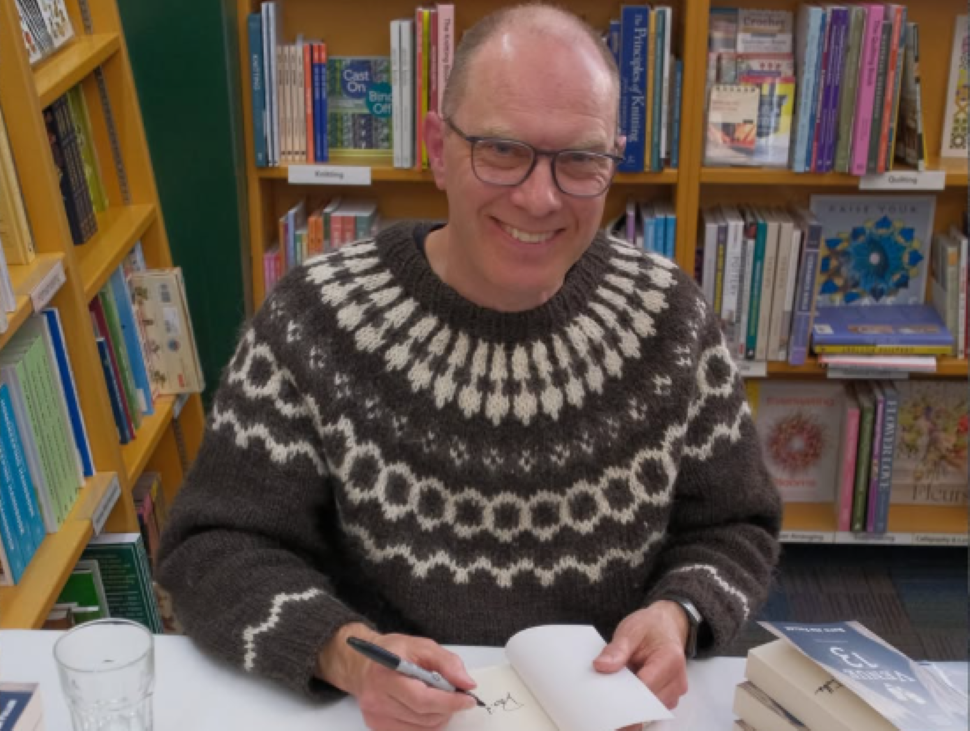
David Jón Fuller can still recall his experiences with the ghosts of the theatre world at the old Mother Tucker’s Restaurant on Donald Street, which used to be a venue at the Winnipeg Fringe Festival.
“It was supposedly haunted,” he says. “I’ll be honest – I didn’t actually incur or experience anything that was uncanny there, but once you start thinking, ‘They say it’s haunted. I wonder if something will happen, I wonder if that noise I just heard means something,’ you can sort of create it in your own mind.”
Now, Fuller has taken that ghost creation to another level in his debut novel, Venue 13. Loosely based on experiences at Fringe, the story centres around an actor/waiter creating a show in the fictional Summer Theatre Festival (known affectionately as Skeeter Fest) and the various hauntings that occur alongside it.
A theatre-informed fiction
Fuller channels his theatre background not only into the plot of Venue 13, but also into the architecture of the novel. The book is written in five acts in addition to the traditional chapter format and features stage directions and fourth wall breaks to describe the actions of the characters.
“I did want the reader to feel like they were watching a show or in a show,” Fuller explains. “It’s just putting a little bit of framing on it that makes it feel theatrical.”
Winnipeg’s theatre community has also seen their own theatrical experiences come to life through Venue 13. While Fuller says many of the settings are completely fictionalized, he has been enjoying interacting with readers about the origins of his ideas for characters and settings and how they are being connected with real life.
“I don’t ever want to shoot people’s ideas down because sometimes, they’ll come to me like, ‘That was The Keg on Main Street, wasn’t it?’ And I go, ‘Huh. That’s a really interesting idea,'” says Fuller. “It wasn’t, but I don’t care. Tell me how you imagine it.”
RELATED STORIES
A story for theatre veterans and novices
Even though Fuller himself did not see a ghost in that particular production at Mother Tucker’s, his castmates and others certainly did. It is an experience that Fuller notes is a part of almost every show, even if it is conjured up by the imaginative minds of theatre creators.
“My thought as I was writing it was that I know a lot of these things. I have a background in these sort of superstitions, traditions, the theatre life, which is a big grind like any creative endeavour,” Fuller says. “I wanted to show that being created.”
A big part of the creation of a haunted theatre myth is the supporting cast of Venue 13, including a fellow restaurant employee and a romantic interest which also mirror Fuller’s own theatre life. While he hopes that other theatre people can see themselves and their own theatre experiences in the book, he also hopes that casual theatre-goers can also enjoy being brought into the world.
“I want people who haven’t lived that life to go, ‘I see – that’s why they say break a leg,'” says Fuller of the invitation to superstition. “It’s good for people who know and good for people who are new to it.”