
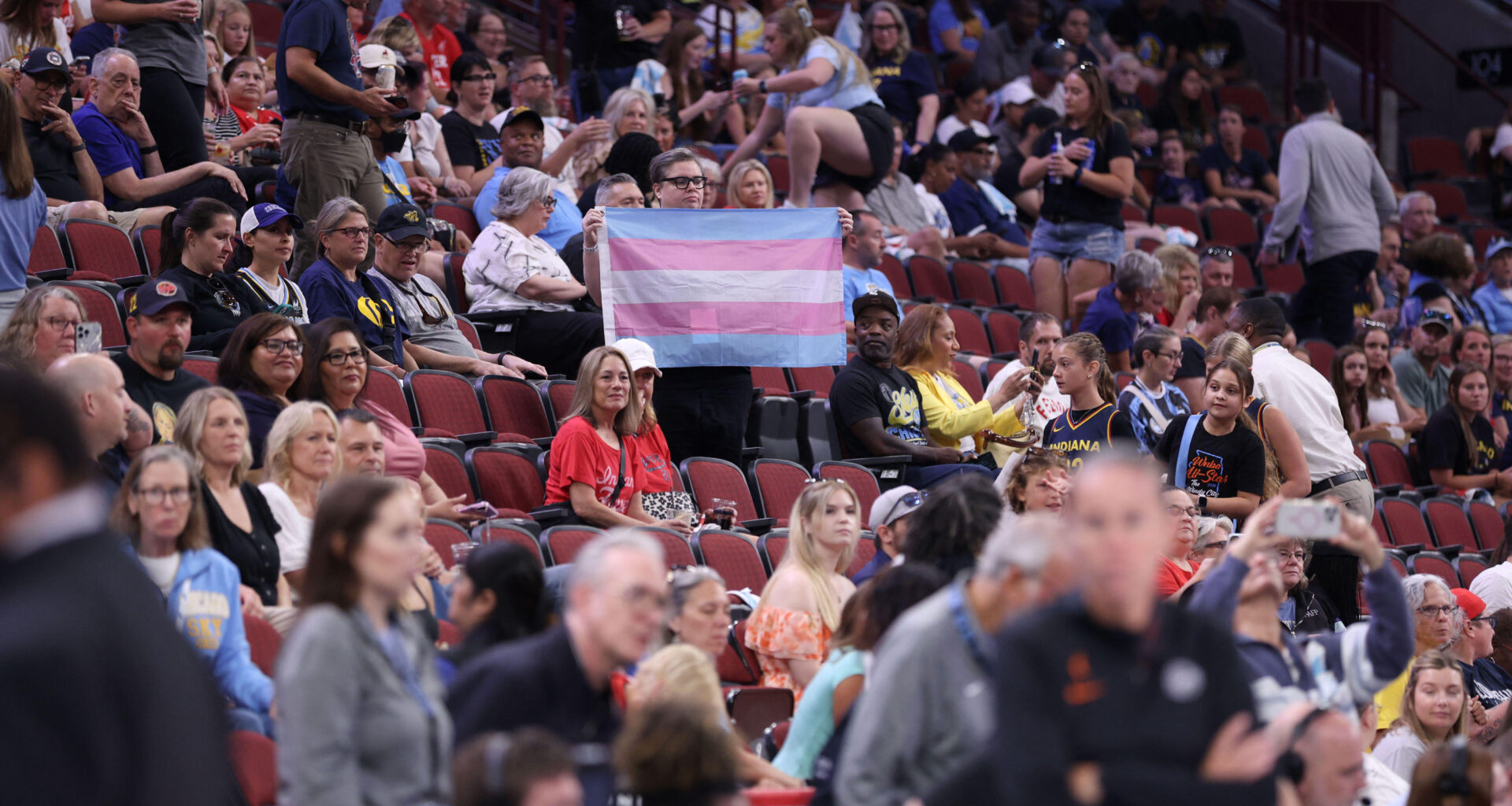
After more than 30 years of existence, the Women’s National Basketball Association (WNBA) is trying to figure out what a woman is.
The transgender controversy is no new debate—especially in the realm of safety and fairness in women’s and girls’ sports. And the professional world of women’s basketball is no exception. The conversation exploded after ESPN released a profile article about Indiana Fever guard Sophie Cunningham, based on an interview conducted in March, which included her belief that women’s sports and locker rooms should be reserved for biological women.
Sophie’s Stand
In expressing her conviction that biological men shouldn’t be allowed to compete in women’s sports, the backlash that erupted was not only toward Sophie but her supporters as well.
During a game in Seattle, with the ESPN article spreading like wildfire, young female sports fans gathered outside of Climate Pledge Arena to cheer on Sophie, thanking her for speaking out on the issue. This simple act reportedly resulted in Seattle Storm players harassing the girls. Some reports indicated that people even tried to trip the girls on the way to their seats.
One of the girls left in tears after Seattle Storm minority co-owner Celeste Keaton approached the teenage fans courtside and cursed at them. Keaton was later suspended for five home games and the team was fined. The Storm issued an apology, but Sophie herself called the behavior “truly embarrassing.”
A few days later, Minnesota Lynx head coach Cheryl Reeve wore a T-shirt declaring “Trans Kids Belong” during a game against Sophie’s Indiana Fever. Other WNBA players have posed for photos also wearing trans-promoting clothing. That same night, prominent women’s and girls’ sports advocate and All-American swimmer Riley Gaines held up a sign that read, “Sophie, thank you — a girl mom.” According to Gaines, an arena staffer tried to make her put it down, allegedly because it had Sophie’s name on it even though several fans in the arena sported signs with their favorite WNBA players.
 Screenshot: X/@Riley_Gaines_
Sophie—and her supporters—have been labeled transphobic and bigoted. Yet through it all, Sophie has refused to walk back her beliefs. Rather, she made it clear that she just wants to focus on the sport she loves.
“I’m going to let people just do the speaking for themselves, but for me, I want to get back to basketball,” Sophie said. “It’s always been about basketball. That [ESPN] interview happened in [March]. I just want to make sure that the focus stays where it should because people are playing at such a high level.”
“I got a lot of negative feedback about me hating trans,” she stated. “I think that I am here to extend love. But I also think with that, love is truth, being honest. And I want to protect young girls in a locker room, or young girls in sport who shouldn’t have to go against biological men.”
Franklin Graham commended her stand on X: “Sophie Cunningham is one tough lady. She’s not afraid to stand up. At the last three Indiana Fever games, she has been booed, criticized by other players and coaches, and even had rallies organized against her. What’s her crime? She simply believes that women and girls shouldn’t have to compete against or share a locker room with biological males.”
“Well,” he added, “I agree with her and support her request that the WNBA and the media let her ‘get back to basketball!’”
Rippling Repercussions
None of this led the WNBA to ask the question, “What is a woman?” Rather, it wasn’t until two men, former NBA players Enes Kanter Freedom and Royce White, this month declared their intent to enter the 2027 WNBA Draft simply to make one point: the WNBA has no clear guidelines for what defines a woman.
“After careful consideration and reviewing the current eligibility guidelines,” Kanter Freedom wrote on X. “I’m officially declaring myself a WNBA prospect. If simply declaring who you are is all that’s required, then I meet every single requirement necessary to compete in the WNBA.”
He explained how he and his team “carefully examined the WNBA’s eligibility criteria and governing framework surrounding self-identification and inclusion. Based on the current guidelines, I can and am officially declaring my eligibility for the upcoming WNBA draft in April 2027. … I’m simply asking that the current rules be applied equally to everyone—the rules that represent the very values many WNBA players and coaches have publicly advocated for.”
“My team and I are prepared to ensure these guidelines are applied equally, consistently and without exception, and I look forward to the #WNBA honoring its stated principles. See you at training camp.”
Three days later, Kanter Freedom—a 6-10, 250-pound biological man—shared that he had submitted his application.
Likewise, White has received a lot of attention as he actively portrays himself online as “a Pro-Life sometimes identifying as a Black woman.” And according to Jackson Thompson, sports reporter for Fox News, White intends to declare for the 2027 WNBA draft with only one exception: the league issues a “definitive statement” that biological men are not eligible for the women’s court. Otherwise, White has said he identifies as a woman “for purpose of basketball,” believes he would be “unstoppable,” and has indicated he is prepared for a legal battle over discrimination if blocked.
Even more recently, a third ex-NBA player, Will Van Booraem, also made a post about declaring for the draft.
On Aug. 7, WNBA Commissioner Cathy Engelbert sent an internal memo to teams addressing league eligibility definitions and transgender athlete participation. In other words, the WNBA will sit around the table to chat about what a woman is.
The current collective bargaining agreement states that “only players who are women are eligible to play in the WNBA,” without further defining the term or specifying criteria around so-called gender identity, sex “assigned at birth” or self-identification.
Public Pandemonium
On one side of this are the people in favor of all measures taken to protect the integrity of women’s sports—from Sophie’s stand to the former NBA players declaring for the 2027 WNBA draft to the league itself admitting some form of conversation should take place. Yet notably, the actions taken by women’s sports advocates have not been taken well by those on the other side of this issue.
The Women’s National Basketball Players Association issued a statement denouncing “hate, abuse and demonization” of the transgender community, emphasizing diversity and inclusion while declaring that players “will not be used as political pawns.” The union also did not define who qualifies as a “woman” when it comes to WNBA eligibility.
Critics labeled Sophie’s views transphobic and bigoted; Kanter Freedom and White have both reported receiving death threats directly linked to their stand against biological men in women’s sports and the way they chose to address it. Players and coaches have worn pro-trans messaging, rallies on both sides have appeared outside arenas, and online discourse has been intense and polarized, with accusations flying in every direction.
Yet voices in support have been equally clear and persistent. Supporters of protecting women’s categories point to basic fairness, safety in locker rooms and on the court, and the preservation of opportunities protected under Title IX. And now, many have welcomed the pressure applied by Kanter Freedom and White to force clearer rules from the WNBA.
American sports TV personality Stephen A. Smith posed the pressing question: “How come you didn’t write in your language ‘those born female?’ How come you didn’t make that clear?” This indefinable phrasing, he argued, puts the WNBA—and the women within it—in a precarious position. “You can deny [men like Kanter Freedom and White] entry, you can refuse to draft them, but you’re going to open yourself up to potential legal action until you clarify what … is going on.”
Like Smith, many argue that if self-identification alone is the standard, the logical endpoint is exactly the scenario these former NBA players are testing—and that the league’s reluctance to define “woman” only prolongs the uncertainty.
The saga continues to unfold, with the league now formally engaged in discussions that could shape eligibility—and the world of female athletics altogether—for years to come.